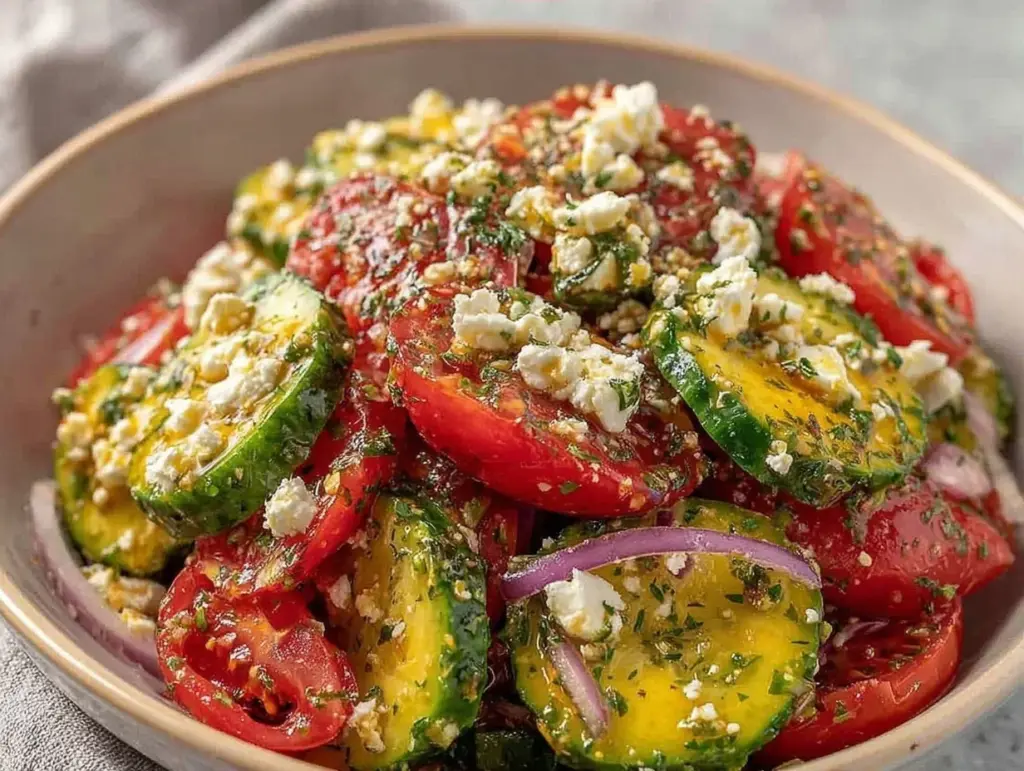
There is a specific kind of panic that hits you around mid-August. You’re staring at your calendar, realizing Labor Day is basically around the corner, and you’re trying to figure out what to serve that isn’t just another burger or a pile of potato salad. I’ve been there. I remember standing in my kitchen last year, sweating through a linen shirt, trying to decide if I should grill one more chicken or actually make something that wouldn’t turn my house into a sauna. That’s when I realized my summer parties don’t need more heavy mains. They need something bright, crisp, and utterly refreshing.
That realization led me to this Labor Day Cucumber Tomato Salad with Feta. It’s not just a side dish; it’s the palate cleanser your entire meal has been begging for. I’ve tested this recipe about a dozen times in the last two summers, tweaking the ratios of vinegar to oil and arguing with myself about whether to peel the cucumbers (spoiler: don’t peel them, the skin adds crunch). The result is a salad that looks effortlessly elegant on the table but comes together in less than fifteen minutes. It’s the kind of dish that makes people stop mid-chew, close their eyes, and say, “Wow, this is perfect.”
What I love most about this salad is how it balances the heavy, smoky flavors of typical barbecue foods. When you’re serving Labor Day grilled BBQ chicken thighs with that sticky honey glaze, or maybe some BBQ pulled chicken sliders for the kids, you need something to cut through all that richness. The acidity of the red wine vinegar, the saltiness of the feta, and the cool snap of the cucumber do exactly that. It’s light, it’s vibrant, and it’s going to be the star of your side dish spread.
Why You’ll Love This Summer Side
I’ve made my fair share of summer salads, and honestly, some of them feel like an afterthought. This one? This one is a showstopper. Here’s why it has earned a permanent spot in my Labor Day rotation:
- Stupid Simple Prep — Seriously, if you can slice a cucumber and crumble cheese, you can make this. I’ve whipped this up while holding a drink and chatting with guests. It requires zero cooking, which means you can spend your time actually enjoying the party instead of hovering over a stove.
- Perfectly Balanced Flavor — It’s not just “salad.” It’s a harmony of salty, tangy, sweet, and fresh. The feta provides that savory punch, the tomatoes bring natural sweetness, and the dressing ties it all together with a bright zing that wakes up your tongue.
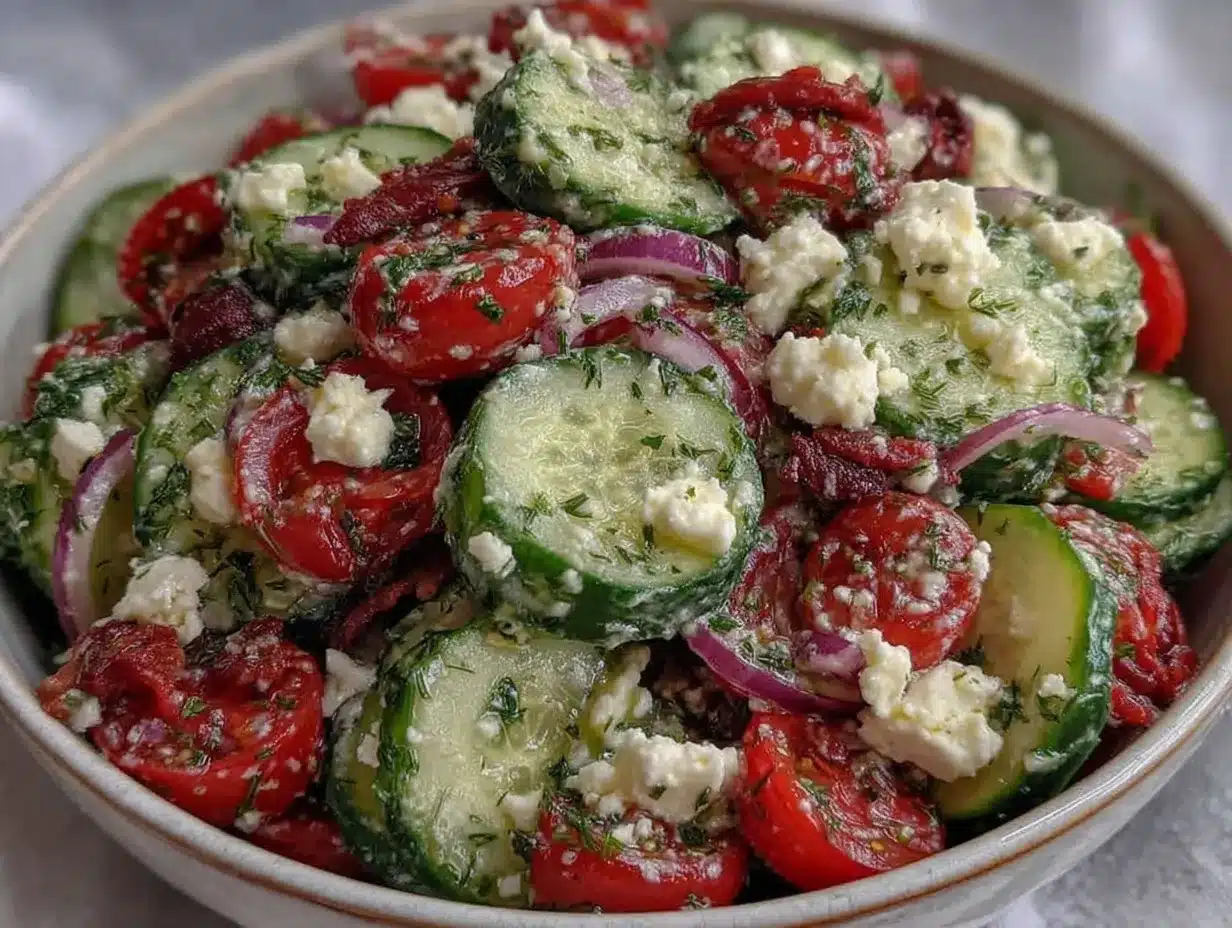
- Visual Appeal — Let’s be real, we eat with our eyes first. The vibrant red of the tomatoes against the crisp green of the cucumbers, topped with creamy white feta and a dusting of herbs, looks incredible on a platter. It’s Instagram-worthy without you even trying.
- Make-Ahead Friendly — This is crucial for parties. You can chop everything the morning of and store it in the fridge. Just toss it with the dressing right before serving to keep the cucumbers crisp. I often prep this while the BBQ chicken skewers are marinating, so everything is ready to go at once.
- Light but Satisfying — After a heavy meal of grilled meats and starches, you don’t want to feel stuffed. This salad is refreshing and hydrating, thanks to the high water content in the vegetables. It leaves you feeling full but light, ready for dessert (which, let’s be honest, is the main event).
This salad has completely changed how I approach summer entertaining. It’s my go-to when I want to impress without stressing. No complicated techniques, no weird ingredients, just reliable, delicious food that makes everyone happy.
Ingredients You’ll Need
Here’s the best part: you probably have most of this already in your fridge or pantry. This recipe relies on high-quality, simple ingredients because there’s nowhere to hide. If your tomatoes are bland, the salad will be bland. So, let’s talk about what goes in.
For the Salad Base
English (Hothouse) Cucumbers (2 large, sliced into half-moons / about 600g) — I always use English cucumbers. They’re longer, thinner, and have fewer seeds than standard slicing cucumbers. The seeds can make a salad watery, and we don’t want that. The skin is tender and adds a nice crunch. If you can only find standard cucumbers, peel them halfway to keep some texture.
Vine Tomatoes (1.5 pounds / about 700g) — Not cherry tomatoes, not beefsteaks. Vine tomatoes are the sweet spot. They’re firm enough to hold their shape when tossed but sweet and juicy enough to add flavor. Look for ones that are deep red and smell like sunshine. If you’re buying from a farmer’s market, ask for “heirloom” if they’re in season—those flavors are unmatched.
Feta Cheese (6 ounces / 170g, crumbled) — This is non-negotiable. You want a block of feta, not the pre-crumbled stuff in a bag. Pre-crumbled feta is coated in potato starch to keep it from clumping, which ruins the texture and prevents it from melting slightly into the dressing. Buy a block and crumble it with your fingers. It’s worth the extra two minutes.
Red Onion (1 small, thinly sliced / about 50g) — This adds a bit of bite. If you’re sensitive to raw onion, you can soak the slices in ice water for ten minutes before adding them. It mellows the sharpness but keeps the crunch. I usually slice them into thin rings or half-moons to match the cucumbers.
For the Dressing
Extra Virgin Olive Oil (1/3 cup / 80ml) — Use your best olive oil here. This is the backbone of the dressing. You want something fruity and peppery, not bland or oily. I keep a bottle specifically for salads that I wouldn’t use for cooking.
Red Wine Vinegar (3 tablespoons / 45ml) — This provides the necessary acidity to cut through the fat of the feta and oil. Red wine vinegar has a slightly sharper, more robust flavor than white wine vinegar, which pairs better with the strong taste of feta. Balsamic would make it too sweet and dark; stick to red wine.
Dijon Mustard (1 teaspoon) — This is the secret weapon. It doesn’t make the salad taste like mustard. Instead, it acts as an emulsifier, helping the oil and vinegar mix into a cohesive dressing that clings to the vegetables. It also adds a tiny, subtle depth of flavor.
Honey (1 teaspoon) — Just a touch. It balances the acidity of the vinegar and the saltiness of the cheese. You don’t want it to taste sweet, just rounded out.
Dried Oregano (1 teaspoon) — The classic herb for Greek-style salads. It’s earthy and aromatic. If you have fresh oregano, use twice as much, but dried works perfectly fine here.
Kosher Salt (1/2 teaspoon) — And freshly cracked black pepper (1/4 teaspoon). Taste before you add the feta, as the cheese is already salty. Start with less salt and adjust at the end.
Optional Add-ins
Fresh Mint or Parsley (2 tablespoons, chopped) — I love adding fresh mint for a cooling effect, but flat-leaf parsley is more traditional. Either way, fresh herbs make this salad look and taste professional.
Kalamata Olives (1/2 cup, pitted) — If you’re a fan of olives, these add a briny, chewy contrast. I usually leave them out for my husband, who isn’t a fan, but my guests always go crazy for them.
Equipment Needed
You don’t need fancy equipment for this. Here’s what I actually use:
Large Mixing Bowl — I use a 4-quart ceramic bowl. It’s wide enough to toss everything without spilling and pretty enough to serve from if you’re feeling lazy. Glass or stainless steel works too.
Sharp Chef’s Knife — For slicing cucumbers and tomatoes. A dull knife will crush the tomatoes and make a mess. I use my 8-inch Wüsthof for this. It glides through the cucumber skin effortlessly.
Cutting Board — Any size works. I prefer a large wooden board for the aesthetic, but plastic is easier to clean. Just make sure it’s stable so your knife doesn’t slip.
Small Whisk — For emulsifying the dressing. A small balloon whisk is perfect for mixing the oil, vinegar, mustard, and honey until it’s smooth. If you don’t have one, a fork works, but a whisk is faster.
Measuring Spoons — For the dressing. I keep a basic set on my counter. Dollar store versions work fine for this.
Colander (Optional) — If you’re washing your tomatoes and cucumbers, you’ll need this. I usually rinse them under cold water and pat them dry with paper towels to ensure the dressing sticks.
How to Make It: Step-by-Step
Alright, let’s make this! I’m walking you through exactly how I do it, including the little tricks I’ve picked up over the years.
Step 1: Prep Your Vegetables (10 minutes)
Start by washing your cucumbers and tomatoes. You don’t need to peel the cucumbers—that’s where the color and crunch live. Slice the cucumbers into half-moons, about 1/4-inch thick. If they’re very large, you can halve them lengthwise first. Slice the tomatoes into similar-sized wedges or chunks. You want them to be bite-sized but substantial. Thinly slice the red onion. If you’re using olives, pit them now. Place all the vegetables in your large mixing bowl.
Step 2: Make the Dressing (2 minutes)
In a small jar or bowl, combine the olive oil, red wine vinegar, Dijon mustard, honey, dried oregano, salt, and pepper. If using a jar, put the lid on and shake it vigorously until the mixture is emulsified (it should look creamy and unified). If using a bowl, whisk until smooth. The goal is to blend the oil and vinegar so they don’t separate immediately when you pour it over the salad.
Step 3: Toss the Salad (2 minutes)
Pour the dressing over the vegetables. Use your hands or a large spoon to gently toss everything together. You want to coat every piece evenly. Be gentle with the tomatoes so they don’t break apart. Let the salad sit for about 5 minutes. This allows the flavors to meld and the cucumbers to absorb some of the dressing. It might seem like a small step, but it makes a huge difference in taste.
Step 4: Add the Feta and Herbs (1 minute)
Crumble the feta cheese over the top. Don’t mix it in completely yet; let it sit on top for a bit so it stays distinct. Sprinkle the fresh herbs (mint or parsley) over the salad. Just before serving, give it one final gentle toss to distribute the feta and herbs. Taste and adjust salt or pepper if needed. Remember, the feta is salty, so you might not need much extra salt.
Step 5: Serve
Serve immediately on a platter or in the bowl. This salad is best when it’s cool but not cold from the fridge. If you made it ahead, take it out of the fridge 15 minutes before serving to take the chill off. Garnish with a few extra sprigs of mint or a drizzle of olive oil for that restaurant-quality finish.
Total Time: About 15 minutes (10 minutes prep, 5 minutes resting)
Expert Tips & Tricks
Here’s everything I’ve learned from making this dozens of times. These tips will save you from my mistakes.
Don’t Skip the Resting Time
I know you want to eat it right away, but letting the salad sit for 5-10 minutes allows the cucumbers to soften slightly and absorb the dressing. Raw cucumber can be a bit harsh; this step mellows it out and integrates the flavors. It’s the difference between a salad and a *great* salad.
Pat Your Tomatoes Dry
Water is the enemy of dressing. If your tomatoes are wet from washing, the dressing will slide right off. After washing, pat them dry with paper towels or a clean kitchen towel. It’s an extra step, but it ensures every bite is flavorful.
Use Good Feta
I cannot stress this enough. Cheap, pre-crumbled feta is dry and salty in a bad way. Buy a block of Greek feta cheese and crumble it yourself. It’s creamier, more complex, and less likely to be overly salty. It’s worth the extra dollar.
Balance the Salt
Feta is salty. Vinegar is acidic. Olive oil is rich. The key is balancing these. Start with less salt in the dressing, taste, and then add more after the feta is mixed in. You want the feta to stand out, not disappear into a salty mush.
Keep it Cool
If you’re serving this outdoors on a hot day, keep the salad in the fridge until the last possible moment. Warm cucumber salad is not a good experience. If you’re prepping ahead, store the vegetables and dressing separately and combine right before serving.
Variations & Substitutions
Once you’ve nailed the basic version, here’s how you can mix it up. I’ve tried all of these.
Avocado Twist
Add 1 or 2 diced avocados right before serving. The creaminess of the avocado pairs beautifully with the feta and tomato. It makes the salad even more filling and luxurious. Just make sure to use ripe avocados so they don’t turn mushy.
Mediterranean Style
Add kalamata olives and a handful of artichoke hearts (canned, drained). This turns the salad into a heartier Mediterranean mezze-style dish. It’s great as an appetizer with crusty bread.
Herb-Forward
Increase the fresh herbs to 1/2 cup. Use a mix of mint, dill, and parsley. The herbal notes will dominate, making it a very refreshing, almost cocktail-like side dish. Perfect for hot days.
Gluten-Free & Dairy-Free
This recipe is naturally gluten-free. For dairy-free, substitute the feta with a vegan feta alternative (like those made from tofu or nuts) or omit it entirely and add some white beans for protein and creaminess. The dressing is already vegan if you skip the honey (use maple syrup instead).
Protein Boost
Add grilled chicken or shrimp. I often serve this salad alongside grilled chicken salad components, but adding the protein directly to the bowl makes it a full meal. Just let the meat cool before adding it.
Serving & Storage
How to Serve:
I usually serve this straight from the bowl at the dinner table—it looks rustic and stays cool. But here are other ways I’ve enjoyed it:
- Side Dish: Pairs perfectly with grilled meats like charred lemon grilled chicken, lamb chops, or fish tacos.
- Appetizer: Serve with pita chips or crusty bread to scoop up the juicy vegetables.
- Salad Base: Use it as a bed for grilled shrimp or scallops.
Storage Instructions:
Refrigerator:
Store leftovers in an airtight container for up to 2 days. The cucumbers will soften over time, and the tomatoes will release more juice, so the texture will change. It’s still good, just not as crisp. I usually finish it within a day.
Reheating:
Do not reheat this salad. It’s meant to be eaten cold or at room temperature. Heating it will wilt the vegetables and make the feta melt into an unappetizing goo.
Freezing:
Do not freeze. The high water content in the cucumbers and tomatoes will break down when thawed, resulting in a mushy, watery mess. Make it fresh.
Meal Prep:
Chop the vegetables and store them in a container with a paper towel at the bottom to absorb excess moisture. Store the dressing separately. Combine right before serving for the best texture.
Nutrition Information
I’m not a nutritionist, but here’s the breakdown if you’re tracking.
Per Serving (based on 6 servings):
- Calories: 180
- Protein: 6g
- Carbs: 10g
- Fiber: 2g
- Sugar: 6g
- Fat: 14g
- Saturated Fat: 4g
- Cholesterol: 15mg
- Sodium: 320mg
- Calcium: 120mg
What’s Good:
- Low in calories and carbs
- Good source of calcium from the feta
- High in vitamins from the vegetables
- Healthy fats from the olive oil
What to Know:
It’s higher in sodium due to the feta, so if you’re watching your salt intake, use low-sodium feta or rinse the cheese before crumbling. It’s also dairy-heavy, so not suitable for dairy-free diets without substitution.
My Take:
Look, this is a fresh, light salad. It’s not a diet recipe, but it’s certainly a healthy one. The olive oil provides healthy monounsaturated fats, and the vegetables are packed with nutrients. When I want to make it lighter, I reduce the feta and increase the cucumbers. But usually? I just eat a reasonable portion and enjoy the freshness.
Final Thoughts
So that’s my go-to Labor Day Cucumber Tomato Salad with Feta! I’ve probably talked your ear off at this point, but when you make a recipe this often, you have a lot to say about it.
This has saved summer parties more times than I can count. It’s my answer to “what’s for dinner” when I’m tired, don’t want takeout, and still want something that tastes really good. My guests are happy, my husband’s happy, and I’m happy because I’m not stressed about cooking.
Make it yours! Try different herbs, swap in your favorite cheese (goat cheese is also delicious), or add some olives. The best recipes are the ones you adapt to your family’s tastes.
If you make this, drop a comment and let me know what you think! I love hearing how recipes turn out in your kitchen. And if something doesn’t work, tell me that too—I’m here to help troubleshoot.
Happy cooking! And I hope your kitchen smells half as good as mine does right now.
Frequently Asked Questions
Can I use regular cucumbers instead of English cucumbers?
You can, but regular cucumbers have thicker skins and more seeds. The seeds can make the salad watery. If you use regular cucumbers, I recommend peeling them partially or completely and scooping out the seeds with a spoon before slicing. English cucumbers are just easier because you can slice them whole.
Why did my salad turn out watery?
This usually happens if you use very juicy tomatoes or if you let the salad sit too long before serving. Tomatoes release water as they sit. To prevent this, pat your tomatoes dry before slicing, and only toss the salad with the dressing right before serving. Also, salting the cucumbers beforehand (and draining the liquid) can help, though it’s not strictly necessary for this recipe.
Can I make this ahead for a party?
Yes, but with a caveat. Chop the vegetables and store them in the fridge in an airtight container with a paper towel at the bottom. Make the dressing separately. Combine everything 30 minutes before serving. This gives the flavors time to meld without turning the salad into soup.
What kind of vinegar is best?
Red wine vinegar is the traditional choice for Greek salads because it has a robust flavor that stands up to the feta. White wine vinegar is milder and works too. Avoid balsamic vinegar as it will make the salad too sweet and dark. Apple cider vinegar is another option, but it has a distinct flavor that might not pair as well.
Can I use goat cheese instead of feta?
Yes! Goat cheese is tangy and creamy, similar to feta but less salty. It crumbles nicely and pairs beautifully with cucumbers and tomatoes. It’s a great alternative if you find feta too salty. Just use the same amount.
How long does this salad last?
It’s best eaten within 24 hours. After that, the cucumbers will lose their crunch and the tomatoes will become mushy. It’s not dangerous to eat after 2 days, but the texture won’t be great. I usually make enough for one meal and enjoy the leftovers the next day as a light lunch.
Can I add protein to make it a main course?
Absolutely. Grilled chicken, shrimp, or even chickpeas work well. If you’re adding cooked protein, let it cool completely before mixing it in to avoid wilting the vegetables. This salad is a great base for a light summer lunch or dinner.
Pin This Recipe!
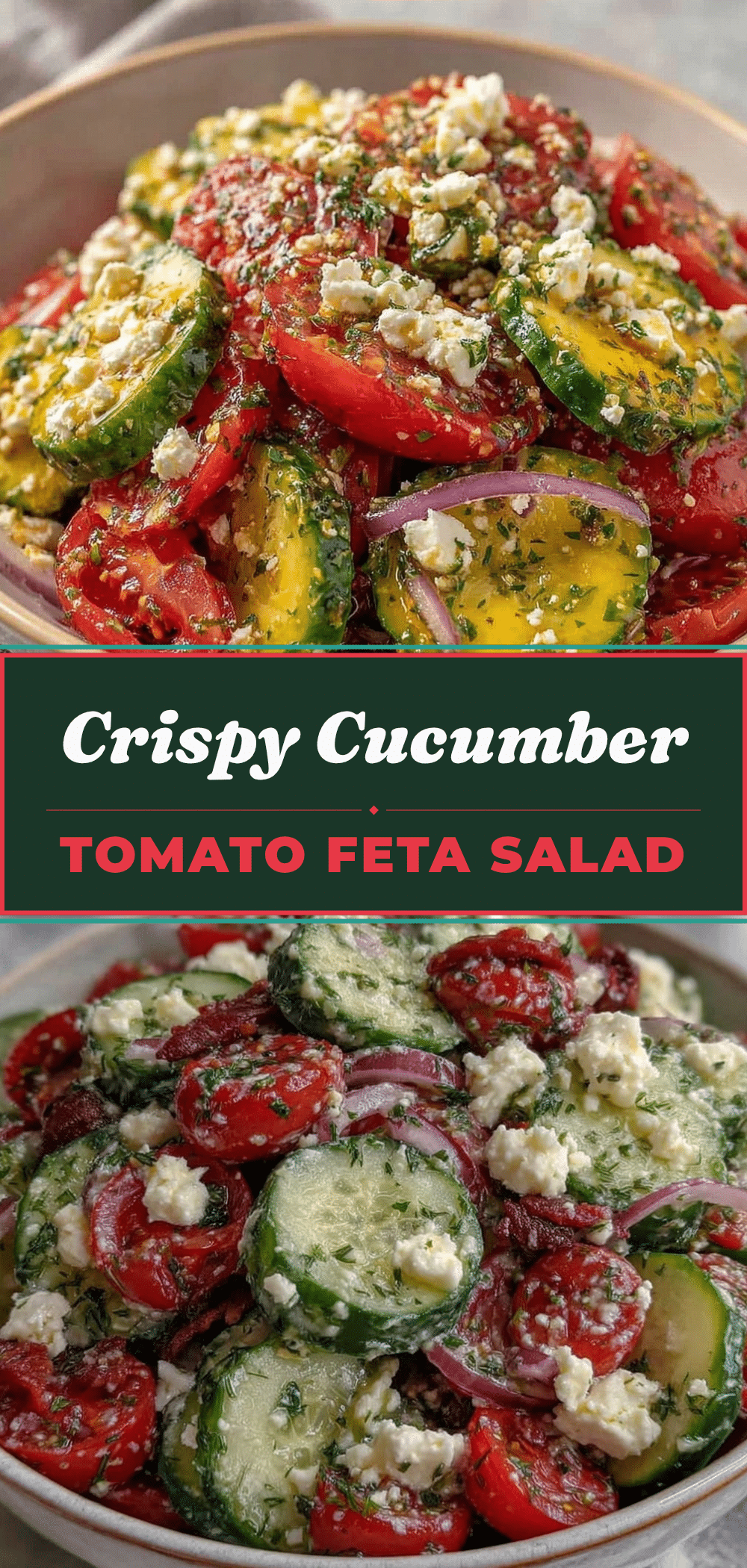
Labor Day Cucumber Tomato Salad with Feta
- Total Time: 15 minutes
- Yield: 6 servings 1x
Description
A bright, crisp, and refreshing 5-ingredient summer side dish that balances heavy barbecue flavors with the acidity of red wine vinegar and the saltiness of feta cheese.
Ingredients
- 2 large English (Hothouse) cucumbers, sliced into half-moons (about 600g)
- 1.5 pounds Vine tomatoes, cut into wedges or chunks (about 700g)
- 6 ounces block Feta cheese, crumbled (170g)
- 1 small Red onion, thinly sliced (about 50g)
- 1/3 cup Extra Virgin Olive Oil (80ml)
- 3 tablespoons Red Wine Vinegar (45ml)
- 1 teaspoon Dijon Mustard
- 1 teaspoon Honey
- 1 teaspoon Dried Oregano
- 1/2 teaspoon Kosher Salt
- 1/4 teaspoon Freshly cracked black pepper
- 2 tablespoons Fresh Mint or Parsley, chopped (optional)
- 1/2 cup Kalamata Olives, pitted (optional)
Instructions
- Wash cucumbers and tomatoes. Slice cucumbers into 1/4-inch half-moons and tomatoes into similar-sized wedges. Thinly slice the red onion. Place all vegetables in a large mixing bowl.
- In a small jar or bowl, combine olive oil, red wine vinegar, Dijon mustard, honey, dried oregano, salt, and pepper. Shake or whisk vigorously until the dressing is emulsified and smooth.
- Pour the dressing over the vegetables and gently toss to coat evenly. Let the salad sit for 5 minutes to allow flavors to meld.
- Crumble the feta cheese over the top and sprinkle with fresh herbs. Give the salad one final gentle toss just before serving to distribute the cheese and herbs.
- Taste and adjust salt or pepper if needed. Serve immediately on a platter.
Notes
Do not peel the cucumbers as the skin adds crunch. If using standard cucumbers, peel halfway. Pat tomatoes dry before slicing to prevent watery dressing. Use block feta rather than pre-crumbled for better texture. Let the salad rest for 5 minutes before serving to allow flavors to meld. Store leftovers in an airtight container for up to 2 days, but do not freeze.
- Prep Time: 10 minutes
- Cook Time: 0 minutes
- Category: Side Dish
- Cuisine: Mediterranean
Nutrition
- Serving Size: 1 serving
- Calories: 180
- Sugar: 6
- Sodium: 320
- Fat: 14
- Saturated Fat: 4
- Carbohydrates: 10
- Fiber: 2
- Protein: 6
Keywords: Labor Day, cucumber salad, tomato salad, feta salad, summer side dish, no-cook recipe, healthy salad, party food, Greek salad