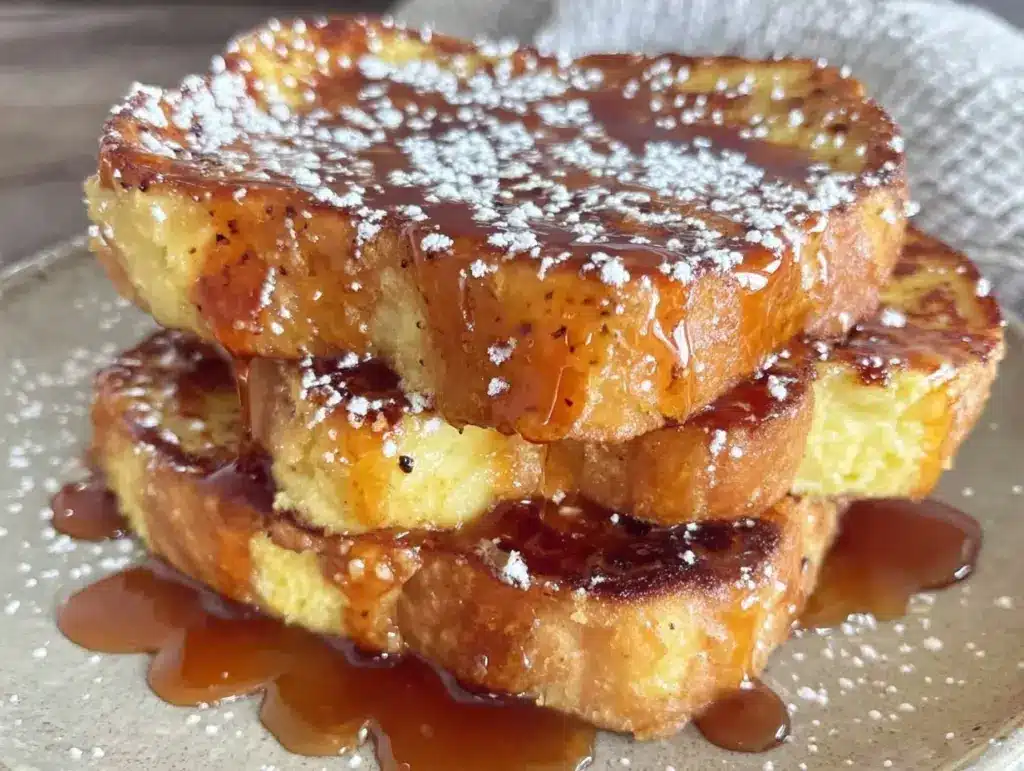
There is a specific kind of magic that happens when you take that slightly tangy, chewy loaf of sourdough you’ve been nursing along in the fridge and turn it into something impossibly rich and golden. I’ve been making this sourdough french toast for about three years now, and it has completely ruined me for any other morning bread. The first time I made it, I was trying to use up a half-loaf that was starting to dry out, and I ended up waking up the entire house with the smell of caramelizing butter and cinnamon. My husband literally walked into the kitchen in his pajamas before his eyes were even fully open, and he didn’t say a word. He just sat at the counter, waited for me to plate it, and took one bite that made him close his eyes and sigh.
That was the moment I knew I had found my holy grail of weekend brunches. Regular white bread french toast is fine, sure. But it’s soft, sometimes a bit mushy, and lacks that complex depth of flavor that sourdough brings to the table. The crust on this version is crisp and shattering, while the inside is custardy and warm, almost like a bread pudding that learned how to be elegant. It’s the kind of dish that makes people stop scrolling on their phones and actually pay attention to the food in front of them.
I’ve tested this recipe dozens of times, tweaking the egg-to-milk ratio, the type of cinnamon, and even the syrup, until I landed on this perfect balance. It’s not just about using up leftovers anymore; it’s about creating a moment. A moment where the weekend feels slow, the kitchen is warm, and the table is set for good conversation. If you’re looking for a way to impress your guests or just treat yourself to a truly indulgent start to Saturday, this is it. And if you want to pair it with something cold and refreshing to cut through the richness, I’ve got a homemade vanilla sweet cream cold brew that pairs beautifully with the warm spices.
Why You’ll Love This Recipe
Look, I get it. Weekend mornings are precious. You want to sleep in, or at least pretend to. But when you make this sourdough french toast, you’ll realize that the extra fifteen minutes of effort is worth every second. Here’s why this recipe has earned a permanent spot in my weekend rotation:
- It Uses Up Stale Bread Perfectly — Sourdough is best when it’s a day or two old. The dryness absorbs the custard without falling apart, creating a texture that’s impossible to replicate with fresh bakery bread. It’s zero-waste cooking at its most delicious.
- The Crust is Everything — We’re using a generous amount of butter and a touch of sugar in the pan to get that deep, golden-brown crust. It’s crispy on the outside, soft on the inside, and sticks to your teeth in the best way possible.
- It Feels Like a Restaurant Treat — There’s something special about a brunch dish that looks as good as it tastes. When you plate this with that warm maple cinnamon syrup drizzled over the top, it feels fancy. It feels like a gift to yourself.
- Customizable for Crowds — Whether you’re feeding a small family or hosting a brunch party, this scales up easily. You can make a big batch of the custard and cook the bread in batches while everyone chats in the living room.
- The Syrup Changes the Game — Most people just pour syrup on top. But we’re making a warm cinnamon maple syrup that’s simmered on the stove. It adds a layer of flavor that plain syrup just can’t match.
This isn’t just breakfast. It’s an experience. It’s the kind of meal that makes you want to linger at the table with a second cup of coffee, even though you know you should probably get up and clean the kitchen. But hey, we’ll worry about that later.
Ingredients You’ll Need
One of the best parts about this sourdough french toast is that the ingredients are simple pantry staples. You probably have most of this already. The secret isn’t in exotic items; it’s in the quality of the sourdough and the patience you take with the cooking process.
For the Sourdough Bread
Sourdough loaf (about 12-16 ounces / 350-450g) — You want a loaf that is at least a day old, preferably two. Fresh sourdough is too moist and will get soggy. Look for a loaf with a thick, sturdy crust and an open crumb structure. I prefer a slightly dense sourdough because it holds up better to soaking.
For the Custard Base
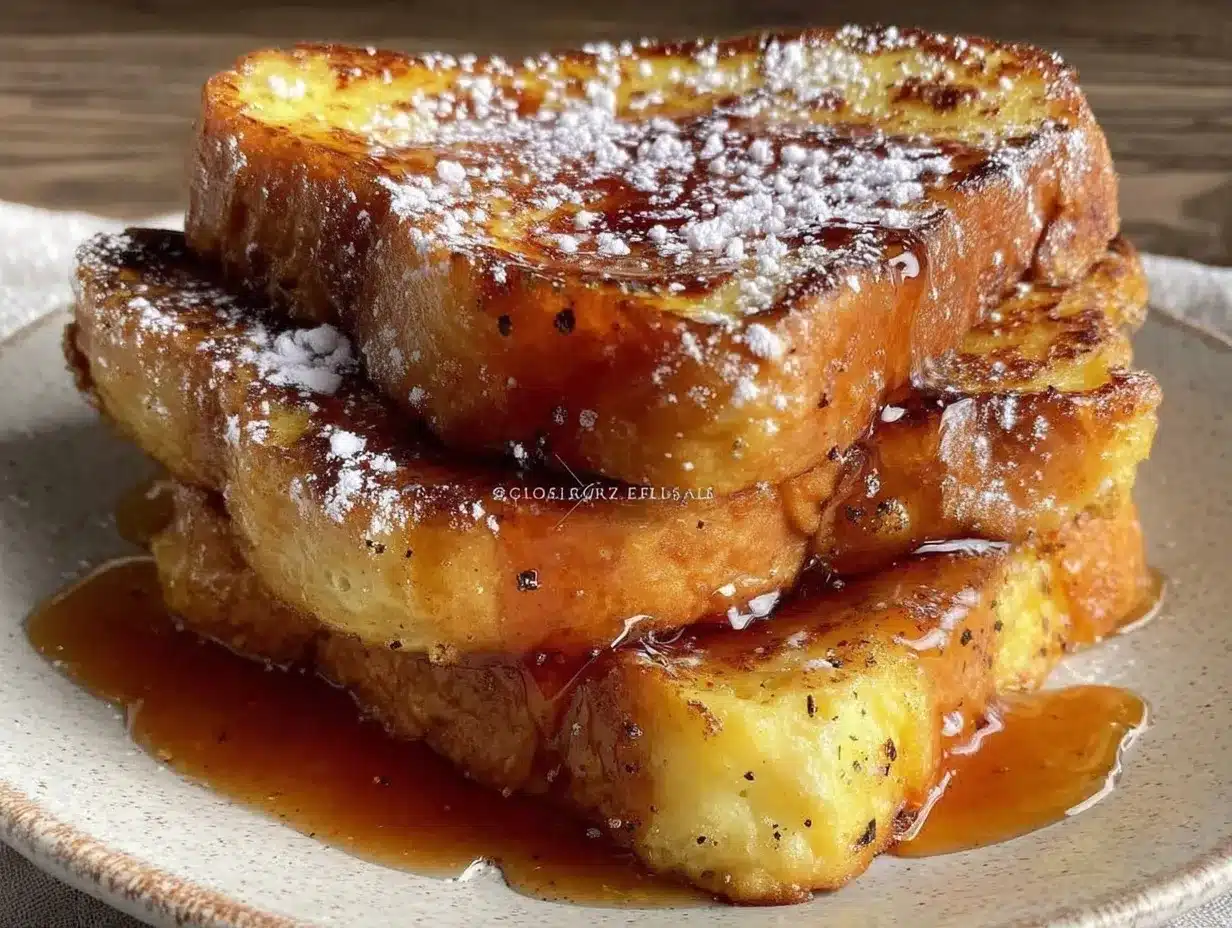
Eggs (4 large) — Room temperature eggs mix more evenly into the custard. If you’re short on time, just drop them in warm water for five minutes. Don’t skip this step if you can help it.
Heavy cream (1 cup / 240ml) — This is non-negotiable for that rich, custardy center. Whole milk alone makes it too thin. Half-and-half works in a pinch, but heavy cream gives you that luxurious mouthfeel.
Whole milk (½ cup / 120ml) — Used to balance out the richness of the cream. It lightens the custard slightly so it’s not too heavy.
Vanilla extract (2 teaspoons) — Use real vanilla, not imitation. The flavor is subtle but essential. If you have vanilla bean paste, even better.
Cinnamon (1 teaspoon ground) — Good quality cinnamon makes a huge difference. If you have a jar that’s been sitting for years, toss it and get fresh. The aroma should be potent.
Nutmeg (¼ teaspoon freshly grated) — Just a pinch. It adds warmth and complexity. Freshly grated is best, but pre-ground works if that’s all you have.
Pinch of salt — A small pinch balances the sweetness and enhances the egg flavor.
For Cooking and Topping
Unsalted butter (4-6 tablespoons) — You’ll need this for the pan. I like to use a mix of butter for flavor and a little oil for smoke point, but pure butter is delicious if you watch the heat.
Maple syrup (½ cup / 120ml) — Use real maple syrup, not pancake syrup. The grade doesn’t matter much here, but darker syrup has more flavor.
Brown sugar (2 tablespoons) — For the warm cinnamon syrup. It adds a molasses note that pairs perfectly with the maple.
Extra cinnamon (1 teaspoon) — For the syrup.
Equipment Needed
You don’t need anything fancy for this. Here’s what I actually use:
- Large shallow baking dish or pie plate — This is where you whisk the custard and dip the bread. A 9×13 dish is perfect for soaking multiple slices at once.
- Whisk — Essential for blending the eggs and cream until smooth. No lumps allowed.
- Large skillet or griddle — I use a 12-inch cast iron skillet. It holds heat evenly and gives you that beautiful sear. Stainless steel works too, but cast iron is my go-to for french toast.
- Spatula — A thin, flexible spatula is best for flipping without breaking the bread.
- Small saucepan — For making the warm cinnamon syrup.
- Instant-read thermometer — Optional, but helpful if you’re worried about undercooking eggs. You want the internal temp to reach 160°F.
How to Make It: Step-by-Step
Alright, let’s get cooking! This process is straightforward, but there are a few tricks to getting that perfect texture. I’m walking you through exactly how I do it.
Step 1: Prep the Bread (10 minutes before you start)
If your sourdough isn’t already stale, slice it and let it sit on a wire rack for a few hours, or toast it lightly in the oven at 300°F for 10 minutes. You want it dry. Slice the bread into thick pieces, about 1 to 1.5 inches thick. Thick slices are crucial—they need the structure to hold the custard. Thin slices will fall apart.
Step 2: Make the Custard (5 minutes)
In your large shallow dish, whisk together the eggs, heavy cream, milk, vanilla, cinnamon, nutmeg, and salt. Whisk vigorously until the mixture is completely uniform and slightly frothy. This ensures the flavor is distributed evenly. Taste it—it should taste like sweet, spiced egg nog. If you like it sweeter, add a little more vanilla or a pinch of sugar.
Step 3: Soak the Bread (1-2 minutes per side)
This is the most important step. Heat your skillet or griddle over medium-low heat. Add a tablespoon of butter. While that melts, dip a slice of sourdough into the custard. Let it soak for about 30 seconds to a minute on each side. You want the bread to be saturated but not falling apart. If the bread is very dry, let it soak a bit longer. If it’s fresh, soak it for less time. Lift it out and let the excess drip off for a few seconds.
Step 4: Cook the French Toast (3-4 minutes per side)
Place the soaked bread into the hot skillet. Don’t crowd the pan—cook in batches if needed. Cook over medium-low heat. This is key. If the heat is too high, the outside will burn before the inside is cooked. Cook for 3-4 minutes until the bottom is deep golden brown and crisp. Flip carefully and cook the other side for another 3-4 minutes. Add more butter to the pan as needed between batches.
Step 5: Make the Warm Maple Cinnamon Syrup (5 minutes)
While the toast is cooking, combine the maple syrup, brown sugar, cinnamon, and 1 tablespoon of water in a small saucepan over medium heat. Whisk until the sugar dissolves and the mixture is smooth. Let it simmer for 2-3 minutes until it thickens slightly. It will bubble gently. Remove from heat and keep warm.
Step 6: Serve Immediately
Transfer the cooked french toast to plates. Drizzle generously with the warm maple cinnamon syrup. I like to serve this with fresh berries on the side—the tartness cuts through the richness perfectly. If you’re feeling extra indulgent, add a dollop of whipped cream. Eat it while it’s hot, because it doesn’t stay crispy for long.
Expert Tips & Tricks
Here’s everything I’ve learned from making this dozens of times. These tips will save you from my mistakes.
- Stale Bread is Non-Negotiable — Fresh sourdough is too moist. It absorbs too much custard and turns into mush. If you don’t have stale bread, slice it and bake it at 300°F for 10-15 minutes to dry it out. It should sound hollow when you tap it.
- Medium-Low Heat is Your Friend — I know we want to cook fast, but french toast needs patience. Low and slow ensures the center is cooked and creamy without burning the outside. If the pan is too hot, you’ll get a charcoal crust and cold, runny center.
- Don’t Skip the Butter — Butter adds flavor and helps create that crisp crust. I use unsalted butter so I can control the salt. If you’re out, you can use oil, but the flavor won’t be as rich.
- Keep It Warm — If you’re cooking for a crowd, put the finished slices on a baking sheet in a 200°F oven while you cook the rest. This keeps them warm and crisp.
- Toast the Cinnamon — For the syrup, toasting the cinnamon in the pan for 30 seconds before adding the syrup enhances the flavor. It brings out the earthy notes.
Variations & Substitutions
Once you’ve nailed the basic version, here’s how you can mix it up. I’ve tried all of these.
- Brioche Version — Swap sourdough for brioche. It’s richer and sweeter, so you can reduce the sugar in the syrup. It’s less tangy but incredibly decadent.
- Chai Spice — Swap the cinnamon and nutmeg for chai spice blend. It adds ginger, cardamom, and cloves for a warmer, more complex flavor.
- Orange Zest — Add the zest of one orange to the custard. It brightens the flavor and pairs beautifully with the maple syrup.
- Gluten-Free — Use gluten-free sourdough-style bread. Make sure it’s stale, as GF bread can be more fragile. Soak it for less time.
- Dairy-Free — Use coconut milk instead of heavy cream and milk, and coconut oil instead of butter. The flavor will be slightly different but still delicious.
Serving & Storage
How to serve this for maximum impact:
How to Serve: I usually serve this straight from the skillet at the brunch table. It looks rustic and stays warm. But here are other ways I’ve enjoyed it:
- Side Dishes: Fresh berries (strawberries, blueberries, raspberries), a simple arugula salad with lemon vinaigrette, or crispy bacon.
- Toppings Bar: When I have guests, I put out: extra cinnamon sugar, fresh berries, whipped cream, and maybe some sliced bananas.
- Drink Pairing: This pairs wonderfully with coffee, obviously. But if you want something cold, a frozen strawberry lemonade slushie is a fun, refreshing contrast to the warm, spicy toast.
Storage Instructions:
Refrigerator: Store leftovers in an airtight container for up to 2 days. The bread will soften, but it’s still good.
Reheating: Reheat in a skillet over medium heat with a little butter to crisp it back up. The microwave will make it soggy, so avoid it if you can.
Freezing: You can freeze the cooked french toast. Let it cool completely, then freeze in a single layer on a baking sheet. Transfer to a freezer bag. Reheat in the toaster or oven. It won’t be as crispy as fresh, but it’s a great hack for busy mornings.
Nutrition Information
I’m not a nutritionist, but here’s the breakdown if you’re tracking. This is a rich dish, so enjoy it in moderation.
Per Serving (based on 2 slices):
- Calories: 450
- Protein: 12g
- Carbs: 55g
- Fiber: 3g
- Sugar: 25g
- Fat: 20g
- Saturated Fat: 10g
- Cholesterol: 180mg
- Sodium: 350mg
What’s good: It has decent protein from the eggs and cheese (if you add it). What to know: It’s higher in calories and sugar due to the butter, cream, and syrup. It’s comfort food, after all.
Final Thoughts
So that’s my go-to sourdough french toast! I’ve probably talked your ear off at this point, but when you make a recipe this often, you have a lot to say about it. This has saved weekend mornings more times than I can count. It’s my answer to “what’s for brunch” when I want to impress friends or just treat myself to something special. My family is happy, my guests are happy, and I’m happy because I know exactly what’s in it.
Make it yours! Try different spices, swap in your favorite berries, adjust the syrup sweetness. The best recipes are the ones you adapt to your family’s tastes. If you make this, drop a comment and let me know what you think! I love hearing how recipes turn out in your kitchen. And if something doesn’t work, tell me that too—I’m here to help troubleshoot.
Happy cooking! And I hope your kitchen smells half as good as mine does right now.
Frequently Asked Questions
Can I use fresh sourdough bread?
You can, but the results won’t be as good. Fresh sourdough is too moist and will absorb too much custard, becoming mushy. If you must use fresh bread, slice it and toast it lightly in the oven first to dry it out. Stale bread is the key to that perfect custardy interior.
Why did my french toast get soggy?
This usually happens if the bread is too fresh or if you soaked it for too long. Make sure your bread is stale, and don’t let it sit in the custard for more than a minute per side. Also, cook it over medium-low heat so the inside cooks through without the outside burning.
Can I make the custard ahead of time?
Yes! You can whisk the custard mixture and store it in the fridge for up to 24 hours. This is great for meal prep. Just let it come to room temperature before dipping the bread. Give it a quick whisk before using, as the eggs may settle.
Can I freeze the sourdough french toast?
Absolutely! Cook the toast, let it cool completely, then freeze it in a single layer on a baking sheet. Once frozen, transfer to a freezer bag. Reheat in the toaster or oven at 350°F for 10-15 minutes. It won’t be quite as crispy as fresh, but it’s a great hack for busy mornings.
What’s the best syrup to use?
Real maple syrup is the best choice. It has a complex flavor that complements the cinnamon and vanilla. Avoid pancake syrup, which is just corn syrup with artificial flavoring. If you want to make the warm cinnamon syrup, it’s worth the extra five minutes.
Can I add other flavors to the custard?
Definitely! Try adding orange zest, cardamom, or a splash of rum for a grown-up version. I also like adding a tablespoon of cream cheese to the custard for extra richness. Get creative!
How do I keep the french toast warm for a crowd?
Preheat your oven to 200°F. As you finish cooking each batch, place the slices on a baking sheet in the oven. This keeps them warm and crisp while you cook the rest. Don’t stack them, or they’ll get soggy.
Pin This Recipe!
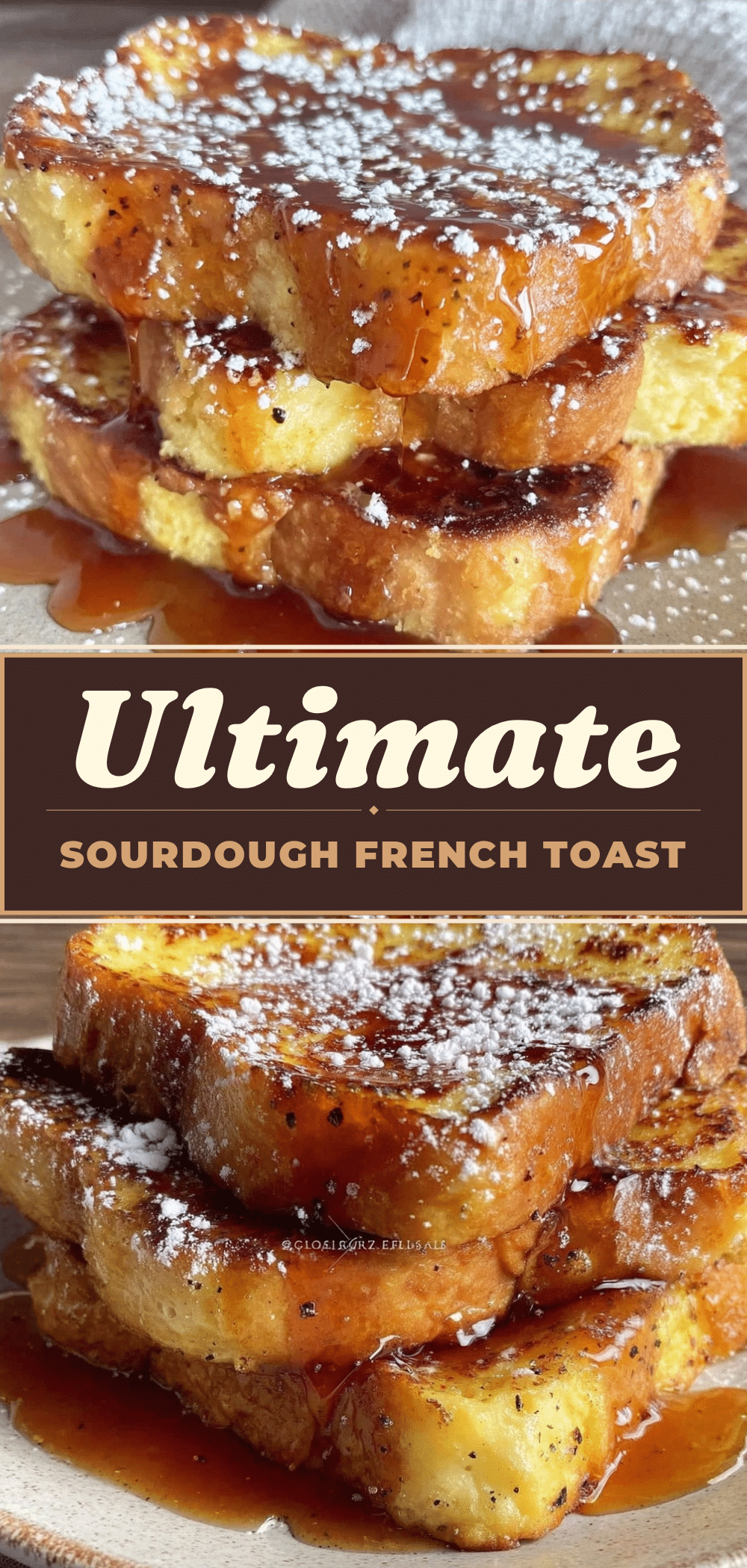

Sourdough French Toast: Best Weekend Brunch Treat
- Total Time: 35 minutes
- Yield: 4 servings 1x
Description
A rich, custardy sourdough french toast with a crisp, golden-brown crust, served with a warm homemade maple cinnamon syrup. Perfect for weekend brunches.
Ingredients
- 12–16 ounces stale sourdough loaf, sliced into 1–1.5 inch thick pieces
- 4 large eggs, room temperature
- 1 cup heavy cream
- 1/2 cup whole milk
- 2 teaspoons vanilla extract
- 1 teaspoon ground cinnamon
- 1/4 teaspoon freshly grated nutmeg
- Pinch of salt
- 4–6 tablespoons unsalted butter
- 1/2 cup real maple syrup
- 2 tablespoons brown sugar
- 1 teaspoon extra cinnamon (for syrup)
- 1 tablespoon water (for syrup)
Instructions
- Prep the bread: If the sourdough isn’t stale, slice it and let it sit on a wire rack for a few hours or toast lightly at 300°F for 10 minutes to dry it out.
- Make the custard: In a large shallow baking dish, whisk together eggs, heavy cream, milk, vanilla, cinnamon, nutmeg, and salt until uniform and slightly frothy.
- Soak the bread: Heat a large skillet or griddle over medium-low heat and add butter. Dip bread slices into the custard, soaking for 30 seconds to 1 minute per side until saturated but not falling apart. Let excess drip off.
- Cook the french toast: Place soaked bread in the hot skillet. Cook for 3-4 minutes per side over medium-low heat until deep golden brown and crisp. Add more butter as needed between batches.
- Make the syrup: While toast cooks, combine maple syrup, brown sugar, cinnamon, and water in a small saucepan over medium heat. Whisk until sugar dissolves and simmer for 2-3 minutes until slightly thickened.
- Serve immediately: Transfer cooked french toast to plates and drizzle generously with warm maple cinnamon syrup. Serve with fresh berries or whipped cream if desired.
Notes
Stale bread is non-negotiable for the best texture; fresh bread will become mushy. Cook over medium-low heat to ensure the inside is cooked without burning the outside. For a crowd, keep finished slices warm in a 200°F oven. Leftovers can be refrigerated for 2 days or frozen for later reheating in a toaster or oven.
- Prep Time: 15 minutes
- Cook Time: 20 minutes
- Category: Breakfast
- Cuisine: American
Nutrition
- Serving Size: 2 slices per serving
- Calories: 450
- Sugar: 25
- Sodium: 350
- Fat: 20
- Saturated Fat: 10
- Carbohydrates: 55
- Fiber: 3
- Protein: 12
Keywords: sourdough french toast, weekend brunch, custardy french toast, maple cinnamon syrup, stale bread recipe, easy brunch


