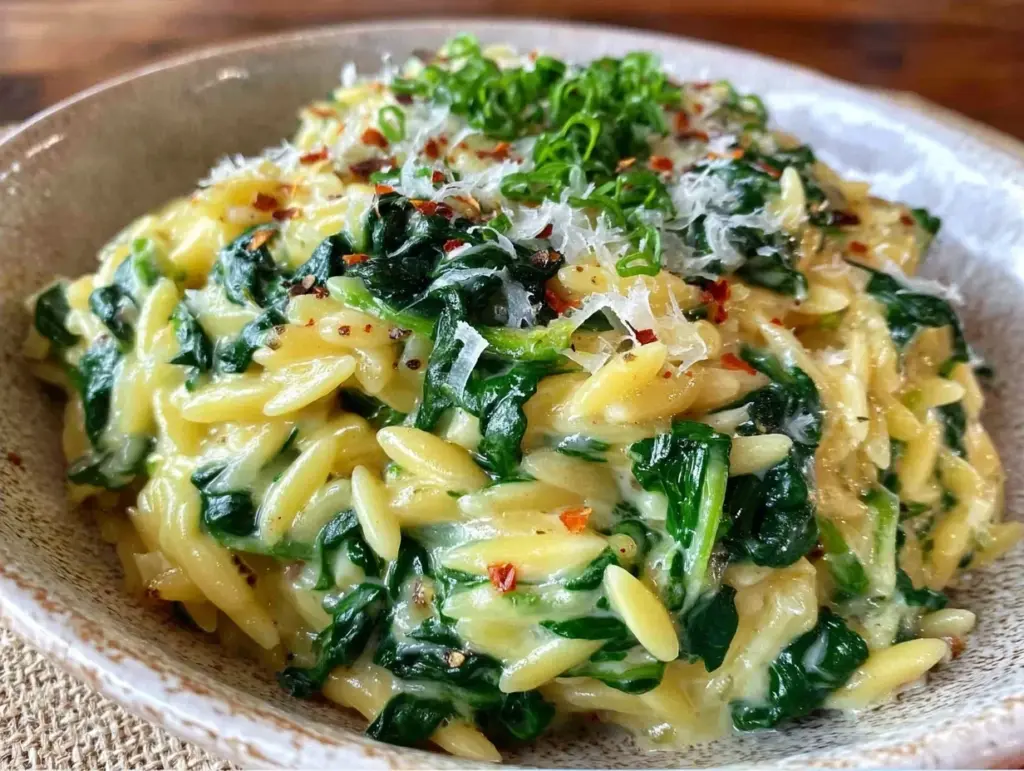
There was a dinner party last November where I served this creamy garlic parmesan orzo with wilted baby spinach, and I watched it vanish in under four minutes. I’m not exaggerating. One minute, it was sitting in a rustic ceramic bowl on the buffet table, steaming and fragrant, and the next minute, there were only empty spoons and confused guests asking what I put in it. My husband had to sneak back to the kitchen to grab the backup batch I’d made for leftovers.
That’s when I knew this recipe had crossed over from “good weeknight dinner” to “party centerpiece.” It’s the kind of dish that feels luxurious but requires almost zero effort. You don’t need to be a chef to pull it off. You just need orzo, enough garlic to make your neighbors wonder if you’re making perfume, and a willingness to stir until it gets creamy enough to coat a spoon.
I’ve made this creamy garlic parmesan orzo with wilted baby spinach probably thirty times now. Thirty. Sometimes it’s a quick Tuesday meal when I’m too tired to chop vegetables. Sometimes it’s the star side dish for a holiday gathering. But honestly? It’s my go-to for when I want to impress friends without spending the entire night hovering over the stove. It’s rich, it’s comforting, and it has that perfect bite from the pasta that holds up to the sauce without turning into mush. If you’re looking for a side dish that steals the show, this is it.
Why You’ll Make This Recipe on Repeat
I’m not saying this lightly, but this orzo dish has completely changed how I approach side dishes. It’s not just filler; it’s the main event. Here’s why it keeps ending up on my menu:
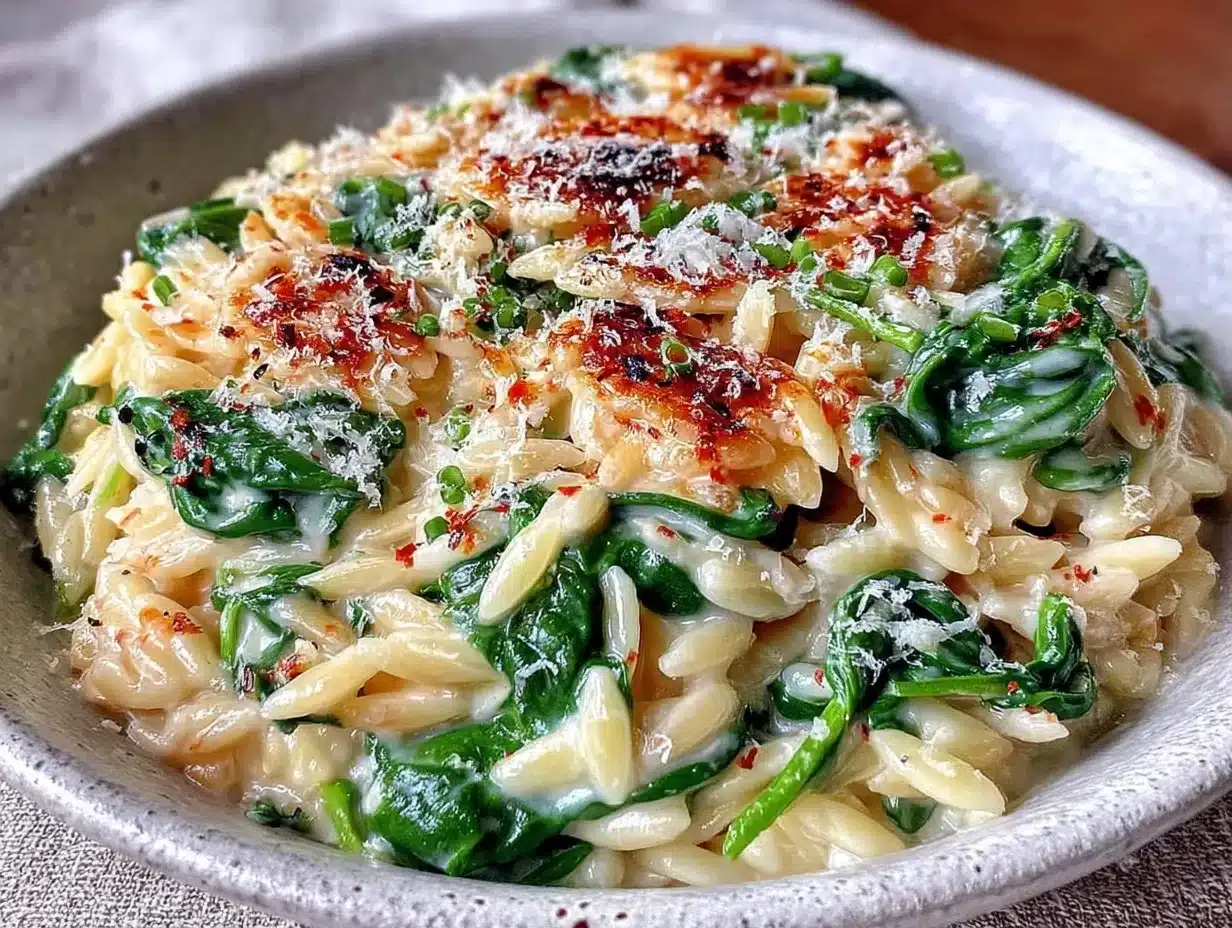
It Looks Fancy (But Isn’t) — Seriously, the contrast of the white orzo against the bright green spinach and that golden cheese crust on top? It looks like something you’d order at a bistro for $18. But you’re making it in your kitchen for less than $10. The visual appeal is instant. People see it and think, “Wow, they put in effort.” You just think, “Wow, I added spinach.”
One-Pot Wonders — I love recipes where the cleanup isn’t a nightmare. With this orzo, you boil the pasta, drain it (mostly), and mix it all in one big skillet or pot. There’s no dozen different pans to scrub. It’s efficient without feeling rushed. Perfect for when you’re hosting and want to look busy but actually be chatting with your guests.
The Texture is Everything — Orzo has this unique shape that traps sauce in every nook and cranny. Unlike penne or rotini, it doesn’t just hold the sauce on the surface; it absorbs it slightly while keeping its structure. That bite is crucial. And the spinach? It wilts down to nothing, leaving just those tender, flavorful leaves that cut through the richness of the cheese.
It’s a Crowd-Pleaser — I’ve served this to picky eaters and food snobs alike. Kids love it because it’s cheesy and pasta-like. Adults love it because it’s not heavy like mac and cheese but still feels indulgent. It’s the perfect bridge between a salad and a starch. It satisfies everyone.
Make-Ahead Friendly — Here’s the secret weapon: this dish actually tastes better if you let it sit for a bit. The flavors meld. The spinach releases a little more moisture into the sauce. I often make it an hour before guests arrive and just reheat it gently. It stays warm in the pot, and the aroma alone gets people talking.
This isn’t just a recipe; it’s a confidence booster. It’s your answer to “What should I bring?” when someone asks for a potluck, or “What should I serve with this roast chicken?” when you’re trying to curate a menu. It’s reliable, delicious, and always a hit.
Ingredients You’ll Need for Creamy Garlic Parmesan Orzo
Before we dive in, let’s talk about what you need. The beauty of this dish is that the ingredient list is short, but the quality matters. You don’t need fancy items, but you do need good basics.
Orzo Pasta (12 oz / 340g) — This is the star. I use standard dried orzo, usually the Barilla brand because it cooks evenly. You can buy it in the pasta aisle. It looks like large rice grains. If you can’t find orzo, small shells or ditalini work, but the shape really helps hold the creamy sauce. Don’t use spaghetti or linguine; they won’t have that same mouthfeel.
Unsalted Butter (3 tablespoons) — Butter adds that rich, nutty base. I use unsalted so I can control the sodium. If you’re out, olive oil works, but butter makes it feel more like a party dish. Don’t skip it.
Garlic (6-8 cloves, minced) — Yes, that many. This is a *garlic* parmesan orzo. I like it punchy. Fresh garlic only. If you use jarred, it’ll taste metallic and bitter when cooked. Mince it fine so it disperses evenly. I use a garlic press when I’m in a hurry, but a knife gives better texture.
Chicken or Vegetable Broth (1 cup / 240ml) — Low-sodium is best here. You’ll add salt later with the cheese, so starting with unsalted broth prevents it from getting too salty. Vegetable broth keeps it vegetarian. I usually keep chicken broth in the pantry for quick dinners.
Heavy Cream (½ cup / 120ml) — This is what makes it creamy. Don’t use milk; it’ll be too thin. Half-and-half is okay if you’re watching calories, but heavy cream gives that restaurant-quality gloss. I take it out of the fridge 10 minutes before cooking so it’s not ice-cold when it hits the pan.
Parmesan Cheese (1 cup / 100g, freshly grated) — Buy the block. Grate it yourself. Pre-grated cheese has cellulose in it to prevent clumping, and that stops it from melting smoothly. You want silky, not grainy. It takes two minutes to grate, and it’s worth it. I use a box grater for this.
Baby Spinach (5 oz / 150g, fresh) — This is the “wilted” part. Baby spinach is tender and doesn’t need chopping. It wilts down to almost nothing, leaving you with vibrant green flecks. Don’t use mature spinach; it’s too tough and watery. Fresh is best, but frozen (thawed and squeezed dry) works in a pinch.
Lemon (1 lemon, zested and juiced) — This is the secret ingredient. The acid cuts through the fat of the cream and cheese. It brightens the whole dish. You’ll use the zest for aroma and the juice for balance. Don’t skip the lemon, or it’ll taste heavy.
Red Pepper Flakes (½ teaspoon) — Optional, but I love a little heat. It adds depth. If you’re serving kids, skip it or use a tiny pinch.
Salt and Black Pepper — To taste. Always taste before serving. The cheese is salty, so start with a little and adjust.
Extra Virgin Olive Oil (1 tablespoon) — For finishing. A drizzle on top adds a fresh, fruity note and looks pretty.
Equipment Needed
You don’t need anything fancy. Here’s what I actually use:
Large Skillet or Dutch Oven — I prefer a 12-inch skillet with high sides. It gives you room to toss the pasta and spinach without spilling. A Dutch oven works too if you have a big one. You need enough surface area to cook the garlic and reduce the sauce.
Large Pot — For boiling the orzo. Any big pot works. I use a 6-quart pot. It needs to hold the pasta and water comfortably.
Colander — For draining the pasta. A simple mesh one works fine.
Box Grater — For the Parmesan. Microplane is nice for the lemon zest, but a box grater is faster for the cheese.
Wooden Spoon — For stirring. Silicone works too. Just avoid metal on non-stick surfaces.
Zester or Microplane — For the lemon zest. If you don’t have one, a sharp knife works, but it’s harder to get fine zest.
Measuring Cups and Spoons — Standard stuff. I keep a set on the counter.
Optional: Serving Bowl — A wide, shallow bowl looks great for serving. It lets the steam escape and makes it look inviting.
How to Make It: Step-by-Step
Alright, let’s make this! I’m walking you through exactly how I do it, including the little tricks I’ve picked up over time.
Step 1: Boil the Orzo (10-12 minutes)
Bring a large pot of salted water to a boil. The water should taste like the ocean. Add the orzo and cook according to package directions, usually 8-10 minutes, until al dente. It should be tender but still have a slight bite. Don’t overcook it; it’ll finish cooking in the sauce. IMPORTANT: Before you drain it, scoop out ½ cup of the starchy pasta water and set it aside. This liquid is gold. It helps emulsify the sauce. Drain the orzo and set it aside. Don’t rinse it! You want that starch.
Step 2: Sauté the Garlic (2 minutes)
While the pasta cooks, heat the butter in your large skillet over medium heat. Once the butter is melted and foaming, add the minced garlic and red pepper flakes. Cook for about 1-2 minutes, stirring constantly. You want the garlic to be fragrant and golden, not brown. Brown garlic tastes bitter. If it starts to smoke, lower the heat immediately. This step builds the flavor base.
Step 3: Build the Sauce (3 minutes)
Pour in the chicken broth and let it simmer for 1 minute to scrape up any bits from the bottom of the pan. Add the heavy cream and bring it to a gentle simmer. Let it cook for 2 minutes until it thickens slightly. It should coat the back of a spoon. If it looks too thin, let it simmer a minute longer. Don’t boil it violently; you don’t want the cream to break.
Step 4: Add the Cheese (2 minutes)
Remove the skillet from the heat. This is crucial. Add the grated Parmesan cheese gradually, stirring constantly. The residual heat will melt the cheese. If the sauce looks too thick, add a splash of that reserved pasta water. Keep stirring until the cheese is fully melted and the sauce is smooth and glossy. If it’s clumpy, it’s because the heat was too high. Whisk in a little more pasta water to fix it.
Step 5: Wilt the Spinach (1 minute)
Add the fresh baby spinach to the skillet. It will look like a mountain, but it’ll wilt down quickly. Stir it in until it’s just wilted, about 30-60 seconds. Don’t overcook it; you want it bright green and tender, not dark and slimy.
Step 6: Combine and Finish (2 minutes)
Add the drained orzo to the skillet. Toss everything together until the pasta is evenly coated in the creamy sauce. Add the lemon zest and half the lemon juice. Toss again. Taste it. Does it need more salt? More pepper? More lemon? Adjust as needed. If it’s too thick, add a little more pasta water. If it’s too thin, let it sit for a minute.
Step 7: Serve
Transfer to a serving bowl. Drizzle with a little extra virgin olive oil. Sprinkle with extra Parmesan and fresh black pepper. Serve immediately while it’s hot and creamy.
Expert Tips & Tricks
Here’s everything I’ve learned from making this dozens of times. These tips will save you from my mistakes.
Save That Pasta Water
This is the #1 tip. That starchy water is what makes the sauce cling to the pasta perfectly. I forgot it once and the sauce was just okay instead of amazing. Now I set out a measuring cup before I even start cooking so I don’t forget.
Don’t Skimp on Salt
Your pasta water should taste like seawater. Undersalted pasta tastes bland no matter how good your sauce is. I use about 1 tablespoon salt per pound of pasta. For orzo, which is less, use about 2 teaspoons.
Fresh Parmesan Only
Pre-grated Parmesan has anti-caking agents that make the sauce grainy. Grate your own from a block—takes 3 minutes and makes a huge difference. My husband can tell when I’ve been lazy and used pre-grated.
Low Heat for Cheese
Always remove from heat before adding cheese. High heat makes cheese grainy and separated. I learned this the hard way with a grainy, broken sauce that looked awful.
Room Temperature Cream
Cold cream can make the sauce separate. I take mine out of the fridge 15 minutes before cooking. If I forget, I microwave it for 15 seconds.
Add Lemon at the End
Adding the lemon juice too early can make the sauce curdle if it’s too hot. Add it after you’ve combined everything and taken it off the heat. The zest can go in earlier, but the juice should be last.
Common Mistakes (and how to avoid them):
Mistake: Sauce is too watery
Fix: Let it simmer longer, or add more cheese. Also, make sure you’re not adding too much pasta water at the end.
Mistake: Pasta is mushy
Fix: Cook 1-2 minutes less than the package says. It’ll finish cooking in the sauce.
Mistake: Everything is too salty
Fix: Use unsalted broth and unsalted butter so you can control the salt. You can always add more, can’t take it away.
Pro Tricks I’ve Learned:
For Restaurant-Quality Finish
Add a tablespoon of cold butter at the very end and swirl it in. Makes the sauce glossy and rich.
For Extra Flavor
Toast the garlic and red pepper flakes in the oil for 30 seconds before adding onions. Releases more flavor.
For Better Texture
Toss the pasta with a tiny bit of olive oil after draining (before adding to sauce). Prevents sticking.
Variations & Substitutions
Once you’ve nailed the basic version, here’s how you can mix it up. I’ve tried all of these.
Shrimp Orzo
Add 1 pound of peeled and deveined shrimp. Sauté them in the butter before the garlic, then remove them. Add them back in at the end with the pasta. It turns it into a main course. I love this with the creamy pumpkin alfredo pasta vibe but with seafood.
Veggie-Loaded
Toss in 1 cup halved cherry tomatoes and ½ cup diced zucchini with the garlic. Cook until soft. Adds color and nutrition. This is how I get my kids to eat vegetables.
Mushroom Lover’s
Sauté 8oz sliced mushrooms with the onions. Cook until golden brown. Adds earthiness and makes it feel fancier.
Herb-Forward
Add ½ cup fresh chopped basil or parsley at the end. Fresh herbs make a huge difference in brightness.
Gluten-Free
Use gluten-free orzo. Everything else is naturally gluten-free. I’ve used Barilla gluten-free and it works great.
Dairy-Free
Replace heavy cream with full-fat coconut cream and Parmesan with nutritional yeast (use ½ cup). It’s different but still tasty. My lactose-intolerant friend requests this version.
Serving & Storage
How to Serve:
I usually serve this straight from the skillet at the dinner table—it looks rustic and stays warm. But here are other ways I’ve enjoyed it:
Side Dishes:
– Roasted chicken thighs (the sauce goes great with them)
– Grilled salmon (the lemon cuts the fishiness)
– Simple green salad with balsamic vinaigrette (to balance the richness)
Toppings Bar:
When I have guests, I put out: extra Parmesan, red pepper flakes, fresh basil, lemon wedges. Everyone customizes their bowl.
Storage Instructions:
Refrigerator:
Store in an airtight container for up to 4 days. The sauce will thicken in the fridge—totally normal.
Reheating:
Best method: Add to a skillet with a splash of milk or cream over low heat. Stir until heated through and creamy again. Microwave method: Heat in 30-second intervals, stirring between. Add a splash of milk if it’s too thick.
Freezing:
Honestly, this doesn’t freeze well because of the dairy. The sauce separates when thawed. Make it fresh or store in the fridge for up to 4 days.
Pro tip: If leftovers are drying out, stir in a tablespoon of butter and a splash of milk when reheating. Brings back that creamy texture.
Nutrition Information
I’m not a nutritionist, but here’s the breakdown if you’re tracking.
Per Serving (based on 6 servings):
– Calories: 380
– Protein: 14g
– Carbs: 45g
– Fiber: 2g
– Sugar: 2g
– Fat: 16g
– Saturated Fat: 9g
– Cholesterol: 40mg
– Sodium: 350mg
– Calcium: 220mg
What’s Good:
– Decent protein from pasta and Parmesan
– Calcium from the cheese
– Can add vegetables to boost nutrition
What to Know:
– Higher in calories from cream and cheese
– Contains dairy and gluten
– Moderate sodium (use low-sodium broth to reduce)
My Take:
Look, this is comfort food with cream and cheese. It’s not a diet recipe. But it’s way better than takeout, costs less, and I know exactly what’s in it. When I want to make it lighter, I use the half-and-half version and load up on vegetables. But usually? I just eat a reasonable portion and enjoy it.
Final Thoughts
So that’s my go-to creamy garlic parmesan orzo with wilted baby spinach! I’ve probably talked your ear off at this point, but when you make a recipe this often, you have a lot to say about it.
This has saved weeknight dinners more times than I can count. It’s my answer to “what’s for dinner” when I’m tired, don’t want takeout, and still want something that tastes really good. My kids are happy, my husband’s happy, and I’m happy because I’m not stressed about cooking.
Make it yours! Try different add-ins, swap in your favorite vegetables, adjust the garlic (though more is always better in my opinion). The best recipes are the ones you adapt to your family’s tastes.
If you make this, drop a comment and let me know what you think! I love hearing how recipes turn out in your kitchen. And if something doesn’t work, tell me that too—I’m here to help troubleshoot.
Happy cooking! And I hope your kitchen smells half as good as mine does right now.
Frequently Asked Questions
Can I use milk instead of heavy cream?
You can, but the sauce will be much thinner and less rich. If you want to try it, use whole milk (not skim) and add 2 tablespoons of flour to thicken it. Whisk the flour into the milk before adding to the pan. I’ve done this when I ran out of cream—it works okay, just not as good as the real thing. Half-and-half is a better middle ground.
My sauce came out watery—what happened?
Usually means you didn’t let it simmer long enough to thicken, or you added too much pasta water at the end. Let the cream mixture simmer for a full 3-4 minutes before adding cheese. If it’s already watery, turn up the heat and let it reduce for another few minutes. The cheese will also thicken it up.
Can I make this ahead for a dinner party?
Sort of. Make the sauce up to 2 days ahead and store in the fridge. Cook the pasta fresh right before serving (takes 10 minutes). Reheat the sauce gently and toss with hot pasta. It won’t be quite as good as fresh, but it’s close and saves you stress during the party. I do this all the time.
Why did my sauce get grainy/lumpy?
The heat was too high when you added the cheese, which made it seize up. Parmesan needs gentle heat. Always remove the pan from the burner before adding cheese, then stir it in off heat. If it’s already grainy, try whisking in a splash of warm cream—sometimes you can save it.
Can I use jarred garlic?
You can, but fresh tastes so much better in this recipe. Jarred garlic has a weird metallic taste that really shows up in cream sauces. If you must use it, use half the amount because it’s stronger. But honestly, mincing 6 cloves takes like 2 minutes. Buy pre-peeled garlic cloves if you want to save time.
How do I reheat leftovers without it getting dry?
Add a splash of milk or cream to a skillet, add your leftover pasta, and heat gently over low heat, stirring frequently. The extra liquid brings back the creamy texture. Microwave sort of works but tends to dry it out. If you do microwave, definitely add a splash of milk first and heat in short bursts, stirring between.
Can I double this recipe?
Absolutely! Double everything and use your biggest pot. The cooking times stay the same. I do this when I’m meal-prepping or feeding a crowd. Just make sure your skillet is big enough for the sauce—you might need to use two pans or a very large skillet.
Pin This Recipe!
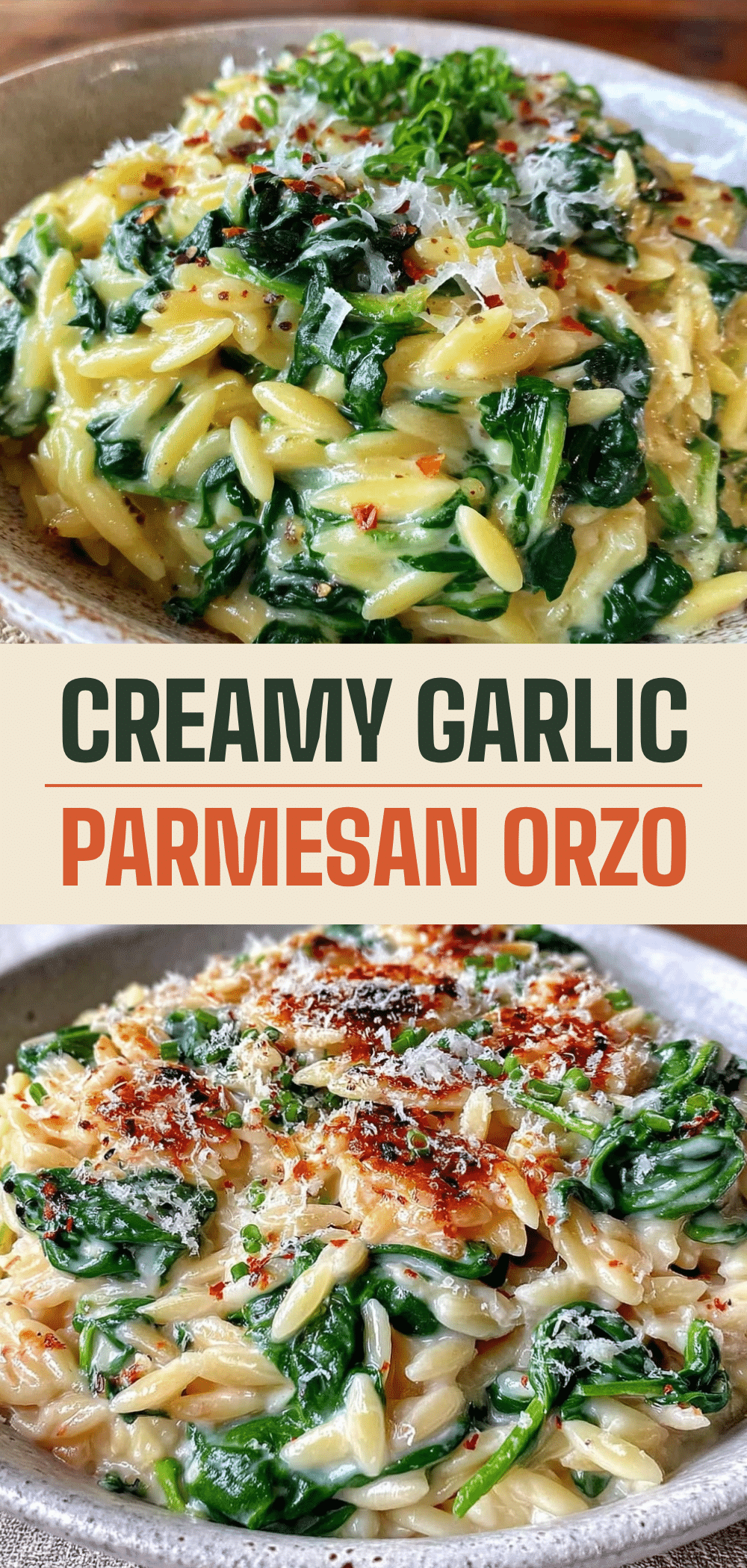
Creamy Garlic Parmesan Orzo: Best Party Side
- Total Time: 30 minutes
- Yield: 6 servings 1x
Description
A luxurious yet effortless one-pot side dish featuring creamy garlic parmesan sauce, tender orzo pasta, and wilted baby spinach. Perfect for dinner parties or weeknight dinners.
Ingredients
- 12 oz (340g) Orzo Pasta
- 3 tablespoons Unsalted Butter
- 6–8 cloves Garlic, minced
- 1 cup (240ml) Chicken or Vegetable Broth (low-sodium)
- ½ cup (120ml) Heavy Cream
- 1 cup (100g) Parmesan Cheese, freshly grated
- 5 oz (150g) Baby Spinach, fresh
- 1 Lemon, zested and juiced
- ½ teaspoon Red Pepper Flakes (optional)
- Salt and Black Pepper, to taste
- 1 tablespoon Extra Virgin Olive Oil (for finishing)
- Salt for pasta water
Instructions
- Bring a large pot of salted water to a boil. Add orzo and cook according to package directions until al dente (usually 8-10 minutes).
- Before draining, scoop out ½ cup of the starchy pasta water and set aside. Drain the orzo and do not rinse.
- While pasta cooks, heat butter in a large skillet over medium heat. Once melted and foaming, add minced garlic and red pepper flakes. Cook for 1-2 minutes until fragrant and golden, but not brown.
- Pour in chicken broth and simmer for 1 minute to deglaze the pan. Add heavy cream and bring to a gentle simmer. Cook for 2 minutes until slightly thickened.
- Remove the skillet from the heat. Gradually add grated Parmesan cheese, stirring constantly until melted and smooth. If too thick, add a splash of reserved pasta water.
- Add fresh baby spinach to the skillet and stir until just wilted (30-60 seconds).
- Add the drained orzo to the skillet. Toss to coat evenly with the sauce. Add lemon zest and half the lemon juice. Taste and adjust seasoning with salt, pepper, and remaining lemon juice as needed.
- Transfer to a serving bowl. Drizzle with extra virgin olive oil and sprinkle with extra Parmesan and black pepper. Serve immediately.
Notes
[‘Save the starchy pasta water; it helps emulsify the sauce.’, ‘Use fresh Parmesan cheese, not pre-grated, to avoid graininess.’, ‘Remove pan from heat before adding cheese to prevent separation.’, ‘Add lemon juice at the end to prevent curdling.’, ‘This dish does not freeze well due to the dairy sauce.’]
- Prep Time: 10 minutes
- Cook Time: 20 minutes
- Category: Side Dish
- Cuisine: Italian
Nutrition
- Serving Size: 1 serving
- Calories: 380
- Sugar: 2
- Sodium: 350
- Fat: 16
- Saturated Fat: 9
- Carbohydrates: 45
- Fiber: 2
- Protein: 14
Keywords: creamy garlic parmesan orzo, party side dish, one pot pasta, orzo recipe, spinach pasta, easy dinner, gluten-free option