I have a confession to make. For years, I thought I was a bad cook. Not because I couldn’t feed my family, but because I couldn’t figure out why my scrambled eggs always turned out rubbery, dry, and sad by the time they hit the plate. I’d whisk them vigorously, pour them into the pan, and watch them tighten up into little curds that tasted more like rubber than breakfast. I was frustrated, and honestly? A little embarrassed when company came over for brunch.
Then, about three years ago, I was scrolling through a recipe blog at 6 AM, half-asleep, looking for a quick protein fix before a work call. I saw a comment section debating whether cottage cheese belongs in scrambled eggs. My first instinct was to scroll past. Cottage cheese? In eggs? That sounded like a texture nightmare. But curiosity got the better of me, and I decided to try it with just half a cup. I added some fresh chives because I had them, and I turned the heat down lower than I ever had before.
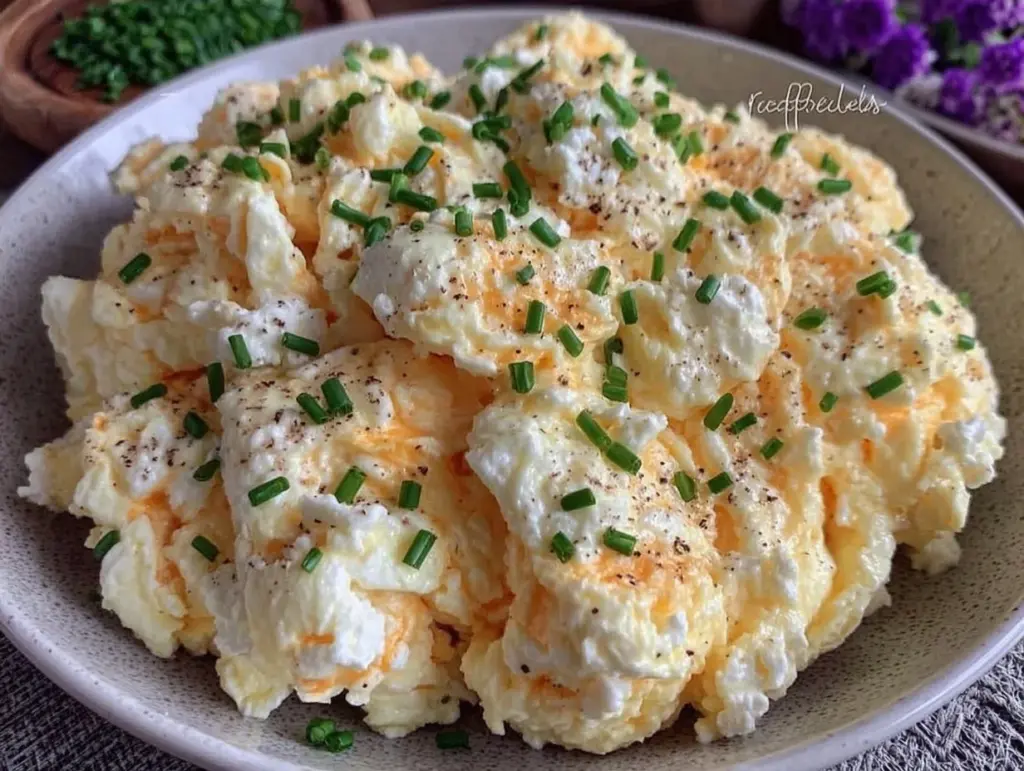
What came out of that pan wasn’t just eggs. It was clouds. It was rich, velvety, and so fluffy that it looked like something you’d see on a luxury resort menu, not a Tuesday morning kitchen counter. I ate them in silence, staring at the bowl, wondering how something so simple could feel so indulgent. That was the moment I stopped making “eggs” and started making Fluffy Cottage Cheese Scrambled Eggs.
Since then, I’ve made this dish at least fifty times. I’ve served it to skeptical husbands, picky toddlers, and foodie friends who swear they’ve “never had eggs this good.” It’s become my go-to for busy weeknights when I need something fast but still want to feel like I treated myself. It’s not just a breakfast hack; it’s a texture revolution. And once you try it, I promise you won’t go back to dry, crumbly eggs ever again.
Why You’ll Love This Recipe
This isn’t just another quick breakfast idea. This is the kind of dish that makes people ask, “Wait, what’s in there? It tastes like custard!” Here’s why this fluffy cottage cheese scrambled eggs recipe has taken over my kitchen routine:
- Stupidly Simple — Seriously, if you can crack an egg, you can make this. There’s no fancy technique, no double boiler, no tempering. Just whisk, pour, and fold. I make this while my coffee brews, and it’s done before I take my first sip.
- Lightning Fast — From fridge to fork in under 7 minutes. This is the ultimate weeknight savior. When I’m rushing out the door or just collapsing on the couch after work, this gives me a hot, satisfying meal in a fraction of the time.
- Protein-Packed Powerhouse — Cottage cheese adds a massive protein boost without changing the flavor. One bowl gives me about 25-30 grams of protein. It keeps me full until lunch, which is a miracle for my metabolism.
- Restaurant-Quality Texture — The cottage cheese breaks down into the eggs, creating a creamy, rich consistency that feels luxurious. It’s indulgent without being heavy or greasy.
- Versatile Comfort — I serve these with crusty toast on busy mornings, but on weekends, I top them with smoked salmon and capers for a brunch spread that feels fancy. It adapts to whatever mood I’m in.
This is my answer to “what’s for breakfast?” when I want something that feels special but requires zero stress. It’s rich, it’s satisfying, and it’s ridiculously easy to clean up.
Ingredients You’ll Need
Here’s the best part: you probably have everything you need right now. This recipe relies on high-quality basics because there’s nowhere to hide. If your eggs are good, your eggs will taste good.
For the Base
Eggs (4 large) — I use large, pasture-raised eggs whenever I can find them. The yolks are deeper orange and the flavor is richer. But honestly? Any large eggs work fine. The cottage cheese does the heavy lifting for texture.
Cottage Cheese (½ cup / 120g) — This is the secret weapon. I use full-fat small curd cottage cheese. The small curds blend into the eggs more seamlessly than the large curd variety, which can sometimes leave chunky bits if you aren’t careful. Full-fat ensures that creamy mouthfeel.
Butter (1 tablespoon) — Unsalted is best so you can control the saltiness. I like using good quality European butter if I have it, but standard salted works if you adjust the seasoning. It adds that essential richness.
For the Flavor
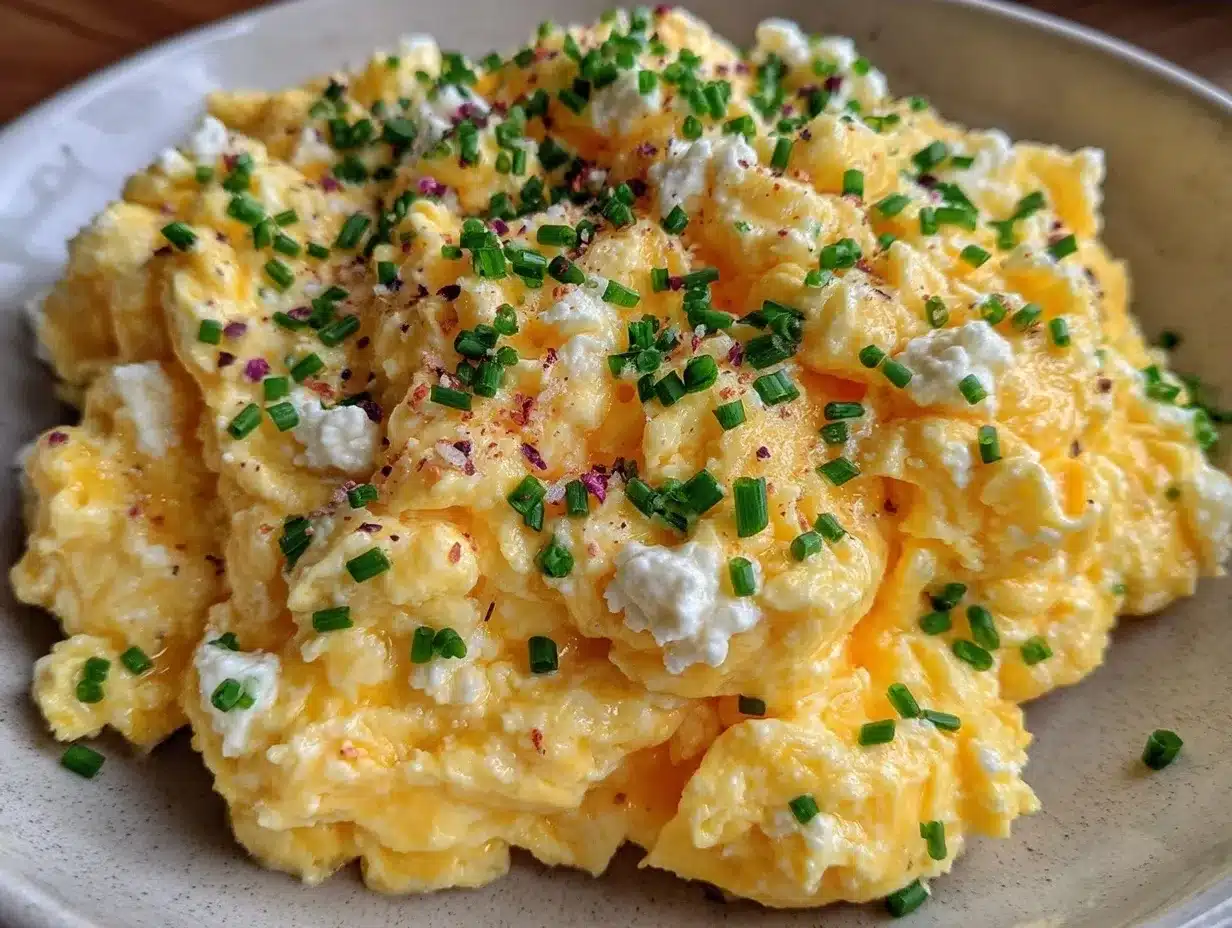
Fresh Chives (2 tablespoons, chopped) — Fresh chives are non-negotiable for me. They add a bright, oniony pop that cuts through the richness of the eggs and cheese. Dried chives just don’t cut it here. If you can’t find fresh, green onions (scallions) are a decent substitute, but the flavor is different.
Salt (½ teaspoon, or to taste) — I usually salt my eggs right before cooking, not before. Salting too early can break down the proteins and make them watery. Kosher salt is my go-to because it’s easy to pinch.
Black Pepper (Freshly cracked) — A little bit of pepper adds warmth. I crack it fresh over the finished dish for the best aroma.
Heavy Cream or Milk (1 tablespoon, optional) — Some recipes call for this, and I usually skip it because the cottage cheese provides enough moisture. But if you want extra richness, a splash of heavy cream or whole milk works well. I keep it simple and omit it 90% of the time.
Optional Add-ins
Feta Cheese (2 tablespoons, crumbled) — For a tangy kick, I sometimes fold in a little feta. It pairs beautifully with the chives.
Spinach (1 cup, fresh) — If I’m trying to sneak in veggies, I’ll wilt a handful of spinach into the eggs right at the end. It adds color and nutrients without overpowering the egg flavor.
Hot Sauce (A few dashes) — For those mornings when I want a little heat. I love a vinegar-based hot sauce like Frank’s or Tabasco stirred in at the very end.
Equipment Needed
You don’t need fancy gadgets for this. Here’s what I actually use in my kitchen:
Non-stick skillet — A 10-inch non-stick skillet is perfect. It ensures the eggs don’t stick and makes cleanup a breeze. I prefer a ceramic-coated pan because it’s gentle and heats evenly. If you only have stainless steel, be prepared to use a bit more butter and keep the heat low.
Small bowl — For whisking the eggs and cottage cheese together. I like a shallow bowl so I can get a good whisking motion.
Whisk — A simple balloon whisk works great. I don’t use a fork because I want to fully incorporate the cottage cheese into the eggs, creating that uniform texture.
Spatula — A silicone spatula is essential for gently folding the eggs. It allows me to push the cooked edges into the center without breaking the delicate curds.
Chef’s knife and cutting board — For chopping the chives. Keep it sharp; it makes the prep faster and cleaner.
How to Make It: Step-by-Step
Alright, let’s make these fluffy eggs! I’m walking you through exactly how I do it, including the little tricks that keep them tender and creamy.
Step 1: Prep Your Ingredients (2 minutes)
Before you turn on the stove, get everything ready. Chop your chives and set them aside. Crack your eggs into a bowl. I know it seems like a small step, but having everything within reach means you won’t panic when the eggs start cooking. Measure out your cottage cheese and have your butter ready at the stove.
Step 2: Whisk the Eggs and Cottage Cheese (1 minute)
Add the cottage cheese to the eggs. Now, here’s the key: whisk them together vigorously. You want to break down the cottage cheese curds as much as possible. You don’t need to turn it into a smoothie, but you want it to look mostly uniform with just tiny bits of cottage cheese visible. This ensures the cheese blends into the eggs rather than sitting as separate lumps. Add a pinch of salt and pepper if you like, though I usually save the seasoning for the pan.
Step 3: Heat the Pan (1 minute)
Place your non-stick skillet over medium-low heat. Add the butter and let it melt. You want the butter to foam but not brown. If it starts sizzling aggressively, your heat is too high. We want gentle, low heat for fluffy eggs. Swirl the butter to coat the entire bottom of the pan.
Step 4: Cook the Eggs (4-5 minutes)
Pour the egg mixture into the pan. Let it sit for about 15 seconds until the edges just start to set. Then, using your spatula, gently push the edges toward the center, tilting the pan so the uncooked egg flows into the empty spaces. Don’t stir constantly like you’re making fried rice. You want to create large, soft curds. Repeat this folding motion every 30 seconds or so.
The eggs will look wet and custard-like for a while. This is good! They will continue to cook from residual heat after you remove them from the pan. Stop cooking when they look about 90% done—still slightly glossy and soft.
Step 5: Fold in the Chives and Serve (1 minute)
Remove the pan from the heat immediately. The residual heat will finish cooking the eggs. Fold in the fresh chives. They will wilt slightly from the heat, releasing their aroma into the eggs. Taste one to check for salt, adding more if needed. Serve immediately while they’re hot and fluffy.
Total Time: About 7 minutes (2 minutes prep, 5 minutes cooking)
Built-in Troubleshooting
- Eggs are watery: You didn’t cook them long enough. Go back to low heat and fold more gently.
- Eggs are dry: Heat was too high, or you left them on the stove too long. Always remove them when they look slightly underdone.
- Cottage cheese curds are too chunky: Whisk harder in Step 2. Or, use a food processor to blend the cottage cheese and eggs together for an ultra-smooth texture.
Expert Tips & Tricks
Here’s everything I’ve learned from making this dozens of times. These tips will save you from my early mistakes.
Low and Slow is the Rule
High heat is the enemy of fluffy eggs. It forces moisture out of the proteins, making them rubbery. I keep my stove on medium-low, even though it’s tempting to crank it up. Patience pays off in texture.
Don’t Skip the Whisk
Some people think adding cottage cheese means you want chunks. But for this specific “fluffy” version, you want the cheese to emulsify into the eggs. Whisking it in thoroughly creates that creamy, almost custard-like consistency that makes this recipe special.
Remove Before They’re Done
This is the most important tip. Eggs continue to cook after they’re off the heat. If you wait until they look “perfect” in the pan, they will be overcooked on the plate. Aim for “just set but still glossy.”
Fresh Chives Are Key
I’ve tried dried chives, and they just don’t work. They taste dusty and flat. Fresh chives add a bright, grassy note that lifts the heavy richness of the eggs. If you can’t find fresh, green onions are the next best option.
Room Temperature Eggs
If you have time, let your eggs sit out for 15 minutes before cooking. Cold eggs hitting a warm pan can cook unevenly. It’s not a dealbreaker, but it helps with consistency.
Variations & Substitutions
Once you’ve nailed the basic version, here’s how you can mix it up. I’ve tried all of these.
Smoked Salmon & Cream Cheese
Top the finished eggs with flaked smoked salmon and small dollops of cream cheese. Add a squeeze of lemon. This is my favorite brunch variation—it feels like a bagel shop experience at home.
Mediterranean Style
Add chopped sun-dried tomatoes and kalamata olives to the eggs. Use feta instead of cottage cheese if you want a tangier flavor. Serve with a side of hummus.
Spicy Southwest
Fold in diced jalapeños and black beans. Top with shredded cheddar cheese and a dollop of sour cream. Great with tortilla chips on the side.
Veggie Loaded
Sauté diced mushrooms and bell peppers in the butter before adding the eggs. This adds volume and nutrients without changing the core texture.
Dairy-Free Option
Use a vegan cottage cheese alternative and cook with olive oil instead of butter. The texture might be slightly different, but it still works for a plant-based breakfast.
Serving & Storage
How to Serve
I usually serve these straight from the skillet at the breakfast table—it looks rustic and stays warm. But here are other ways I’ve enjoyed them:
- With Toast: Thick-cut sourdough or brioche, toasted and buttered. The eggs are so creamy, they’re perfect for dipping.
- On Avocado: Spread mashed avocado on toast and spoon the eggs on top. Drizzle with olive oil and red pepper flakes.
- With Fruit: A side of fresh berries or melon balances the savory eggs nicely.
Storage Instructions
Refrigerator: Store leftovers in an airtight container for up to 2 days. The eggs will firm up in the fridge, so they’re best reheated gently.
Reheating: Best method: Microwave in 15-second intervals, stirring between each, with a splash of water or milk to restore moisture. Or, reheat in a non-stick pan over low heat with a little butter. Avoid high heat, or they’ll become rubbery.
Freezing: I don’t recommend freezing scrambled eggs with cottage cheese. The texture changes significantly upon thawing, becoming watery and grainy. It’s best enjoyed fresh.
Nutrition Information
I’m not a nutritionist, but here’s the breakdown if you’re tracking. This is a high-protein, relatively low-carb meal.
Per Serving (based on 1 serving):
- Calories: 320
- Protein: 28g
- Carbs: 2g
- Fiber: 0g
- Sugar: 2g
- Fat: 22g
- Saturated Fat: 10g
- Cholesterol: 420mg
- Sodium: 380mg
What’s Good:
- High protein content from eggs and cottage cheese.
- Low carb, making it keto-friendly.
- Rich in vitamins A, B12, and D.
What to Know:
- Higher in cholesterol due to eggs, but dietary cholesterol impact varies by individual.
- Contains dairy. Use dairy-free alternatives if needed.
Final Thoughts
So that’s my secret to the fluffiest scrambled eggs of your life! I’ve probably talked your ear off at this point, but when you find a recipe that changes your morning routine, you have a lot to say about it.
This fluffy cottage cheese scrambled eggs recipe has saved me on busy mornings, impressed guests at brunch, and given me a quick protein boost on tired evenings. It’s simple, it’s delicious, and it’s incredibly satisfying. My family asks for it regularly, and I’m happy to oblige.
Make it yours! Try different herbs, add some cheese, or top it with your favorite ingredients. The best recipes are the ones you adapt to your tastes. If you make this, drop a comment and let me know what you think! I love hearing how recipes turn out in your kitchen.
Happy cooking! And I hope your kitchen smells half as good as mine does right now.
Frequently Asked Questions
Q: Does the cottage cheese taste strong?
A: Not at all! When whisked into the eggs and cooked gently, the cottage cheese loses its distinct curdy texture and mild tang. It just adds creaminess and protein. You won’t taste “cottage cheese” so much as you’ll taste “richer eggs.”
Q: Can I use large curd cottage cheese?
A: Yes, but you’ll need to whisk it more vigorously to break down the curds. If you prefer chunky eggs, you can skip the extra whisking, but the texture won’t be as uniformly fluffy. Small curd blends in more seamlessly.
Q: Can I add other vegetables?
A: Absolutely. Sautéed spinach, mushrooms, bell peppers, or onions work great. Just cook the vegetables in the butter before adding the egg mixture, so they’re tender and the water content is cooked off.
Q: Why are my eggs still watery?
A: Cottage cheese has high water content. If your eggs look watery, it might be because you didn’t cook them long enough, or the cottage cheese released water. Try draining the cottage cheese slightly before adding it, or cook the eggs a bit longer on low heat until the moisture evaporates.
Q: Can I make this ahead for meal prep?
A: You can prep the eggs and cottage cheese mixture in advance and store it in the fridge. Just whisk them together in a container and cook them fresh in the morning. Cooking them ahead and reheating often results in a drier texture.
Q: Is this recipe gluten-free?
A: Yes, naturally! Eggs, cottage cheese, butter, and chives are all gluten-free. Just ensure any add-ins (like hot sauce or cheese) are also gluten-free.
Q: Can I substitute milk for the cottage cheese?
A: You can, but you’ll lose the protein boost and the unique creamy texture. Milk will make the eggs lighter and fluffier in a different way, but it won’t have that rich, custard-like quality that cottage cheese provides. For the best results, stick with cottage cheese.
Pin This Recipe!
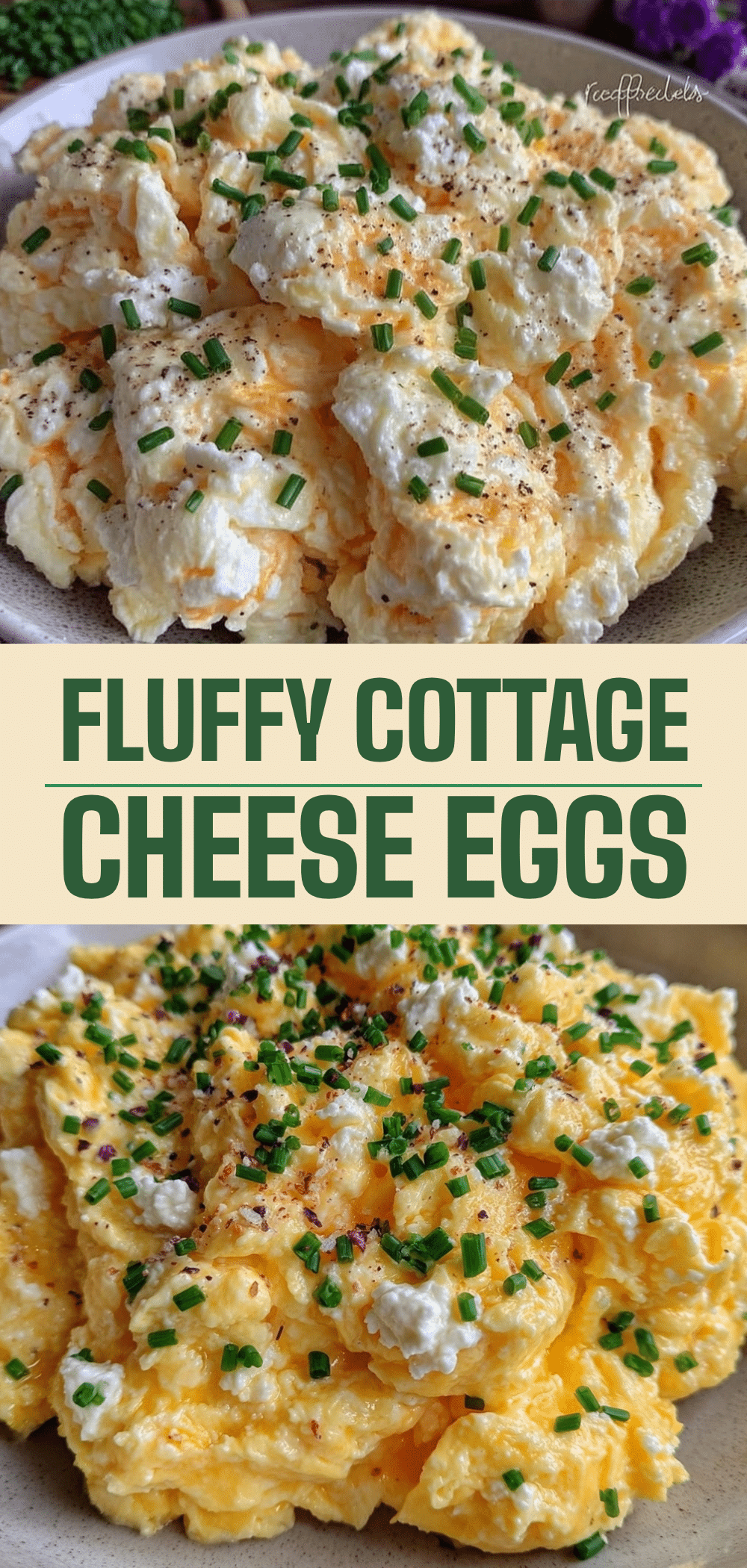

Fluffy Cottage Cheese Scrambled Eggs: Easy Rich Weeknight Feast
- Total Time: 7 minutes
- Yield: 1 serving 1x
Description
A quick, protein-packed breakfast recipe that uses cottage cheese to create incredibly rich, velvety, and fluffy scrambled eggs in under 7 minutes.
Ingredients
- 4 large eggs
- 1/2 cup (120g) full-fat small curd cottage cheese
- 1 tablespoon unsalted butter
- 2 tablespoons fresh chives, chopped
- 1/2 teaspoon salt (or to taste)
- Freshly cracked black pepper
- 1 tablespoon heavy cream or whole milk (optional)
- 2 tablespoons crumbled feta cheese (optional)
- 1 cup fresh spinach (optional)
- Hot sauce (optional)
Instructions
- Chop the fresh chives and set them aside. Crack the eggs into a small bowl.
- Add the cottage cheese to the eggs and whisk vigorously until the mixture is mostly uniform with tiny bits of cheese visible. Add a pinch of salt and pepper if desired.
- Place a 10-inch non-stick skillet over medium-low heat. Add the butter and let it melt until it foams but does not brown. Swirl to coat the pan.
- Pour the egg mixture into the pan and let it sit for about 15 seconds until the edges start to set.
- Using a silicone spatula, gently push the cooked edges toward the center, tilting the pan so uncooked egg flows into empty spaces. Repeat this folding motion every 30 seconds to create large, soft curds.
- Cook until the eggs look about 90% done, remaining slightly glossy and soft. Remove the pan from the heat immediately.
- Fold in the fresh chives. Taste and add more salt if needed. Serve immediately.
Notes
Low and slow heat is crucial to prevent rubbery eggs. Remove eggs from heat when they look slightly underdone as they will continue to cook from residual heat. For ultra-smooth texture, blend cottage cheese and eggs in a food processor. Do not freeze leftovers as texture becomes watery and grainy.
- Prep Time: 2 minutes
- Cook Time: 5 minutes
- Category: Breakfast
- Cuisine: American
Nutrition
- Serving Size: 1 bowl
- Calories: 320
- Sugar: 2
- Sodium: 380
- Fat: 22
- Saturated Fat: 10
- Carbohydrates: 2
- Protein: 28
Keywords: cottage cheese eggs, fluffy scrambled eggs, high protein breakfast, quick breakfast, keto breakfast, weeknight dinner, rich eggs