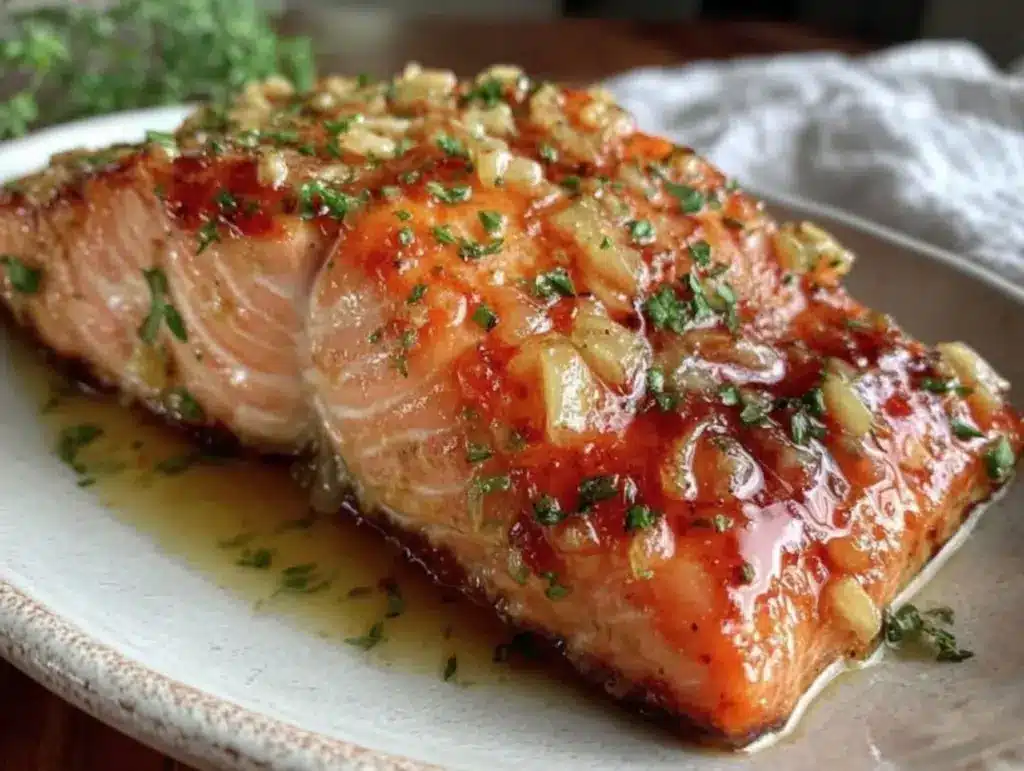
It was supposed to be a low-key Tuesday. I had just gotten home from work, the kids were arguing over who got the bigger slice of pizza, and I was staring into the refrigerator like it held the secrets to the universe. I found a gorgeous, thick-cut salmon fillet and a stick of butter that was slowly turning into a puddle on the counter. I didn’t have time to marinate. I didn’t have time to prepare a fancy side dish. I just had fish, butter, and garlic.
I threw the garlic into the melting butter, tossed it over the fish, and popped it in the oven. Ten minutes later, the smell of caramelized garlic and rich butter filled the house. My husband walked in, sniffed the air, and immediately stopped what he was doing. “Is that… is that the good salmon?” he asked, already pulling out a plate.
That night, we ate it straight from the baking sheet, no sides, no fuss. The skin was crisp, the flesh was flaky, and that crust? It was golden, nutty, and absolutely addictive. It wasn’t just dinner; it felt like something I’d made at a bistro. And the best part? It took less time than it takes to order takeout. Since that random Tuesday, this Baked Salmon with Crispy Garlic Butter Crust has become my secret weapon for everything from lazy weeknights to last-minute dinner parties. It’s the kind of dish that makes people ask for the recipe before they’ve even finished their second bite.
I’ve tested this method about a dozen times now, tweaking the garlic amount (never skimp) and the oven temperature (high heat is non-negotiable for that crust). Every single time, it comes out perfect. It’s tender, it’s flavorful, and it looks like you spent hours in the kitchen—even if you didn’t.
Why You’ll Love This Recipe
There are about ten reasons I keep coming back to this Baked Salmon with Crispy Garlic Butter Crust, but here are the big ones that keep it in my regular rotation.
Restaurant-Quality Finish at Home — Seriously, the contrast between the flaky, moist fish and that crunchy, savory crust is next level. I’ve served this to friends who claim they “don’t like salmon,” and they’ve gone back for seconds. The garlic butter crust changes everything. It adds texture and depth that plain baked salmon just doesn’t have.
Stupid Simple Prep — If you can melt butter and mince garlic, you can make this. I’ve made this while holding a toddler, and I’ve made it at 10 PM when I was too tired to stand. It’s mostly hands-off. You throw it on a sheet pan, put it in the oven, and go do something else. No complex techniques, no fancy equipment.
Ready in 20 Minutes — From preheating the oven to cleaning up, you’re looking at about 20 minutes. That’s it. I make this on nights when I’m exhausted and don’t want to order Uber Eats. It’s healthier, cheaper, and honestly tastes better than most takeout options.
Impressive but Low-Stress — This is my go-to when I have guests over but don’t want to be stuck in the kitchen all night. It looks elegant on the plate. The golden crust is visually stunning. But because it’s baked, I can sit at the table with my guests and chat while it cooks. No standing over a stove, no splattering oil.
Pantry-Friendly Ingredients — You probably already have everything you need. Salmon, butter, garlic, lemon, and maybe some herbs. If you don’t have fresh herbs, dried works fine. This isn’t a recipe that requires a special trip to the specialty market.
This is my answer to “what’s for dinner” when I want to treat myself or my family to something special without the stress. It’s reliable, delicious, and always a crowd-pleaser.
Ingredients You’ll Need
Here’s the best part: you probably have most of this already. This recipe relies on high-quality basics because there aren’t many ingredients to hide behind. Each one plays a specific role in creating that signature crust and flavor profile.
For the Salmon
Salmon Fillets (4 fillets, about 6 ounces each) — I prefer wild-caught Atlantic or Sockeye for their rich flavor and firm texture. Look for fillets that are uniform in thickness so they cook evenly. If your fillets are super thick, you might need an extra minute or two in the oven. Avoid thin, flimsy pieces—they dry out fast.
High-Quality Butter (½ cup / 115g) — This is the star of the crust. Use unsalted butter so you can control the saltiness. I use European-style butter when I have it because it has a higher fat content, which makes the crust crispier and more flavorful. Don’t skimp on the butter here; it’s essential for that rich, golden finish.
Garlic (5-6 cloves, finely minced) — Yes, five or six cloves. Don’t be shy. The garlic gets browned in the butter, turning nutty and sweet. If you use too little, the flavor gets lost. If you use too much, it can get bitter (though I rarely hit that limit). Fresh garlic only—no jarred stuff. It makes a huge difference in the final taste.
Dijon Mustard (1 tablespoon) — This might sound weird, but it adds a tangy depth that cuts through the richness of the butter. It also helps the crust stick to the fish. You won’t taste the mustard directly, but you’ll miss it if it’s not there.
Lemon (1 large) — You’ll need juice and zest. The acid brightens up the heavy butter and garlic. Zest adds aroma; juice adds brightness. I squeeze half over the fish before baking and save the other half for serving.
Flavor Boosters
Fresh Parsley (2 tablespoons, chopped) — Adds a fresh, herbal note and beautiful color. If you don’t have parsley, dill or chives work well. Dried herbs can work in a pinch, but fresh is better here.
Red Pepper Flakes (½ teaspoon) — Optional, but I love a little heat to balance the richness. Just a pinch goes a long way.
Salt and Black Pepper — Kosher salt and freshly cracked pepper. Season the salmon well before adding the butter mixture.
For the Crust
Panko Breadcrumbs (¼ cup) — This is the secret to the “crispy” part of the crust. Panko absorbs the butter and garlic without getting soggy. Regular breadcrumbs work, but they’re denser and don’t get as crunchy. If you’re avoiding breadcrumbs, you can skip them, but you’ll lose that textural contrast.
Optional Add-ins
Lemon Zest (from the second lemon) — I often add a bit more zest to the butter mixture for extra aroma.
Capers (1 tablespoon) — If you like a briny kick, stir these into the butter mixture. It’s a nice variation if you’re tired of the classic flavor.
Equipment Needed
You don’t need fancy equipment for this. Here’s what I actually use.
Baking Sheet or Sheet Pan — I use a standard 18×13 inch rimmed baking sheet. It needs to be big enough to fit the salmon fillets in a single layer with a little space between them. If your fillets are large, you might need two pans.
Parchment Paper or Aluminum Foil — Line your baking sheet! This is non-negotiable. The garlic butter mixture will bubble and caramelize, and if it touches the pan directly, it will burn and stick. Parchment makes cleanup a breeze.
Small Saucepan or Microwave-Safe Bowl — For melting the butter. I prefer a small saucepan because I can keep the garlic warm and fragrant while I prep the fish. A microwave works if you’re in a rush, but be careful not to burn the butter.
Garlic Press or Sharp Knife — For mincing the garlic. A press is faster, but a knife gives you more control over the texture. I like a fine mince so it distributes evenly.
Pastry Brush — To spread the butter mixture over the salmon. A silicone brush works great. If you don’t have one, just use a spoon to dollop it on top.
Zester or Microplane — For getting that lemon zest. A regular grater works, but a microplane gets the zest without the bitter white pith.
Optional: Instant-Read Thermometer — For checking doneness. Salmon is done at 125°F for medium-rare or 130-135°F for medium. I don’t always use it, but it helps if you’re new to cooking fish.
How to Make It: Step-by-Step
Alright, let’s make this! I’m walking you through exactly how I do it, including the little tricks I’ve picked up over the years.
Step 1: Prep Your Oven and Pan (5 minutes)
Preheat your oven to 400°F (200°C). This high heat is crucial for getting that crust crispy without overcooking the fish. While the oven heats, line your baking sheet with parchment paper. Spray it lightly with non-stick spray or brush with a tiny bit of oil to prevent sticking. This step is easy to forget, but it saves you from scrubbing a pan later.
Step 2: Prepare the Salmon (5 minutes)
Pat the salmon fillets dry with paper towels. This seems minor, but removing excess moisture helps the crust adhere better. Season both sides of the fillets with salt and pepper. If you’re using lemon zest, rub it gently into the flesh now. Place the fillets skin-side down on the prepared baking sheet. Leave some space between them so the heat circulates.
Step 3: Make the Garlic Butter Crust (5 minutes)
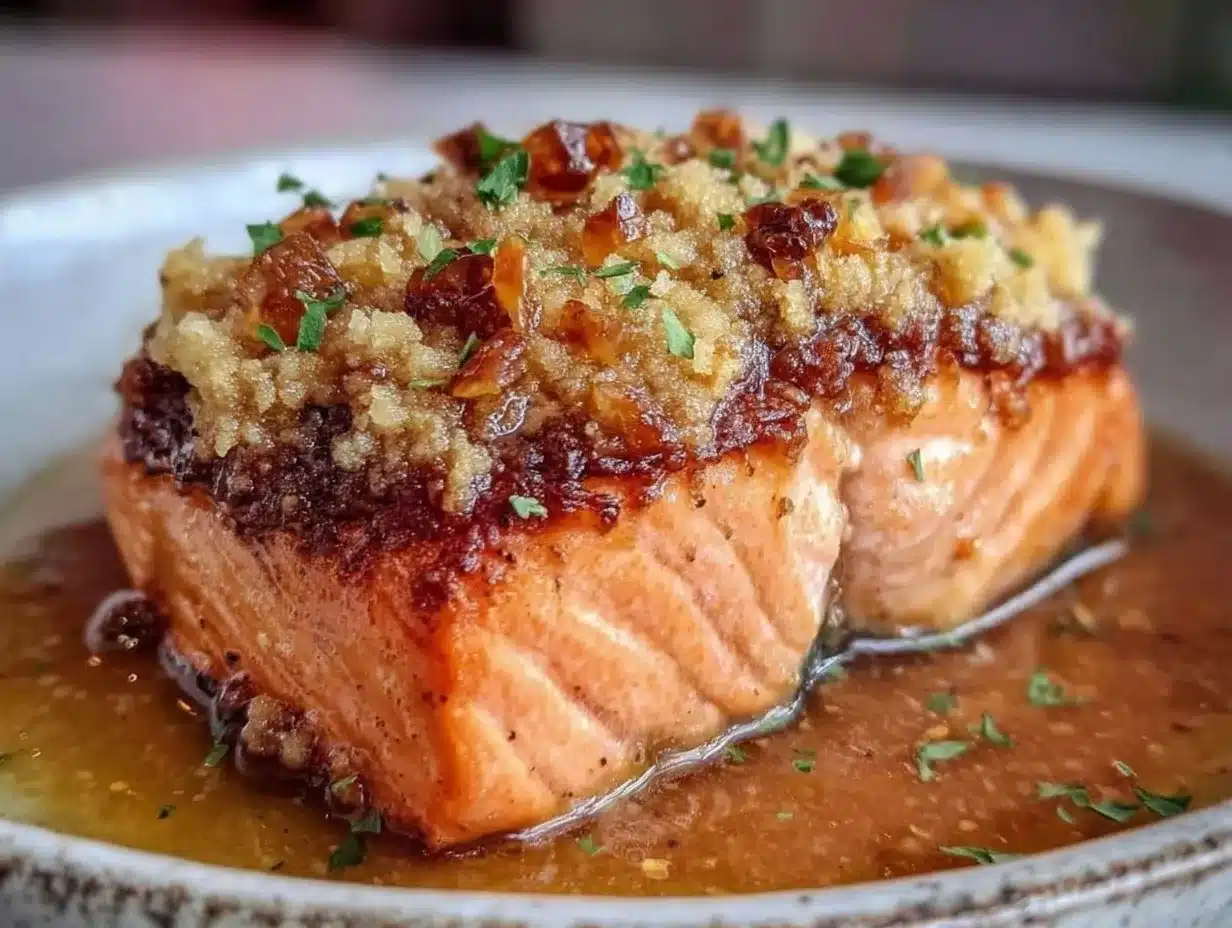
In a small saucepan over medium-low heat, melt the butter. Add the minced garlic and red pepper flakes (if using). Stir constantly for about 1-2 minutes until the garlic is fragrant and just starting to turn golden. Be careful not to burn it—browned garlic is delicious, but burnt garlic is bitter. Remove from heat and stir in the Dijon mustard, chopped parsley, and panko breadcrumbs. The mixture should look like wet sand.
Step 4: Assemble and Bake (12-15 minutes)
Spoon the garlic butter mixture evenly over the top of each salmon fillet. Use the back of a spoon to spread it out, covering the entire surface. You want a good, thick layer. Pop the baking sheet into the preheated oven.
Bake for 12-15 minutes, depending on the thickness of your fillets. The salmon is done when it flakes easily with a fork and reaches an internal temperature of 125-130°F. The crust should be golden brown and crispy. If you want it darker, you can broil for the last 1-2 minutes, but watch it like a hawk—it burns fast.
Step 5: Rest and Serve (5 minutes)
Remove the salmon from the oven and let it rest for 2-3 minutes. This allows the juices to redistribute. Squeeze fresh lemon juice over the top just before serving. The steam from the hot fish will lift the lemon aroma. Serve immediately.
Total Time: About 20 minutes (5 minutes prep, 15 minutes cook)
Built-in Troubleshooting
Crust is soggy? Your oven might not be hot enough, or you didn’t use panko. Make sure your oven is fully preheated to 400°F. Also, don’t skip the panko—it’s the key to crispiness.
Salmon is dry? You might have overcooked it. Salmon continues to cook slightly after you take it out of the oven. Pull it when it’s still slightly translucent in the center. It will finish cooking on the plate.
Garlic burned? The heat was too high during the melting step. Keep the butter on medium-low and watch the garlic closely. If it starts to darken too quickly, remove the pan from the heat immediately.
Expert Tips & Tricks
Here’s everything I’ve learned from making this dozens of times. These tips will save you from my mistakes.
Don’t Skip the Parchment — I know it feels like extra waste, but the garlic butter will bubble and stick to the pan if you don’t use parchment. Cleaning a baked-on garlic butter pan is a nightmare. Parchment makes cleanup take 10 seconds.
Use a Thermometer — Eyes can be deceiving. A good instant-read thermometer takes the guesswork out. Aim for 125°F for medium-rare (which is still moist and tender) or 130°F for medium. If you pull it at 140°F, it’ll be dry and chalky.
Pat the Fish Dry — Wet fish = soggy crust. Take the time to pat the salmon dry with paper towels before seasoning. It’s a small step that makes a big difference in texture.
Butter Temperature Matters — Melt the butter until it’s liquid but not hot. If the butter is too hot when you add the breadcrumbs, they might start to toast too early. You want them to crisp up in the oven, not in the pan.
Add Acid at the End — Don’t squeeze the lemon juice on before baking. The acid can “cook” the fish slightly (like ceviche) and change the texture. Add it fresh after it comes out of the oven for maximum brightness.
Pro Trick: The Broil Finish — If your crust isn’t as crispy as you’d like, switch the oven to broil for the last 2 minutes. Keep the door slightly ajar and watch it closely. It will go from golden to burnt in seconds, but if you catch it at the right moment, it’s incredible.
Variations & Substitutions
Once you’ve nailed the basic version, here’s how you can mix it up. I’ve tried all of these.
Lemon Dill Variation — Swap the parsley for fresh dill and add a tablespoon of capers to the butter mixture. It’s a classic combination that tastes like a fancy brunch.
Spicy Cajun Twist — Add 1 teaspoon of Cajun seasoning and ½ teaspoon of smoked paprika to the butter. It gives it a smoky, spicy kick that’s great with a cold beer.
Herb Garden — Use a mix of fresh herbs—basil, thyme, and oregano. It’s more aromatic and feels a bit more rustic.
Gluten-Free — Skip the panko breadcrumbs. The crust will be softer, but the garlic butter flavor will still be amazing. You can add some crushed gluten-free crackers if you want crunch.
Dairy-Free — Use olive oil or vegan butter instead of dairy butter. The crust won’t brown quite the same way, but it’s still delicious. I use olive oil for a lighter, Mediterranean vibe.
Protein Swap — This method works great for other fish too. Try it with grilled salmon variations, or use it for cod, halibut, or even thick chicken breasts. Just adjust the cooking time accordingly.
Serving & Storage
How to Serve: I usually serve this straight from the baking sheet at the dinner table—it looks rustic and stays warm. But here are other ways I’ve enjoyed it:
Side Dishes:
- Roasted asparagus or green beans
- Garlic mashed potatoes or cauliflower mash
- Quinoa or couscous pilaf
- A simple arugula salad with lemon vinaigrette
Leftovers: Store in an airtight container in the fridge for up to 2 days. The salmon will keep, but the crust will soften. To reheat, pop it in a 350°F oven for 5-7 minutes to crisp up the crust. Avoid the microwave—it makes the fish rubbery.
Freezing: I don’t recommend freezing this dish. The texture of the fish changes when frozen and thawed, and the butter crust separates. It’s best enjoyed fresh.
Nutrition Information
I’m not a nutritionist, but here’s the breakdown if you’re tracking. This is a high-protein, healthy-fat meal, though the butter adds some calories.
Per Serving (based on 4 servings):
- Calories: 450
- Protein: 35g
- Carbs: 3g
- Fat: 32g
- Saturated Fat: 18g
- Cholesterol: 120mg
- Sodium: 300mg
Look, this is comfort food with butter and garlic. It’s not a diet recipe. But it’s packed with omega-3s and protein, and it’s way better than takeout. When I want to make it lighter, I use less butter and add more veggies to the plate. But usually? I just enjoy it. It’s worth it.
Final Thoughts
So that’s my Baked Salmon with Crispy Garlic Butter Crust! I’ve probably talked your ear off at this point, but when you make a recipe this often, you have a lot to say about it.
This has saved weeknight dinners more times than I can count. It’s my answer to “what’s for dinner” when I’m tired, don’t want takeout, and still want something that tastes really good. My family is happy, my guests are impressed, and I’m happy because I’m not stressed about cooking.
Make it yours! Try different herbs, swap in your favorite veggies, or add a splash of white wine to the butter. The best recipes are the ones you adapt to your family’s tastes.
If you make this, drop a comment and let me know what you think! I love hearing how recipes turn out in your kitchen. And if something doesn’t work, tell me that too—I’m here to help troubleshoot.
Happy cooking! And I hope your kitchen smells half as good as mine does right now.
Frequently Asked Questions
Q: Can I use frozen salmon?
A: Yes, but you need to thaw it completely first. Pat it very dry before seasoning. Frozen salmon releases more water, so the crust might not get as crispy unless you’re extra thorough with drying. I always prefer fresh, but frozen works in a pinch.
Q: Why did my crust get soggy?
A: Usually means the salmon was too wet, or the oven wasn’t hot enough. Make sure you pat the fish dry and preheat the oven fully. Also, don’t skip the panko—it’s the key to crunch. If you used regular breadcrumbs, they absorb more moisture and stay soft.
Q: Can I make this ahead for a dinner party?
A: You can prep it ahead. Assemble the salmon with the butter mixture up to 4 hours in advance and keep it covered in the fridge. Take it out 15 minutes before baking to take the chill off. But don’t bake it ahead and reheat—the crust will lose its crunch.
Q: What’s the best side dish for this?
A: I love roasted asparagus or a simple green salad. The acidity of the salad cuts through the richness of the butter. If you want something heartier, garlic mashed potatoes are perfect. Avoid heavy, creamy sides—they compete with the fish.
Q: Can I substitute the panko breadcrumbs?
A: You can use regular breadcrumbs, grated Parmesan, or even crushed crackers. But panko is light and airy, which creates that distinct crunch. If you skip breadcrumbs entirely, the crust will be softer but still flavorful.
Q: How do I know when the salmon is done?
A: The easiest way is the fork test. Gently press a fork into the thickest part. If it flakes easily and is opaque throughout, it’s done. For precision, use a thermometer: 125°F for medium-rare, 130-135°F for medium.
Q: Can I add cheese to the crust?
A: Yes! Grated Parmesan or Pecorino Romano mixed with the panko adds a savory, salty kick. Just be careful not to add too much, as cheese can burn. I usually add a tablespoon max.
Pin This Recipe!
Baked Salmon with Crispy Garlic Butter Crust
- Total Time: 20 minutes
- Yield: 4 servings 1x
Description
A quick and elegant weeknight dinner featuring salmon fillets topped with a golden, nutty crust made from melted butter, garlic, panko breadcrumbs, and herbs. Ready in just 20 minutes with minimal prep.
Ingredients
- 4 salmon fillets (about 6 ounces each)
- ½ cup (115g) unsalted butter
- 5–6 cloves garlic, finely minced
- 1 tablespoon Dijon mustard
- 1 large lemon (juice and zest)
- 2 tablespoons fresh parsley, chopped
- ½ teaspoon red pepper flakes (optional)
- Kosher salt and freshly cracked black pepper
- ¼ cup panko breadcrumbs
- Non-stick cooking spray or oil for the pan
Instructions
- Preheat oven to 400°F (200°C). Line a 18×13 inch rimmed baking sheet with parchment paper and lightly spray with non-stick spray.
- Pat salmon fillets dry with paper towels. Season both sides with salt and pepper. If using, rub lemon zest into the flesh. Place fillets skin-side down on the prepared baking sheet.
- In a small saucepan over medium-low heat, melt the butter. Add minced garlic and red pepper flakes. Stir constantly for 1-2 minutes until fragrant and just starting to turn golden. Do not burn.
- Remove saucepan from heat. Stir in Dijon mustard, chopped parsley, and panko breadcrumbs until the mixture resembles wet sand.
- Spoon the garlic butter mixture evenly over the top of each salmon fillet, spreading it to cover the entire surface.
- Bake for 12-15 minutes, or until the salmon flakes easily with a fork and reaches an internal temperature of 125-130°F. For a darker crust, broil for the last 1-2 minutes, watching closely.
- Remove from oven and let rest for 2-3 minutes. Squeeze fresh lemon juice over the top just before serving.
Notes
Pat the salmon dry before seasoning to ensure the crust adheres properly and stays crispy. Do not skip the panko breadcrumbs as they are essential for the texture. If using frozen salmon, ensure it is completely thawed and patted very dry. For a dairy-free version, substitute butter with olive oil or vegan butter.
- Prep Time: 5 minutes
- Cook Time: 15 minutes
- Category: Main Course
- Cuisine: American
Nutrition
- Serving Size: 1 fillet per serving
- Calories: 450
- Sodium: 300
- Fat: 32
- Saturated Fat: 18
- Carbohydrates: 3
- Protein: 35
Keywords: baked salmon, garlic butter salmon, crispy crust, weeknight dinner, healthy seafood, quick recipes, panko salmon


