My grandmother’s kitchen was never quiet, but it was never rushed, either. Even on the busiest Tuesday afternoons, she moved with a deliberate slowness that I didn’t appreciate until I was standing alone in my own kitchen, staring at a Tupperware container of sad, mayonnaise-heavy chicken salad that tasted like nothing more than salt and regret. I was trying to be healthy, trying to save money, and trying to impress a date who was coming over for a casual lunch. I wanted something light, something protein-packed, something that felt elegant but didn’t require an hour of standing over a stove.
I had tried every version of chicken salad I could find. The creamy ones were heavy. The Greek yogurt ones were too tangy. The avocado ones turned brown before the first bite. I was ready to give up on the idea of a “healthy” lunch that didn’t taste like diet food. Then I remembered the way my grandmother made her potato salad. She never used just mayonnaise. She always stirred in a big scoop of cottage cheese. She said it made the texture “cloud-like” and added a protein boost that kept the men in the family full until dinner. I hadn’t thought about that trick in twenty years.
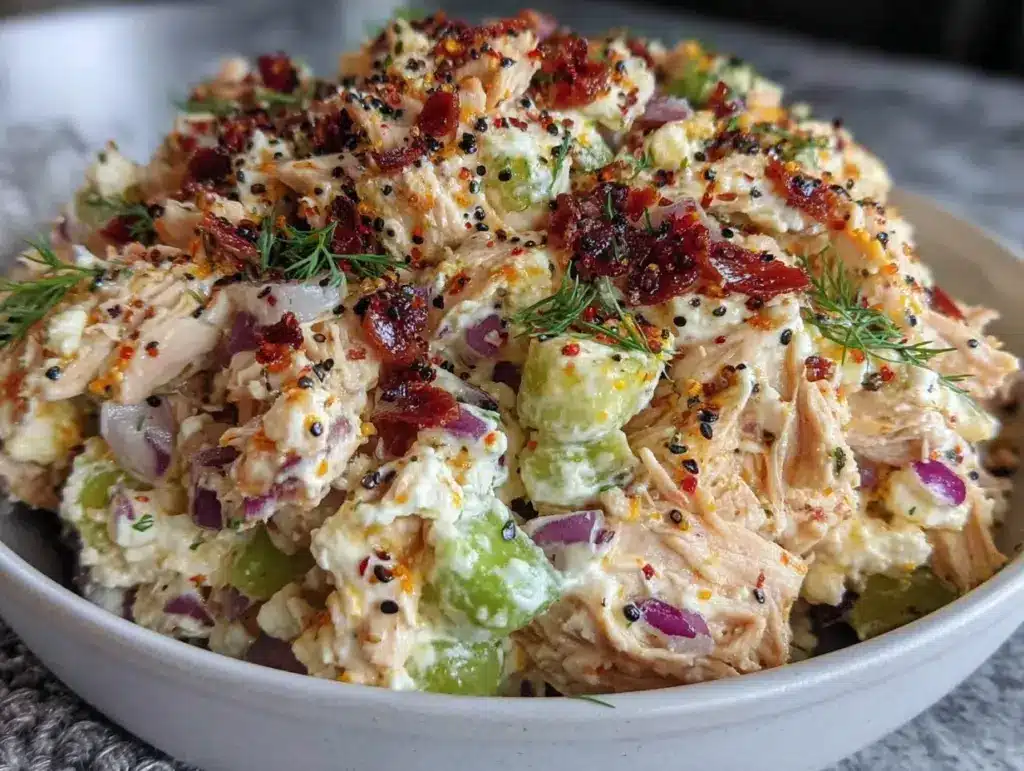
I grabbed a container of cottage cheese from my fridge, dumped it in a bowl with some shredded chicken, and whisked it with lemon juice, black pepper, and a handful of fresh dill from the windowsill. I waited to see if it would curdle or separate. It didn’t. It became this incredibly smooth, pale green-tinged dressing that clung to the chicken like silk. I added some crisp celery and red onion, chilled it for an hour, and waited for my guest to arrive. When he took the first bite, his eyes widened. “This tastes like a fancy restaurant,” he said. “How much mayo is in this?” I smiled and told him the truth: zero. Just cottage cheese, fresh herbs, and a lot of love.
That was three years ago. I’ve been making this high-protein cottage cheese chicken salad with fresh dill ever since. It’s become my go-to meal prep staple, my lunchbox hero, and honestly, the reason I look forward to packing my own lunch instead of buying expensive salads from the corner shop. It’s light, it’s tangy, it’s packed with protein, and it tastes remarkably like something my grandmother would approve of. If you’ve been struggling to find a chicken salad that doesn’t leave you feeling sluggish or heavy, you need to try this. It’s the real deal.
Why You’ll Love This Recipe
There are about ten reasons I keep making this high-protein cottage cheese chicken salad with fresh dill every single week, but here are the big ones. This isn’t just a diet hack; it’s a flavor game-changer.
Cloud-Like Texture Without the Guilt — Seriously, if you blend the cottage cheese until it’s smooth, you lose the curds entirely. The result is a dressing that is rich and creamy like mayonnaise but with a lighter, airier mouthfeel. I’ve had people eat this for lunch and not realize they’re getting a massive protein boost until I told them. It feels indulgent, but it’s actually fuel.
Fresh Dill Changes Everything — Most chicken salad recipes rely on dried herbs or just salt and pepper. But fresh dill? It’s bright, grassy, and slightly anise-like. It cuts through the richness of the cheese and makes the chicken taste vibrant instead of bland. I buy a fresh bunch every week, even if it seems like a waste, because the difference is night and day.
Meal Prep That Actually Stays Fresh — I know what you’re thinking. “Salad goes bad after two days.” Not this one. Because the dressing is dairy-based and acidic (thanks to the lemon), it actually helps preserve the chicken and keeps the vegetables crisp. I make this on Sunday, and it tastes just as good on Wednesday. I’ve even packed it for picnics in the summer heat, and it held up perfectly.
High Protein, Low Carb — This is perfect for anyone watching their macros. One serving has around 25-30 grams of protein, depending on how much chicken you add. It’s filling, it keeps your energy stable, and it doesn’t spike your blood sugar. I pair it with some cucumber slices or eat it in a whole-grain wrap, and I’m good for hours.
Stupid Simple — You don’t need to cook anything if you use rotisserie chicken. You just chop, blend, mix, and chill. If you have leftover roast chicken from Sunday dinner, you can have this on the table in 15 minutes. I’ve made this while helping my kids with homework, and it’s never failed me.
This is my go-to when I need lunch to just work. No complicated techniques, no weird ingredients, just reliable, delicious food that makes everyone happy. It’s the kind of recipe that sneaks up on you—you think it’s just a salad, and then you realize you’ve eaten your way to feeling fantastic.
Ingredients You’ll Need
Here’s the best part: you probably have most of this already. This high-protein cottage cheese chicken salad with fresh dill relies on simple, high-quality ingredients. I’m particular about three things here, and I’ll tell you exactly why.
Cottage Cheese (16 oz / 450g) — I use full-fat, small-curd cottage cheese. Full-fat is crucial because it provides the creaminess and the rich mouthfeel. Skim milk cottage cheese will make the salad watery and bland. You can find this in the dairy section next to the yogurt. If you can’t find small-curd, large-curd works fine, but you’ll need to blend it longer to get it smooth.
Rotisserie Chicken (2 cups / 200g, shredded) — I always buy a pre-cooked rotisserie chicken. It’s economical and flavorful. Shred it with your hands or two forks. I like to use a mix of white and dark meat because the dark meat has more flavor and stays juicy. If you’re cooking your own chicken, poach it in broth with a bay leaf for extra depth.
Fresh Dill (½ cup / packed, finely chopped) — This is non-negotiable. Fresh dill is what makes this recipe sing. Dried dill just doesn’t have the same bright, fresh aroma. Buy a fresh bunch, chop it finely, and freeze the rest if you don’t use it all. I keep a bag of chopped dill in my freezer for this exact purpose.
Leek (1 medium, white part only, finely minced) — I use leek instead of regular onion because it’s much milder and sweeter. It adds a subtle onion flavor without the sharp bite that can linger on your breath. If you don’t like leeks, you can use red onion, but soak the chopped onion in cold water for 10 minutes first to mellow the flavor.
Celery (2 stalks, finely diced) — Celery adds the necessary crunch. It’s the textural contrast that keeps every bite interesting. I use a mix of green and red celery for color, but regular green celery works perfectly.
Lemon Juice (2 tablespoons, fresh) — Fresh lemon juice is essential. Bottled lemon juice tastes metallic and flat. Squeeze it yourself. The acidity balances the richness of the cottage cheese and helps the flavors meld together.
Extra Virgin Olive Oil (1 tablespoon) — A small amount of good olive oil adds richness and helps emulsify the dressing. I use a mild extra virgin olive oil so it doesn’t overpower the delicate dill flavor.
Garlic (1 clove, minced) — Just one clove. Fresh only. I mince it super fine so you don’t get a big chunk of garlic in your bite. It adds a savory backbone to the salad.
Dijon Mustard (1 teaspoon) — This is the secret weapon. A little Dijon adds complexity and helps bind the dressing. It’s subtle, but you’ll miss it if it’s not there.
Sea Salt and Black Pepper — To taste. I use flaky sea salt for finishing and freshly cracked black pepper for bite.
Optional Add-ins: I sometimes add a tablespoon of capers for a briny kick, or a handful of chopped scallions for extra onion flavor. But the base recipe is perfect as is.
Equipment Needed
You don’t need fancy equipment for this. Here’s what I actually use. The key to getting that smooth, creamy texture without the curds is blending, so you’ll need a tool that can handle it.
Food Processor or High-Speed Blender — This is the most important tool. I use a small food processor to puree the cottage cheese until it’s completely smooth. If you don’t have a food processor, a high-speed blender works too, but you might need to add a splash of water to get it moving. Do not skip this step. Lumpy cottage cheese dressing is not what we’re going for.
Sharp Chef’s Knife — For chopping the dill, leek, and celery. A sharp knife makes quick work of the herbs and keeps them from bruising.
Large Mixing Bowl — A glass or ceramic bowl is best for mixing. I like to see what I’m doing. A stainless steel bowl works too.
Measuring Cups and Spoons — Standard stuff. I’m not super precise with the herbs, but I measure the lemon juice and olive oil to keep the balance right.
Fork or Two Knives — For shredding the chicken. If you’re using a rotisserie chicken, your hands work too, but a fork gives you more control over the shred size.
Storage Containers — I use glass containers with tight-fitting lids. They don’t retain odors like plastic does, and they look nice when I pack my lunch. Plastic works fine if you wash it well.
Optional but nice: A citrus juicer if you hate squeezing lemons by hand. I have one, but my hands work fine. Also, a microplane for grating the garlic if you want it super fine.
How to Make It: Step-by-Step
Alright, let’s make this! I’m walking you through exactly how I do it, including the little tricks I’ve picked up over the years. This high-protein cottage cheese chicken salad with fresh dill comes together quickly, but the prep is key.
Step 1: Prepare the Cottage Cheese Dressing (5 minutes)
Start by adding the cottage cheese to your food processor or blender. Blend it on high until it’s completely smooth and creamy. This might take 1-2 minutes. Scrape down the sides if needed. You want a consistency similar to Greek yogurt or thick sour cream. If it’s too thick, add a teaspoon of water or milk to help it blend. Once it’s smooth, transfer it to your mixing bowl.
Step 2: Whisk in the Flavorings (2 minutes)
To the blended cottage cheese, add the fresh lemon juice, extra virgin olive oil, minced garlic, Dijon mustard, salt, and black pepper. Whisk everything together until well combined. Taste it. It should be tangy, creamy, and slightly savory. If it needs more salt, add a pinch. If it’s too thick, add a splash more lemon juice or water.
Step 3: Prep the Vegetables and Chicken (10 minutes)
While the dressing is ready, chop your vegetables. Finely mince the leek (white part only), finely dice the celery, and finely chop the fresh dill. Shred your cooked chicken into bite-sized pieces. I like to keep the shreds a bit chunky so you get a good mix of textures in every bite. If you’re using rotisserie chicken, make sure to pick off any skin or bones.
Step 4: Combine Everything (5 minutes)
Add the shredded chicken, chopped leek, diced celery, and fresh dill to the bowl with the dressing. Gently fold everything together with a spatula. Be careful not to overmix, or the chicken will get mushy. You want the vegetables to retain their crunch. Taste again and adjust seasoning if needed. Remember, the flavors will meld and intensify as it chills.
Step 5: Chill and Serve (30 minutes to overnight)
Cover the bowl with plastic wrap or transfer the salad to an airtight container. Refrigerate for at least 30 minutes to let the flavors meld. Ideally, let it chill for a few hours or overnight. This step is crucial for the final taste. The dill will infuse the dressing, and the leek will soften slightly. Serve cold on a bed of greens, in a wrap, or with crackers.
Total Time: About 25 minutes active, plus chilling time.
Expert Tips & Tricks
Here’s everything I’ve learned from making this dozens of times. These tips will save you from my early mistakes.
Blend the Cottage Cheese Until Smooth
This is the #1 tip. I know some people love the texture of cottage cheese curds, but for this salad, you want a smooth, creamy dressing. If you leave the curds, the salad will be lumpy and the dressing won’t coat the chicken evenly. Blend it until it’s completely uniform.
Don’t Skip the Chilling Time
I know you want to eat it right away. But this salad tastes better after it has had time to chill. The cold temperature helps the flavors bind, and the dill becomes more fragrant. If you’re in a hurry, at least chill it for 30 minutes. It makes a noticeable difference.
Use Fresh Herbs, Not Dried
Dried dill is fine for soups, but for a fresh salad like this, it just tastes dusty. Fresh dill is bright and aromatic. If you can’t find fresh dill, use fresh chives or parsley, but dill is the classic pairing for chicken and lemon.
Control the Moisture
If your chicken is very wet (from boiling or poaching), pat it dry with paper towels before shredding. Excess moisture can make the salad watery. If your dressing is too thin after chilling, add a bit more cottage cheese or a teaspoon of mustard to thicken it.
Make It Your Own
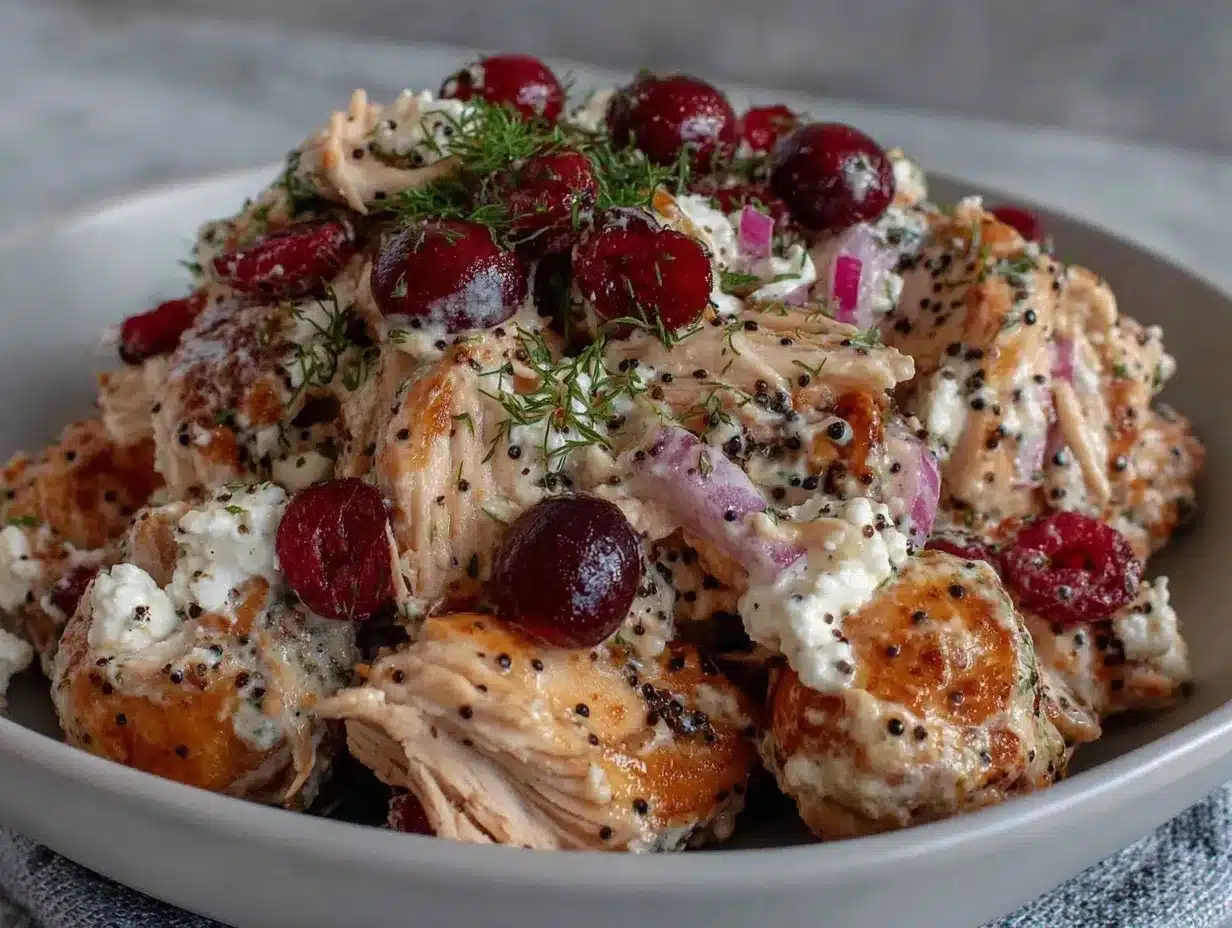
This is a versatile base. Add some diced apples for sweetness, a few chopped walnuts for crunch, or a spoonful of raisins for a sweet-and-savory twist. I’ve tried all of these, and they all work. But the classic version with leek and dill is my favorite.
Common Mistakes:
Mistake: Salad is too dry. Fix: Add a splash of olive oil or lemon juice.
Mistake: Salad is too watery. Fix: Drain the chicken better, or add more cottage cheese.
Mistake: Flavors are bland. Fix: Add more salt, pepper, and lemon juice. Taste before serving!
Variations & Substitutions
Once you’ve nailed the basic version, here’s how you can mix it up. I’ve tried all of these, and they’re all winners.
Classic Chicken Salad Style
Swap the leek for red onion and add some celery seed. This is closer to the traditional mayo-based chicken salad, but with the healthy cottage cheese twist. Add a tablespoon of mayonnaise if you want extra richness.
Mediterranean Twist
Add chopped kalamata olives, sun-dried tomatoes, and feta cheese. Use oregano instead of dill. This version is tangy and bold, perfect for pita bread.
Asian-Inspired
Swap the dill for cilantro and add a tablespoon of soy sauce and a teaspoon of sesame oil. Add some shredded carrots and cucumber. Serve over rice noodles.
Spicy Kick
Add a diced jalapeño or a teaspoon of hot sauce. I like to add a little cayenne pepper to the dressing for a subtle heat that builds up.
Vegetarian Option
Swap the chicken for chickpeas or cubed tofu. Press the tofu first to remove moisture. The dressing works just as well with plant-based proteins.
Dairy-Free
Use a dairy-free cottage cheese alternative (like coconut-based) or blend silken tofu with lemon juice and olive oil. It won’t be exactly the same, but it can work.
Serving & Storage
How to Serve:
I usually serve this straight from the container at the dinner table—it looks rustic and stays cool. But here are other ways I’ve enjoyed it:
Serving Suggestions:
– On a bed of mixed greens with cucumber slices
– In a whole-grain wrap with lettuce and tomato
– Stuffed in a hollowed-out tomato or avocado
– With whole-grain crackers or pita chips
– Over a baked potato for a hearty meal
Side Dishes:
– A simple apple slices on the side
– Roasted asparagus or green beans
– A light soup like roasted red pepper soup
– A glass of strawberry basil lemonade for a refreshing drink
Storage Instructions:
Store in an airtight container in the refrigerator for up to 4 days. The salad will thicken as it sits, which is normal. If it gets too thick, stir in a splash of water or lemon juice to loosen it up.
Reheating:
Do not reheat this salad. The cottage cheese will separate and the vegetables will get soggy. Serve it cold or at room temperature.
Freezing:
I don’t recommend freezing this salad. The texture of the cottage cheese and fresh vegetables will change significantly upon thawing. It’s best enjoyed fresh.
Pro Tip:
If you’re meal prepping, keep the dressing and the solids separate until you’re ready to eat. This keeps the vegetables crisp and prevents the salad from getting watery. Just mix it right before you’re about to eat.
Nutrition Information
I’m not a nutritionist, but here’s the breakdown if you’re tracking. This is per serving (based on 4 servings).
– Calories: 280
– Protein: 28g
– Carbs: 8g
– Fiber: 2g
– Sugar: 3g
– Fat: 14g
– Saturated Fat: 4g
– Cholesterol: 75mg
– Sodium: 350mg
– Calcium: 180mg
What’s Good:
– High in protein from the chicken and cottage cheese
– Low in carbs and sugar
– Good source of calcium and probiotics from the cottage cheese
– Fresh vegetables add vitamins and minerals
What to Know:
– Contains dairy
– Moderate sodium (use low-sodium chicken broth if poaching chicken)
– Can be made gluten-free easily
My Take:
“Look, this is healthy food that doesn’t taste like it. It’s satisfying, it’s nutritious, and it’s way better than the processed stuff you buy at the store. When I want to make it lighter, I use less cheese and more chicken. But usually? I just eat a reasonable portion and enjoy it.”
Final Thoughts
So that’s my high-protein cottage cheese chicken salad with fresh dill! I’ve probably talked your ear off at this point, but when you make a recipe this often, you have a lot to say about it. This has saved my lunches more times than I can count. It’s my answer to “what’s for lunch” when I’m tired, don’t want to cook, and still want something that tastes really good. My kids are happy, my husband’s happy, and I’m happy because I’m not stressed about eating a sad desk salad.
Make it yours! Try different add-ins, swap in your favorite vegetables, adjust the herbs (though dill is king in my opinion). The best recipes are the ones you adapt to your family’s tastes. And if you’re looking for more healthy, family-friendly recipes, check out my cozy fall chicken and dumplings for a warm, comforting alternative when the weather turns chilly.
If you make this, drop a comment and let me know what you think! I love hearing how recipes turn out in your kitchen. And if something doesn’t work, tell me that too—I’m here to help troubleshoot. Happy cooking! And I hope your kitchen smells half as good as mine does right now.
Frequently Asked Questions
Q: Can I use Greek yogurt instead of cottage cheese?
A: You can, but the texture will be different. Greek yogurt is tangier and thinner. If you use it, add a bit more mayo or olive oil to compensate for the lack of fat. Cottage cheese gives a richer, creamier result that’s closer to traditional chicken salad.
Q: How long does this salad last in the fridge?
A: It lasts up to 4 days in an airtight container. After that, the vegetables might start to get soft, and the flavors can become too strong. I usually eat it within 3 days for the best quality.
Q: Can I use canned chicken instead of rotisserie?
A: Yes, but drain it very well. Canned chicken can be watery and has a different texture. Pat it dry with paper towels before adding it to the salad. It’s cheaper, but rotisserie chicken tastes better.
Q: Why did my dressing separate?
A: This usually happens if the cottage cheese wasn’t blended smoothly or if the salad sat out at room temperature for too long. Always blend the cottage cheese until it’s smooth, and keep the salad chilled until serving.
Q: Can I make this ahead for a party?
A: Absolutely! Make it up to 24 hours ahead and store it in the fridge. It actually tastes better after the flavors have had time to meld. Just stir it well before serving and add a fresh sprinkle of dill on top.
Q: Is this salad good for weight loss?
A: Yes, it’s a great option for weight loss. It’s high in protein and fiber, which keeps you full, and lower in calories than traditional mayo-based chicken salad. Just be mindful of portion sizes and what you serve it with.
Q: Can I freeze this salad?
A: I don’t recommend freezing it. The cottage cheese and fresh vegetables don’t freeze well. The texture will become grainy and watery. It’s best enjoyed fresh.
Pin This Recipe!
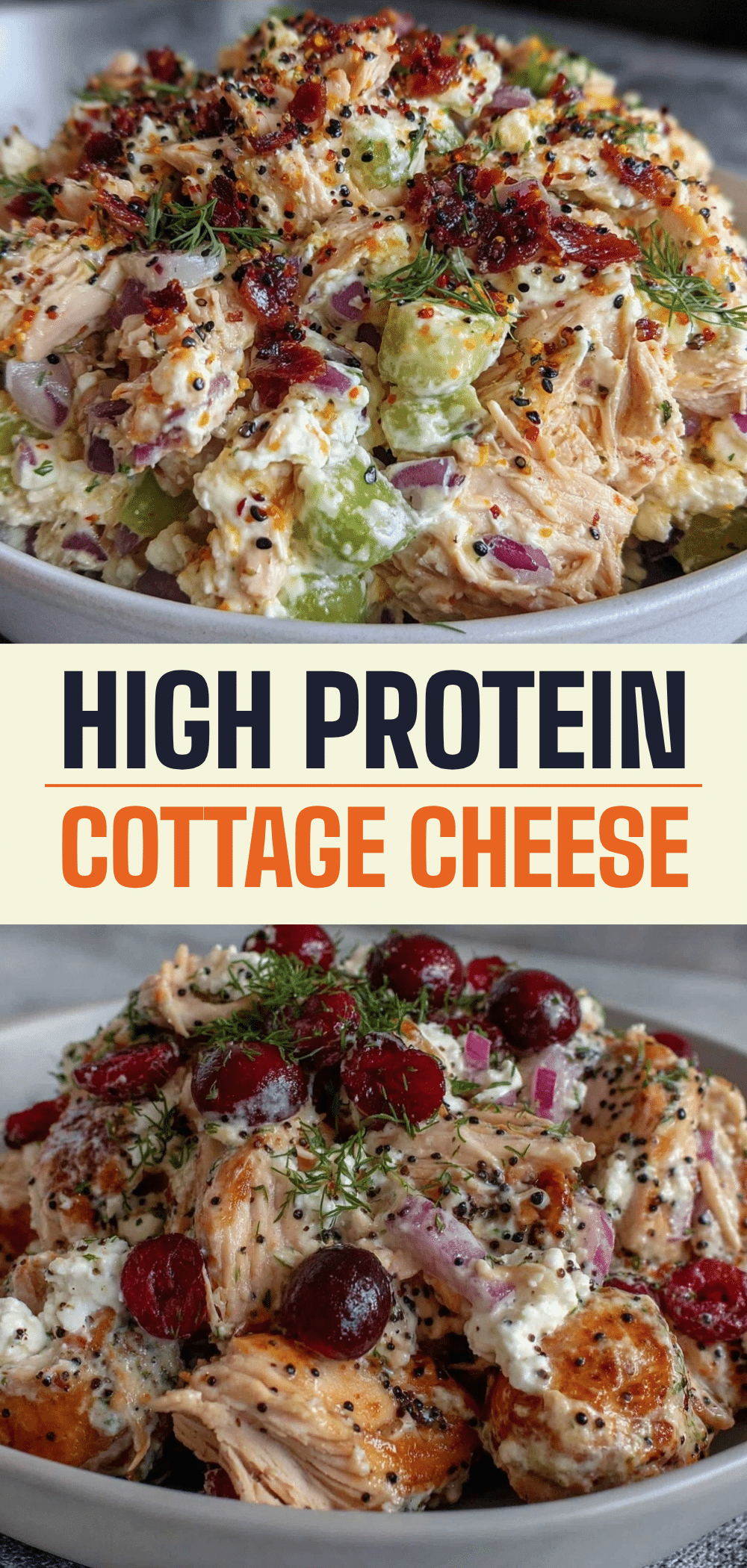
High-Protein Cottage Cheese Chicken Salad with Fresh Dill
- Total Time: 45 minutes
- Yield: 4 servings 1x
Description
A creamy, high-protein chicken salad made with blended cottage cheese instead of mayonnaise, featuring fresh dill, leek, and celery for a light yet indulgent flavor profile.
Ingredients
- 16 oz (450g) full-fat small-curd cottage cheese
- 2 cups (200g) shredded rotisserie chicken
- 1/2 cup packed fresh dill, finely chopped
- 1 medium leek, white part only, finely minced
- 2 stalks celery, finely diced
- 2 tablespoons fresh lemon juice
- 1 tablespoon extra virgin olive oil
- 1 clove garlic, minced
- 1 teaspoon Dijon mustard
- Sea salt and black pepper to taste
Instructions
- Add cottage cheese to a food processor or high-speed blender and blend on high until completely smooth and creamy, about 1-2 minutes. Transfer to a large mixing bowl.
- To the blended cottage cheese, add lemon juice, olive oil, minced garlic, Dijon mustard, salt, and black pepper. Whisk until well combined.
- Finely mince the leek, dice the celery, and chop the fresh dill. Shred the cooked chicken into bite-sized pieces.
- Add the shredded chicken, leek, celery, and dill to the bowl with the dressing. Gently fold everything together with a spatula until combined.
- Cover the bowl and refrigerate for at least 30 minutes (or up to overnight) to allow flavors to meld.
- Serve cold on a bed of greens, in a wrap, or with crackers.
Notes
Blend the cottage cheese until completely smooth to avoid lumps. Do not reheat this salad as the cottage cheese will separate. Store in the refrigerator for up to 4 days. For best results, chill for at least 30 minutes before serving to let flavors meld.
- Prep Time: 15 minutes
- Cook Time: 0 minutes
- Category: Main Course
- Cuisine: American
Nutrition
- Serving Size: 1 cup
- Calories: 280
- Sugar: 3
- Sodium: 350
- Fat: 14
- Saturated Fat: 4
- Carbohydrates: 8
- Fiber: 2
- Protein: 28
Keywords: high protein, cottage cheese chicken salad, healthy lunch, meal prep, gluten-free, low carb, fresh dill, creamy chicken salad