Last Tuesday, I came home from work feeling like my brain had been put through a blender. You know that feeling? Where you’re too exhausted to think, too hungry to wait, and the mere idea of chopping vegetables makes you want to order takeout and eat it out of the box. I stood in my kitchen for a solid ten minutes staring at a half-empty fridge, wondering if I had the energy to actually cook dinner.
Then I saw the bag of peanut butter in the pantry and the rainbow of veggies wilting in the crisper drawer. Something clicked. I didn’t need a complicated meal. I needed fuel. Fast. Something that would hit the spot, keep me full until bedtime, and not leave me feeling heavy or sluggish.
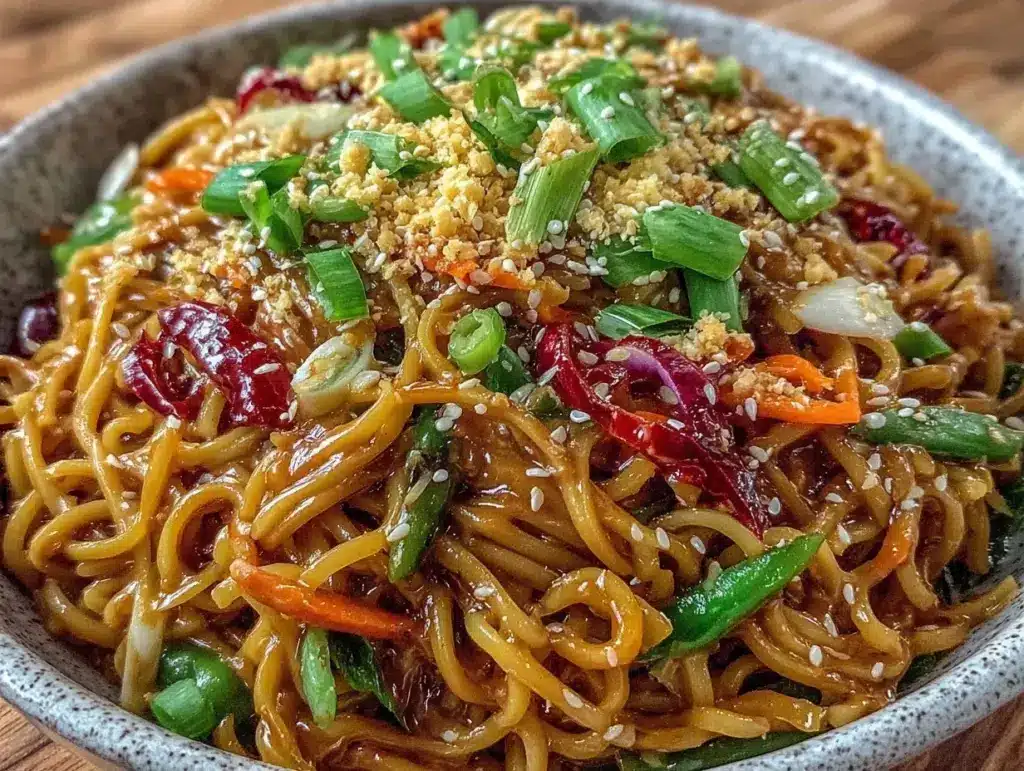
That night, I threw together what I now call my vegan peanut sesame noodles with rainbow veggies. It took exactly 15 minutes. Fifteen. I had dinner on the table before my dog finished her walk. It was creamy, savory, slightly spicy, and packed with enough fiber and plant-based protein to keep my energy steady through the evening. My husband loved it, my kids didn’t complain (which is a miracle), and I went to bed actually satisfied, not stuffed.
Since then, this has become my go-to rescue meal. Seriously, if I’m running on empty, this is what I make. It’s not just about speed—it’s about how good you feel after eating it. Most weeknight dinners leave me dragging by 8 PM, but these noodles? They’re like a reset button. They’re rich and comforting, but because they’re built on whole-food ingredients like tahini, natural peanut butter, and crunchy veggies, they don’t weigh me down.
I’ve made this vegan peanut sesame noodles with rainbow veggies recipe at least twenty times since that Tuesday. I’ve tweaked the spice level, swapped out veggies based on what was on sale, and even added extra protein when I had a particularly active day. It’s forgiving, it’s delicious, and it proves that healthy eating doesn’t have to be complicated or boring. In fact, it’s often the opposite. Let me show you how to make it.
Why You’ll Love This Recipe
There are a million reasons to keep this on your rotation, but here are the big ones that keep me coming back to it week after week.
It’s Actually Filling — I used to think “light” meals meant I’d be hungry an hour later. Not with this. The combination of healthy fats from the peanut butter and sesame oil, plus the fiber from the veggies and whole-grain noodles, keeps my stomach happy for hours. I don’t crave snacks two hours later. It’s sustained energy, not a sugar crash.
Stupid Simple Cleanup — One pot for the noodles, one bowl for the sauce, one pan (or just the bowl) for the veggies. That’s it. If you eat the veggies raw or quickly blanched, you’re looking at minimal dishes. I love that. After a long day, the last thing I want is a mountain of pots to scrub.
Protein-Packed Without the Meat — People ask me all the time where I get my protein on plant-based days. This dish is a powerhouse. Between the peanuts, sesame seeds, and edamame (if you add it), you’re getting a solid protein boost that supports muscle recovery and keeps you full. It’s way more satisfying than a plain bowl of white pasta.
Crowd-Pleaser Flavor — It tastes like it came from a fancy Asian fusion spot, but it’s made in your kitchen. The umami from the soy sauce, the nuttiness of the sesame, the heat from the chili flakes—it’s a flavor explosion. Even my non-vegan friends beg me to make this. It’s that good.
Budget-Friendly — Noodles, peanut butter, frozen veggies, soy sauce. These are pantry staples. You’re not buying expensive cuts of meat or exotic ingredients. It feeds 3-4 people for under $10, depending on what you already have. It’s cheap comfort food that actually fuels your body.
This is my answer to “what’s for dinner” when I’m tired, broke, and want something that tastes amazing. It’s reliable, it’s nutritious, and it makes me feel like I took care of myself without the stress.
Ingredients You’ll Need
Here’s the best part: you probably have 80% of this already. This isn’t a recipe that requires a trip to three different specialty stores. It’s built on simple, whole-food ingredients that do a lot of heavy lifting for your body.
For the Noodles
Whole-wheat spaghetti or brown rice noodles (12 oz / 340g) — I love whole-wheat because it has more fiber and protein than white pasta. It holds up well to the sauce without getting mushy. Brown rice noodles are a great gluten-free option too. Whatever you choose, make sure it’s a noodle that won’t fall apart when tossed.
Water (plenty for boiling) — Salted! Like the ocean. This is the only chance to season the noodles themselves.
For the Rainbow Veggies
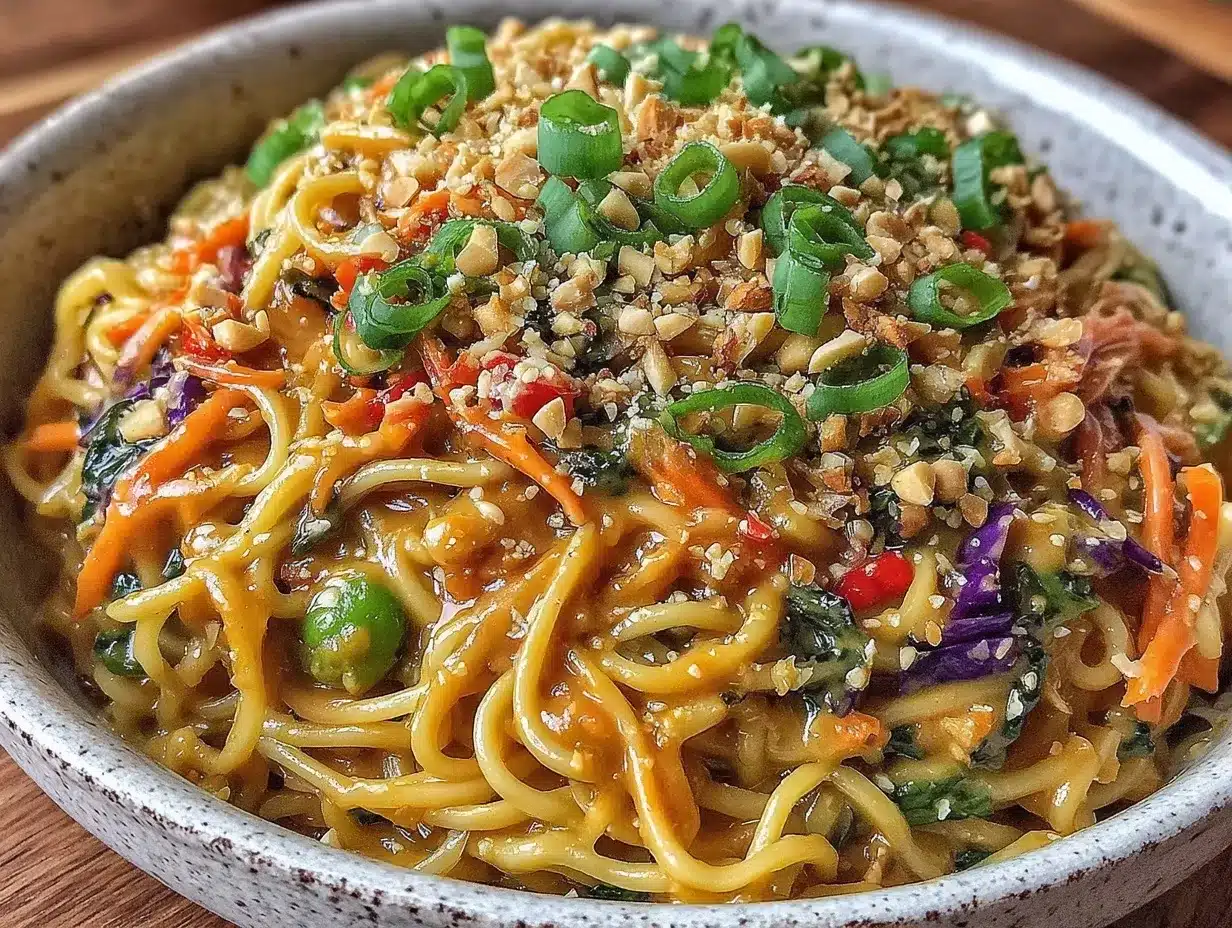
Bell peppers (2 medium, sliced) — Red and yellow are sweeter, but any color works. I love the crunch they add. They’re packed with Vitamin C, which is great for immunity.
Carrots (2 large, julienned or grated) — Essential for that sweet crunch and beta-carotene. I grate them because they cook faster and distribute evenly. If you hate carrots, sub with snap peas or broccoli florets.
Edamame (1 cup, shelled) — This is my secret weapon for protein. Frozen shelled edamame is a pantry staple I always keep. It adds a nice pop of green and boosts the protein count significantly. If you skip this, the dish is still good, but this is what makes it truly fueling.
Green onions (3-4 stalks, sliced) — For freshness and a mild onion bite. Save the white parts for cooking and the green parts for garnish.
For the Peanut Sesame Sauce
Natural peanut butter (½ cup / 120g) — Look for the kind with just peanuts and salt. No added sugar or hydrogenated oils. The quality here matters. I use Jif or a store-brand natural PB. It provides the creamy texture and healthy fats.
Tahini (2 tablespoons) — This is the game-changer. It adds a deep, nutty richness that peanut butter alone doesn’t have. It also boosts the calcium and iron content. If you’re allergic to sesame, you can skip it, but I highly recommend trying it. It’s worth it.
Soy sauce or tamari (3 tablespoons) — Tamari is gluten-free if you need that. This gives the savory umami depth. Don’t use low-sodium unless you plan to add extra salt later.
Rice vinegar (1 tablespoon) — Adds brightness and cuts through the richness of the nuts. Apple cider vinegar works in a pinch, but rice vinegar is more authentic.
Maple syrup (1 tablespoon) — Just a little sweetness to balance the salt and acid. Agave works too. Avoid refined sugar if you want to keep this whole-food focused.
Sesame oil (1 teaspoon) — Toasted sesame oil. This is potent, so a little goes a long way. It smells incredible and defines the flavor profile.
Ginger (1 tablespoon, fresh grated) — Fresh is best. It aids digestion and adds a warm zing. Pre-grated ginger in a tube works if you’re in a rush.
Garlic (2 cloves, minced) — Always fresh. Jarred garlic has a different flavor that doesn’t work as well here.
Red pepper flakes (½ teaspoon, plus more for serving) — For heat. Adjust to your spice tolerance. I like a little kick to wake up my palate.
Sesame seeds (1 tablespoon, for garnish) — Optional, but pretty and adds a nice textural contrast.
Equipment Needed
You don’t need fancy gadgets for this. Just basic kitchen tools.
Large pot — For boiling the noodles. Any pot that fits 12oz of pasta works.
Large skillet or wok — For sautéing the veggies. I prefer a wok because the shape helps toss everything evenly, but a large non-stick skillet is fine.
Small bowl — For whisking the sauce. A whisk helps emulsify the peanut butter and tahini smoothly.
Colander — For draining the noodles. Or just use the lid to drain if you’re being lazy (but be careful!).
Grater or knife — For the carrots and ginger. A microplane is great for ginger.
Measuring cups and spoons — Standard stuff. I eyeball the sauce sometimes, but measuring is more consistent.
Tongs — For tossing the noodles and veggies. Makes mixing easier than a spoon.
How to Make It: Step-by-Step
Alright, let’s make this! I’m walking you through exactly how I do it, including the little tricks I’ve picked up to ensure it’s perfectly creamy and never clumpy.
Step 1: Prep Your Veggies and Sauce (5-8 minutes)
Before you turn on the stove, get everything ready. Slice your peppers, julienne or grate your carrots, and slice your green onions. Mince your garlic and grate your ginger. It sounds like a lot, but it goes fast. While you’re at it, whisk together the peanut butter, tahini, soy sauce, rice vinegar, maple syrup, sesame oil, red pepper flakes, garlic, and ginger in a small bowl. Add 2-3 tablespoons of warm water to thin it out. It should be pourable but still creamy. Set aside.
Step 2: Cook the Noodles (8-10 minutes)
Bring a large pot of salted water to a boil. Add the noodles and cook according to package directions until al dente. Usually 8-10 minutes for whole wheat. IMPORTANT: Before draining, scoop out ½ cup of the starchy pasta water and set it aside. This water is magic for the sauce. Drain the noodles and rinse briefly with cool water to stop the cooking (this prevents them from getting mushy later). Toss with a tiny drop of sesame oil to prevent sticking.
Step 3: Sauté the Rainbow Veggies (3-4 minutes)
While the noodles cook, heat a large skillet or wok over medium-high heat. Add a splash of water or oil (I use water to keep it lower fat). Add the carrots and peppers. Stir-fry for 2-3 minutes until they’re tender-crisp. They should still have some bite. Add the edamame in the last minute just to heat through. Add the white parts of the green onions now.
Step 4: Combine and Sauce (2 minutes)
Add the drained noodles to the skillet with the veggies. Pour the sauce over everything. If the sauce is too thick, add a splash of that reserved pasta water. Toss everything vigorously with tongs. The noodles will soak up the sauce and turn a beautiful golden color. Taste and adjust: need more salt? Add soy sauce. Need more heat? Add red pepper flakes. Need more tang? Add rice vinegar.
Step 5: Serve
Serve immediately topped with the green parts of the green onions and a sprinkle of sesame seeds. It’s best hot and fresh. If you’re meal prepping, let it cool completely before storing.
Total Time: About 15 minutes (5 minutes active prep, 10 minutes cooking)
Expert Tips & Tricks
Here’s everything I’ve learned from making this dozens of times. These tips will save you from my mistakes.
Thin the Sauce Gradually — Peanut butter and tahini can be thick. Start with 2 tablespoons of water when whisking, then add more as you toss the noodles. You want a coating consistency, not a soup. The noodles will absorb some sauce, so it’s okay if it looks a bit thick at first.
Don’t Overcook the Veggies — You want them crunchy. Overcooked veggies get soggy and lose their nutritional value. Stir-fry them quickly on high heat. If you’re using frozen veggies (like broccoli), thaw them first so they don’t water down the dish.
Use Natural Peanut Butter — The oil separation in natural PB is normal. Just stir it well before measuring. If you use creamy PB with added sugar, reduce the maple syrup or skip it entirely.
Tahini is Key — I know some people are wary of tahini because it can be bitter. But in this sauce, the soy sauce and maple syrup balance it out perfectly. It adds a depth of flavor that makes it taste gourmet. Don’t skip it if you can help it.
Reserve Pasta Water — Seriously, don’t forget this. The starch in the water helps the sauce cling to the noodles. Without it, the sauce might slide off and leave you with dry noodles.
Variations & Substitutions
Once you’ve nailed the basic version, here’s how you can mix it up. I’ve tried all of these.
Protein Boost — Add crispy tofu cubes or tempeh strips. I usually press and bake tofu beforehand, then toss it in at the end. It adds a nice chewy texture. Or add grilled chicken if you’re not strictly vegan.
Gluten-Free — Use brown rice noodles or chickpea pasta. Chickpea pasta has even more protein! Just check the cooking time, as it can vary.
Low-Fat Option — Reduce the peanut butter to ¼ cup and increase the broth or water in the sauce. It’s lighter but still flavorful.
Spicy Kick — Add sriracha or gochujang paste to the sauce. Gochujang adds a fermented depth that’s amazing. Start with 1 teaspoon and adjust.
Veggie Swap — Use whatever veggies you have. Snap peas, broccoli, bok choy, zucchini, mushrooms—all work great. The key is keeping the texture varied.
Serving & Storage
How to Serve: I usually serve this straight from the skillet. It looks rustic and stays warm. Garnish with extra sesame seeds, chopped peanuts, or cilantro if you like. A squeeze of lime juice right before eating adds a nice brightness.
Storage: Store leftovers in an airtight container in the fridge for up to 4 days. The noodles will absorb more sauce as they sit, so they might look dry. Just add a splash of water or soy sauce when reheating to loosen it up.
Reheating: Microwave with a splash of water, covered, for 1-2 minutes. Stir well. Or reheat in a skillet with a little water over medium heat. Don’t microwave it dry—it will turn into a brick.
Freezing: I don’t recommend freezing this. The veggies get mushy, and the sauce can separate. It’s best fresh.
Nutrition Information
I’m not a nutritionist, but here’s the breakdown if you’re tracking. This is based on 4 servings.
Per Serving:
- Calories: 380
- Protein: 14g
- Carbs: 52g
- Fiber: 7g
- Sugar: 8g (natural sugars from veggies and maple syrup)
- Fat: 14g (mostly healthy fats from peanuts and sesame)
What’s Good: High in fiber and plant-based protein. Good source of healthy fats. Low in saturated fat. Packed with vitamins from the rainbow veggies.
What to Know: Contains peanuts and sesame (common allergens). Sodium content is moderate (use low-sodium soy sauce to reduce).
My Take: This is fuel. It’s not diet food, but it’s wholesome. It keeps me going without the crash. When I want to make it lighter, I double the veggies and reduce the noodles. But usually? I just eat a reasonable portion and enjoy it.
Final Thoughts
So that’s my vegan peanut sesame noodles with rainbow veggies! I’ve probably talked your ear off at this point, but when you make a recipe this often, you have a lot to say about it.
This has saved weeknight dinners more times than I can count. It’s my answer to “what’s for dinner” when I’m tired, don’t want takeout, and still want something that tastes really good. My kids are happy, my husband’s happy, and I’m happy because I’m not stressed about cooking. And best of all, I feel good afterward.
Make it yours! Try different add-ins, swap in your favorite vegetables, adjust the garlic (though more is always better in my opinion). The best recipes are the ones you adapt to your family’s tastes. If you make this, drop a comment and let me know what you think! I love hearing how recipes turn out in your kitchen. And if something doesn’t work, tell me that too—I’m here to help troubleshoot.
Happy cooking! And I hope your kitchen smells half as good as mine does right now.
Frequently Asked Questions
Q: Can I use almond butter instead of peanut butter?
A: Yes, you can! Almond butter works great and has a slightly milder flavor. I’ve used it when I’m out of peanut butter, and it’s delicious. Just make sure it’s natural almond butter without added sugar.
Q: My sauce came out too thick—what happened?
A: Peanut butter and tahini are thick. You probably need more liquid. Add water, one tablespoon at a time, whisking well, until it reaches your desired consistency. The reserved pasta water is perfect for this.
Q: Can I make this ahead for meal prep?
A: Absolutely! This is actually great for meal prep. Make the sauce and veggies ahead. Cook the noodles fresh each day, or store them separately. Reheat with a splash of water. It tastes almost as good as fresh.
Q: Why did my sauce get clumpy?
A: The peanut butter wasn’t fully emulsified with the liquid. Make sure you whisk the sauce ingredients thoroughly before adding it to the noodles. Adding it to warm noodles also helps it melt evenly.
Q: Can I use rice noodles instead of wheat noodles?
A: Yes, brown rice noodles or rice stick noodles work well. Just be careful not to overcook them, as they can get mushy quickly. Rinse them well after cooking to stop the sticking.
Q: How do I reheat leftovers without it getting dry?
A: Add a splash of water or soy sauce to a skillet, add your leftover noodles, and heat gently over low heat, stirring frequently. The extra liquid brings back the creamy texture. Microwave works too, but definitely add water first.
Q: Can I double this recipe?
A: Yes! Double everything and use a larger pot and skillet. The cooking times stay roughly the same. Just make sure you have enough space to toss everything without spilling.
Pin This Recipe!
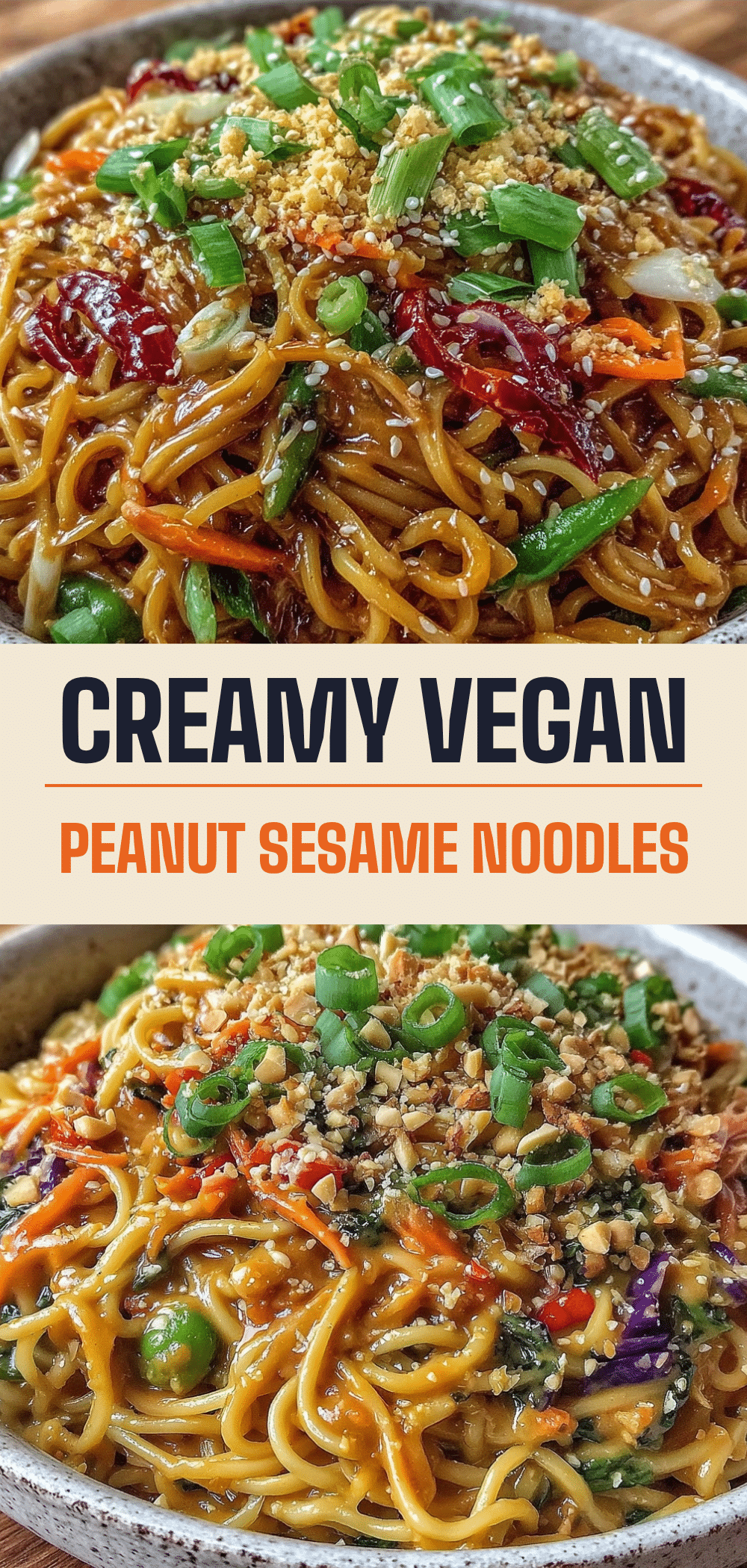
Vegan Peanut Sesame Noodles with Rainbow Veggies
- Total Time: 15 minutes
- Yield: 4 servings 1x
Description
A quick, 15-minute vegan dinner featuring creamy peanut sesame sauce, whole-grain noodles, and colorful vegetables. This nutrient-dense meal is perfect for busy weeknights and provides sustained energy.
Ingredients
- 12 oz whole-wheat spaghetti or brown rice noodles
- Water for boiling (salted)
- 2 medium bell peppers, sliced
- 2 large carrots, julienned or grated
- 1 cup shelled edamame
- 3–4 stalks green onions, sliced (white and green parts separated)
- 1/2 cup natural peanut butter
- 2 tablespoons tahini
- 3 tablespoons soy sauce or tamari
- 1 tablespoon rice vinegar
- 1 tablespoon maple syrup
- 1 teaspoon toasted sesame oil
- 1 tablespoon fresh grated ginger
- 2 cloves garlic, minced
- 1/2 teaspoon red pepper flakes (plus more for serving)
- 1 tablespoon sesame seeds (for garnish)
Instructions
- Prep veggies and sauce: Slice peppers, grate carrots, and slice green onions. Mince garlic and grate ginger. In a small bowl, whisk together peanut butter, tahini, soy sauce, rice vinegar, maple syrup, sesame oil, red pepper flakes, garlic, and ginger. Add 2-3 tablespoons of warm water to thin the sauce to a pourable consistency. Set aside.
- Cook noodles: Bring a large pot of salted water to a boil. Cook noodles according to package directions until al dente (usually 8-10 minutes). Before draining, reserve 1/2 cup of starchy pasta water. Drain noodles and rinse briefly with cool water. Toss with a tiny drop of sesame oil to prevent sticking.
- Sauté veggies: While noodles cook, heat a large skillet or wok over medium-high heat. Add a splash of water or oil. Add carrots and peppers, stir-frying for 2-3 minutes until tender-crisp. Add edamame and white parts of green onions in the last minute to heat through.
- Combine: Add drained noodles to the skillet with the veggies. Pour the sauce over everything. If the sauce is too thick, add a splash of reserved pasta water. Toss vigorously with tongs until noodles are coated and golden.
- Serve: Serve immediately, topped with green parts of green onions and a sprinkle of sesame seeds.
Notes
Reserve pasta water to help emulsify the sauce. Use natural peanut butter without added sugar. If the sauce is too thick, add water gradually. For a gluten-free version, use brown rice noodles or chickpea pasta. Do not freeze leftovers as veggies may become mushy.
- Prep Time: 5 minutes
- Cook Time: 10 minutes
- Category: Main Course
- Cuisine: Asian Fusion
Nutrition
- Serving Size: 1 serving
- Calories: 380
- Sugar: 8
- Fat: 14
- Saturated Fat: 2
- Carbohydrates: 52
- Fiber: 7
- Protein: 14
Keywords: vegan, peanut noodles, sesame noodles, quick dinner, weeknight meals, healthy pasta, gluten-free option, plant-based protein, meal prep