It was late October, and the kind of chill that actually gets under your ribs had finally settled in. I had spent the afternoon raking leaves, my hands numb, dreaming of something warm but not heavy. I didn’t want a soup that required babysitting a pot, and I definitely didn’t want another sad, cold salad that tasted like regret. I wanted something that felt like a hug but looked like it came from a nice restaurant.
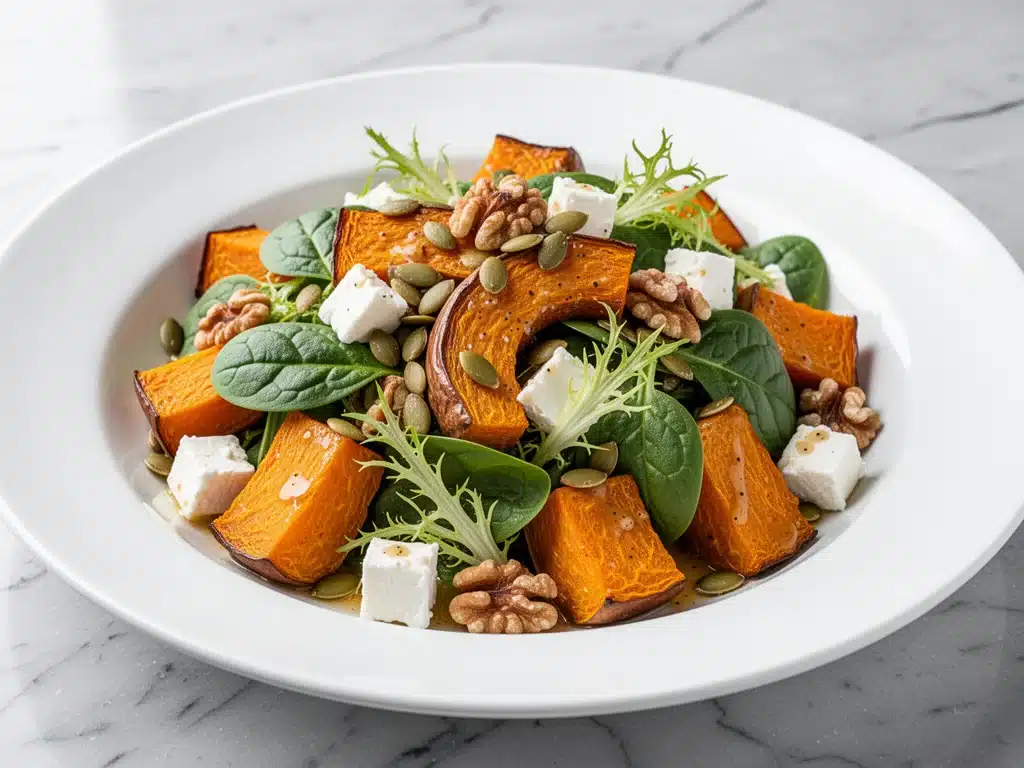
I threw a few butternut squash cubes on a baking sheet, tossed them with olive oil and cinnamon, and hit the oven. While those roasted, I threw together some arugula, crumbled some salty feta, and scattered toasted walnuts over the top. The smell of caramelized squash mixing with earthy greens filled the kitchen, and for the first time in weeks, I felt calm.
I took one bite and stopped. It was perfect. The sweetness of the roasted squash, the peppery bite of the arugula, the crunch of the nuts, and that creamy, tangy cheese—it hit every single note. That night, this Autumn Roasted Squash Salad became my new obsession. It’s not just a side dish; it’s a complete meal that feels luxurious but takes less time than ordering takeout.
I’ve made this salad probably fifteen times since that October night. I’ve tweaked the dressing, swapped the nuts, and even tried it with acorn squash instead of butternut. Every single time, it’s been a winner. If you’re looking for cozy fall dinners that don’t require a culinary degree, this is the one. It’s vibrant, it’s healthy, and it tastes like autumn in a bowl.
Why You’ll Love This Autumn Roasted Squash Salad
There are plenty of salad recipes out there, but this one has earned a permanent spot in my weekly rotation. Here’s why it works so well, especially when the weather turns crisp and you’re craving comfort food that doesn’t weigh you down.
It’s Actually Warm — Most salads are cold, which feels wrong in November. This one uses freshly roasted squash, so the warmth of the vegetables melts the cheese slightly and warms the greens just enough. It’s comforting without being heavy.
Texture Overload (The Good Kind) — I’m obsessed with texture in food. You get the soft, custardy squash, the crisp snap of fresh arugula, the crunch of toasted walnuts, and the creamy pop of feta. Every spoonful has something different to chew on.
Pantry-Friendly Ingredients — You probably already have most of this on hand. Olive oil, vinegar, nuts, cheese, and a squash are staples I keep year-round. The only thing you might need to run out for is fresh arugula, but even that’s easy to find.
Meal Prep Magic — I make the roasted squash and the dressing on Sunday, and I assemble the salads throughout the week. The squash holds up in the fridge for four days, and when I reheat it gently or eat it cold, it’s still delicious. It’s my go-to for busy weeknights when I’m tired but still want to eat well.
Vegetarian-Friendly Comfort — I serve this to my meat-eating husband, my vegetarian sister, and my gluten-free neighbor. It feels substantial enough to be a main course but light enough to be a side. It’s versatile in the best way.
This salad is my answer to “what’s for dinner?” when I want something that feels special but doesn’t require hours in the kitchen. It’s easy, it’s beautiful, and it tastes like fall.
Ingredients You’ll Need
Here’s the thing about this salad: the quality of a few key ingredients makes all the difference. I’m not saying you need the most expensive stuff, but I am particular about the cheese and the squash. Here’s what you need and why.
Butternut Squash (2 medium, about 2 pounds / 900g) — I always use butternut. It’s sweet, holds its shape when roasted, and has that perfect orange color. You can use acorn or sweet potato, but butternut is the gold standard here. Peel it, remove the seeds, and cube it into 1-inch pieces. Uniform size ensures even cooking.
Arugula (5 ounces / 140g) — Fresh, baby arugula is a must. It has a peppery bite that cuts through the sweetness of the squash. Spinach is too mild; kale is too tough unless you massage it. Arugula is the perfect balance. If you can’t find it, frisée or mixed spring greens work okay, but the flavor profile changes.
Feta Cheese (½ cup / 70g, crumbled) — I use a block of feta and crumble it myself. Pre-crumbled feta is often too dry and dusty. Greek feta is creamier and saltier, which I prefer. If you’re lactose-intolerant, goat cheese is a great substitute—it’s tangy and soft.
Walnuts (½ cup / 60g) — Toasted walnuts add that crucial crunch and earthy flavor. I use raw walnuts and toast them myself. Pre-toasted nuts often taste rancid. If you hate walnuts, pecans or pistachios work well here.
Red Onion (½ medium, thinly sliced) — Raw red onion adds a sharp, pungent bite. I like it raw for the crunch, but if you’re sensitive to raw onions, you can quick-pickle them in the vinaigrette for 10 minutes first. It mellows the bite beautifully.
For the Vinaigrette:
Extra Virgin Olive Oil (3 tablespoons / 45ml) — Use a good quality oil here. It’s the base of the dressing, so it should taste fruity and fresh.
Balsamic Vinegar (2 tablespoons / 30ml) — I use a standard balsamic, not the thick, syrupy kind. You want acidity, not sweetness. Apple cider vinegar works too, but balsamic pairs better with the squash.
Dijon Mustard (1 teaspoon) — This emulsifies the dressing and adds a little heat. It’s the secret ingredient that makes the dressing cling to the leaves.
Honey (1 teaspoon) — Just a touch to balance the acidity of the vinegar and the saltiness of the feta. Skip it if you’re avoiding sugar.
Salt and Black Pepper — To taste. I use flaky sea salt for finishing.
Optional Add-ins:
Apple Slices — Thinly sliced Gala or Honeycrisp apples add another layer of sweetness and crunch. I add them when I want to make the salad feel even more festive.
Pomegranate Seeds — For a burst of juiciness and color. They look gorgeous and add a tart contrast.
Equipment Needed
You don’t need anything fancy for this. Here’s what I actually use.
Large Sheet Pan — I use a standard 18×13 inch baking sheet. Make sure it’s big enough that the squash cubes aren’t crowded. If they’re touching too much, they steam instead of roast. Two pans might be necessary if you’re doubling the recipe.
Sharp Chef’s Knife — For peeling and cubing the squash. Peeling a butternut squash can be tricky, so make sure your knife is sharp. A sturdy vegetable peeler works too if you’re nervous.
Large Mixing Bowl — For tossing the squash with oil and seasoning before roasting.
Small Jar or Bowl — For whisking up the vinaigrette. I usually just shake it in a mason jar.
Large Salad Bowl — To toss the greens, squash, and dressing together. Any big bowl works.
Optional: Parchment Paper — I line my sheet pan with parchment to make cleanup instant. Squash can stick if you don’t, and scrubbing baked-on sugar is no fun.
How to Make It: Step-by-Step
Alright, let’s make this! I’m walking you through exactly how I do it, including the little tricks I’ve picked up over time.
Step 1: Prep the Squash (10 minutes)
Preheat your oven to 400°F (200°C). Line a large sheet pan with parchment paper. Peel the butternut squash. I know, peeling squash is a pain, but it’s worth it. Cut it in half, scoop out the seeds (save them if you want to roast them later—they’re delicious!), and cube the flesh into 1-inch pieces. Try to keep them uniform so they cook evenly.
Step 2: Season and Roast (30-40 minutes)
Place the squash cubes in a large bowl. Drizzle with 2 tablespoons of olive oil, sprinkle with ½ teaspoon of salt and ¼ teaspoon of black pepper. Toss until every piece is coated. Spread them out on the sheet pan in a single layer. Do not crowd the pan! If the pieces are touching, they’ll steam. Roast for 30-40 minutes, flipping halfway through, until the squash is tender and caramelized at the edges. You should be able to pierce it easily with a fork.
Step 3: Toast the Walnuts (5 minutes)
While the squash roasts, place the walnuts in a dry skillet over medium heat. Toast them for 3-5 minutes, shaking the pan frequently, until they’re fragrant and slightly darkened. Watch them closely—nuts burn fast. Transfer them to a plate and let them cool completely. This step unlocks their flavor and gives them that necessary crunch.
Step 4: Make the Vinaigrette (2 minutes)
In a small jar or bowl, combine the remaining 1 tablespoon of olive oil, balsamic vinegar, Dijon mustard, honey, a pinch of salt, and pepper. Whisk or shake vigorously until the mixture is emulsified and creamy-looking. Taste it. It should be tangy, slightly sweet, and well-balanced. Adjust salt or vinegar to your preference.
Step 5: Assemble the Salad (5 minutes)
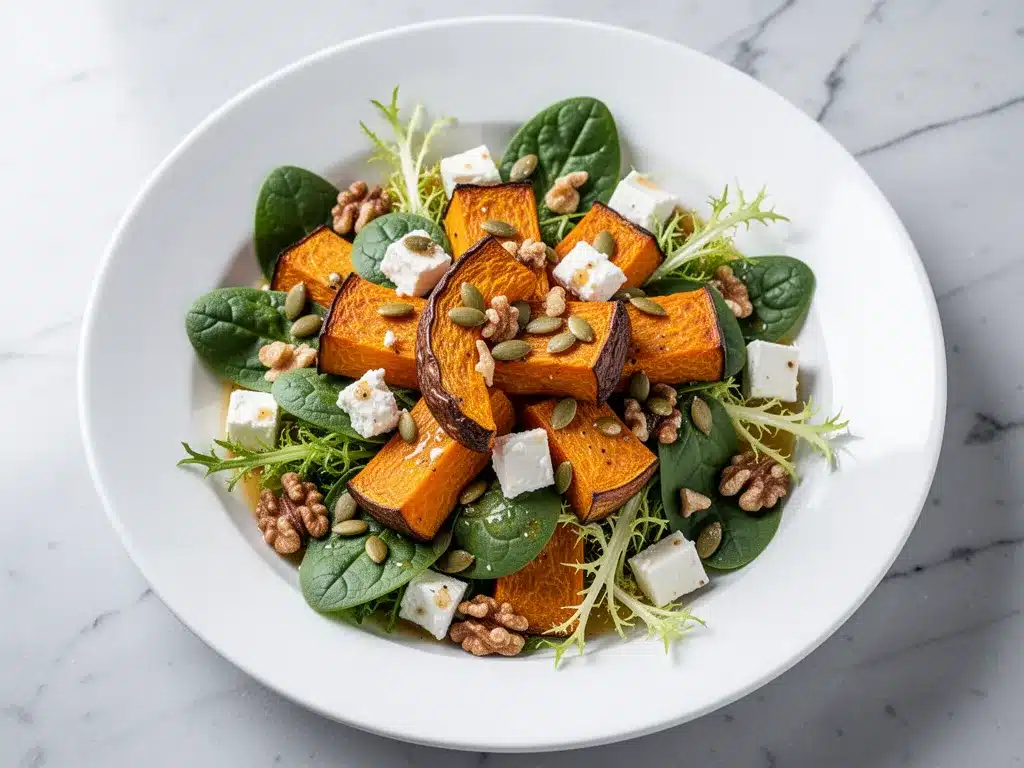
In a large salad bowl, toss the arugula with about half of the vinaigrette. Add the warm roasted squash, crumbled feta, sliced red onion, and toasted walnuts. Drizzle with the remaining dressing. Toss gently to combine. The heat from the squash will slightly wilt the arugula and melt the feta a tiny bit, which is exactly what you want.
Step 6: Serve
Serve immediately while the squash is still warm. Top with extra crumbled feta, a crack of black pepper, and maybe some pomegranate seeds if you have them. This Autumn Roasted Squash Salad is best enjoyed fresh, but leftovers are good too.
Expert Tips & Tricks
Here’s everything I’ve learned from making this salad dozens of times. These tips will save you from my mistakes.
Don’t Skip the Toasting
Raw nuts are fine, but toasted nuts are essential here. The heat releases oils that make them nutty and aromatic. If you skip this, the salad feels flat. Toast them in a dry pan or even in the oven with the squash for the last 10 minutes.
Roast Until Caramelized
The magic of this salad is the caramelized edges on the squash. If you pull them out when they’re just tender, you miss out on the sweetness. Look for browned edges. If your oven runs hot, check them a few minutes early.
Warm the Greens Slightly
I like the contrast of warm squash and cool greens, but if you prefer everything warm, you can toss the arugula with the hot squash immediately after roasting. The residual heat will wilt it gently. Just don’t let it sit too long, or it’ll get soggy.
Emulsify the Dressing
A well-emulsified dressing clings to the leaves instead of pooling at the bottom. Whisking the mustard with the vinegar and oil helps create that creamy texture. If your dressing looks separated, whisk it again right before tossing.
Make-Ahead Strategy
You can roast the squash up to 3 days ahead. Store it in an airtight container in the fridge. Reheat it gently in the microwave or oven before assembling. The dressing keeps for a week. Assemble the salad right before eating to keep the nuts crunchy.
Variations & Substitutions
Once you’ve nailed the basic version, here’s how you can mix it up. I’ve tried all of these.
Sweet Potato Version
Swap the butternut squash for cubed sweet potatoes. They take slightly longer to roast (40-45 minutes), so keep an eye on them. The flavor is similar, just a bit earthier.
Acorn Squash Version
Roast halved acorn squash with the seeds removed, cut-side down. Scoop out the flesh once tender and chop it. This looks more rustic and has a nuttier flavor.
Chicken or Salmon Add-in
For a heartier meal, add grilled chicken strips or flaked salmon. I often serve this salad with baked salmon with crispy garlic butter crust for a complete protein-packed dinner. The citrusy notes in the salmon pair beautifully with the balsamic dressing.
Quinoa Base
For a grain-heavy version, toss in cooked quinoa or farro. This makes it even more filling and great for meal prep. The grains soak up the dressing nicely.
Apple and Cranberry
Add thinly sliced apples and dried cranberries for a sweeter, more festive version. This is my go-to for holiday gatherings.
Dairy-Free
Skip the feta or use a vegan feta alternative. The salad is still delicious without the cheese, though you’ll miss the saltiness. Add extra nuts or seeds to compensate for the texture.
Gluten-Free
This recipe is naturally gluten-free. Just make sure your oats (if adding) and nuts are certified gluten-free.
Serving & Storage
How to Serve:
I usually serve this straight from the bowl at the dinner table. It looks rustic and colorful. It pairs beautifully with garlic herb focaccia for a complete meal. The bread is perfect for soaking up any extra dressing.
Side Dishes:
– Garlic bread or focaccia
– Roasted Brussels sprouts
– A simple white bean salad
– Grilled chicken or fish
Storage Instructions:
Store the roasted squash in an airtight container in the fridge for up to 4 days. The dressing keeps for a week. Do not store the assembled salad with the greens and nuts mixed in, as they’ll get soggy. Assemble right before eating.
Reheating:
You can reheat the squash in the microwave or oven. If you’re serving it warm, toss the warm squash with fresh greens and dressing. If you prefer it cold, eat the squash cold with fresh greens—it’s surprisingly good.
Freezing:
I don’t recommend freezing this salad. The greens and nuts won’t survive the thaw, and the squash texture changes. Make it fresh.
Nutrition Information
I’m not a nutritionist, but here’s the breakdown if you’re tracking. These are estimates per serving (based on 4 servings).
| Nutrient | Amount |
|---|---|
| Calories | 280 |
| Protein | 8g |
| Carbs | 32g |
| Fiber | 6g |
| Sugar | 12g |
| Fat | 14g |
| Saturated Fat | 4g |
| Cholesterol | 15mg |
| Sodium | 320mg |
What’s Good: High in fiber and vitamins from the squash and greens. Good source of healthy fats from the olive oil and walnuts. Vegetarian and gluten-free friendly.
What to Know: Contains dairy (feta). Moderate sodium depending on the cheese. The sugar comes naturally from the squash and honey.
My Take: This is a nutritious, balanced meal. It’s not a diet food, but it’s nutrient-dense and satisfying. When I want to make it lighter, I reduce the feta and add more greens. But usually? I just enjoy it as is.
Final Thoughts
So that’s my Autumn Roasted Squash Salad! I’ve probably talked your ear off at this point, but when you make a recipe this often, you have a lot to say about it. This salad has saved my weeknight dinners more times than I can count. It’s my answer to “what’s for dinner?” when I’m tired, don’t want takeout, and still want something that tastes really good.
My kids are happy, my husband’s happy, and I’m happy because I’m not stressed about cooking. It’s vibrant, it’s healthy, and it tastes like fall. Make it yours! Try different add-ins, swap in your favorite vegetables, adjust the garlic (though more is always better in my opinion). The best recipes are the ones you adapt to your family’s tastes.
If you make this, drop a comment and let me know what you think! I love hearing how recipes turn out in your kitchen. And if something doesn’t work, tell me that too—I’m here to help troubleshoot. Happy cooking! And I hope your kitchen smells half as good as mine does right now.
Frequently Asked Questions
Can I use a different type of squash?
Yes! Acorn squash, sweet potato, or even pumpkin work well. Just note that they may have slightly different cooking times. Acorn squash takes longer to roast, so cut it into smaller pieces or roast it longer. Sweet potatoes also take a bit longer. Butternut is the easiest because it’s sweet and cooks evenly.
Why did my squash turn out mushy?
Usually, this means the pieces were too small or the oven temperature was too low. For caramelized, firm-tender squash, keep the cubes at 1-inch and roast at 400°F. If they’re crowded on the pan, they’ll steam instead of roast, leading to mushiness. Make sure they have space!
Can I make this salad ahead of time?
You can prep the components ahead. Roast the squash and make the dressing up to 3 days in advance. Store them separately. Assemble the salad right before serving to keep the nuts crunchy and the greens fresh. If you assemble it too early, the salad will get soggy.
What cheese can I use instead of feta?
Goat cheese is a great substitute—it’s tangy and soft. Blue cheese works if you like a stronger flavor. Parmesan shavings add a salty, nutty crunch. If you’re dairy-free, skip the cheese or use a vegan alternative. The salad is still delicious without it.
Can I add protein to make it a main course?
Absolutely! Grilled chicken, salmon, or chickpeas work great. I often serve this with Mediterranean shrimp skillet for a light but protein-packed dinner. The shrimp adds a nice savory contrast to the sweet squash.
How long does this salad last?
The roasted squash lasts 4 days in the fridge. The assembled salad is best eaten immediately but will keep for 1-2 days if stored properly. The nuts will lose their crunch, and the greens will wilt, so it’s best fresh.
Pin This Recipe!
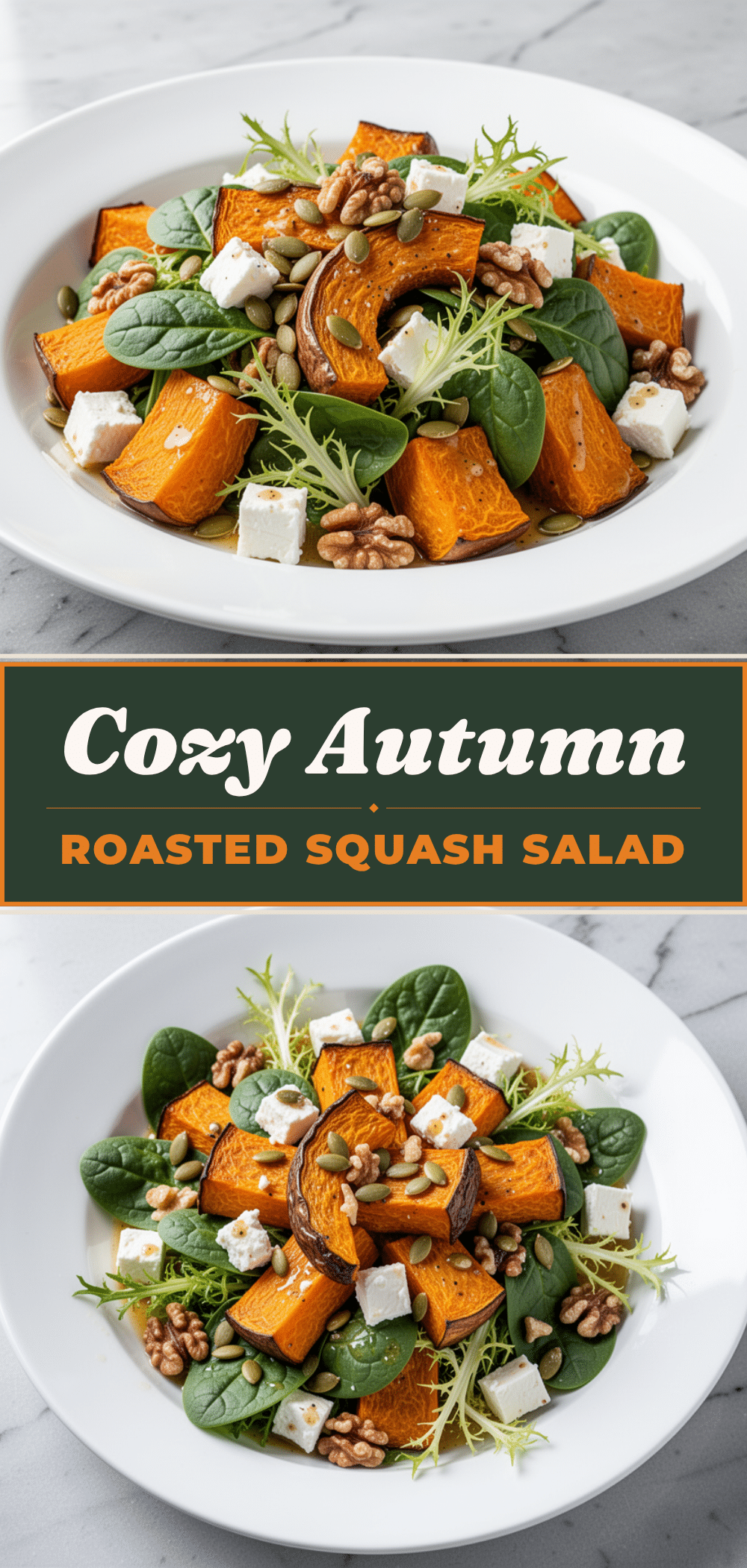
Autumn Roasted Squash Salad
- Total Time: 45 minutes
- Yield: 4 servings 1x
Description
A cozy, warm salad featuring roasted butternut squash, peppery arugula, toasted walnuts, and tangy feta cheese, dressed in a balsamic vinaigrette.
Ingredients
- 2 medium butternut squash (about 2 pounds / 900g), peeled and cubed into 1-inch pieces
- 5 ounces (140g) fresh baby arugula
- 1/2 cup (70g) feta cheese, crumbled
- 1/2 cup (60g) raw walnuts
- 1/2 medium red onion, thinly sliced
- 3 tablespoons extra virgin olive oil, divided
- 2 tablespoons balsamic vinegar
- 1 teaspoon Dijon mustard
- 1 teaspoon honey
- Salt and black pepper to taste
- Optional: Apple slices, pomegranate seeds
Instructions
- Preheat oven to 400°F (200°C). Line a large sheet pan with parchment paper.
- Place squash cubes in a large bowl. Drizzle with 2 tablespoons olive oil, sprinkle with 1/2 teaspoon salt and 1/4 teaspoon black pepper. Toss to coat.
- Spread squash in a single layer on the sheet pan. Roast for 30-40 minutes, flipping halfway, until tender and caramelized.
- While squash roasts, toast walnuts in a dry skillet over medium heat for 3-5 minutes until fragrant. Let cool.
- In a small jar, combine remaining 1 tablespoon olive oil, balsamic vinegar, Dijon mustard, honey, salt, and pepper. Shake or whisk until emulsified.
- In a large salad bowl, toss arugula with half the vinaigrette.
- Add warm roasted squash, crumbled feta, sliced red onion, and toasted walnuts. Drizzle with remaining dressing and toss gently.
- Serve immediately while squash is warm.
Notes
Do not crowd the squash on the pan to ensure caramelization rather than steaming. Toasting the walnuts is essential for flavor. The salad is best served warm; if making ahead, store squash and dressing separately and assemble just before eating to keep greens fresh and nuts crunchy.
- Prep Time: 10 minutes
- Cook Time: 30-40 minutes
- Category: Main Course
- Cuisine: American
Nutrition
- Serving Size: 1 bowl
- Calories: 280
- Sugar: 12
- Sodium: 320
- Fat: 14
- Saturated Fat: 4
- Carbohydrates: 32
- Fiber: 6
- Protein: 8
Keywords: autumn salad, roasted squash, butternut squash salad, fall dinner, vegetarian main course, healthy salad, balsamic vinaigrette